
Charles Darwin visits Chiloé Island in 1835, on the HMS Beagle. He calls the place ‘a miserable hole’. The climate ‘in winter is detestable, and in summer it’s only a little better’, he says. And he describes it as a place ‘on the borders of Christianity’!?!
Darwin, how can we not, but visit Chiloé Island!

Here is Chiloe Archipelago; barely tethered to Chile.
It’s an archipelago of islands, 30 kilometres off Chile’s southern coast. So, our bikes and we, board a ferry. And our minds start to dig.
Chono nomads arrive, in canoes, more than 6000 years ago. And the Huilliche peoples settle 4500 years later. One works the sea, the other works the land. It’s bitterly hard. Ridiculous weather fronts batter day in and day out. Raw forces of nature shape the land, and shape the people. So what’s a man to do? Our Islanders tease out the most fantastical myths, legends and beliefs. Mystical creatures seep into everyday life. The ocean has a daughter. Witches ride sea horses to ghost ships. Red mushrooms whisper diagnoses. And oh, there is so much more ….
And here it hides …
… until the Jesuits arrive, from 1608 …
The Jesuits embark on a Circulating Mission. They tour, by boat, the Chiloé archipelago in the temperate months. At first, they visit their missions and tend to the Islanders spiritual needs. Then Jesuits encourage them to build chapels. The Islanders use local building materials and deploy their carefully honed boat building skills. The Spanish Crown deems their labour instead of the compulsory monetary tributes. Later, Jesuits appoint laymen to uplift the religious life of the islanders.
By end of 19th century there are over a hundred churches. On a small group of islands!
And here it hides again!
It’s a sea and wind swept archipelago, in isolation. The Spanish occupation of Chile sweeps by. The rise and fall of the Machupe Army is a mere whisper. And the Pinochet dictatorship hardly knocks.
And so today, it’s an eclectic mix! Yes, ‘on the borders of Christianity’ still. All those fanciful mystical creatures co-exist with orthodox Christianity. We get it, Darwin. And we love it.
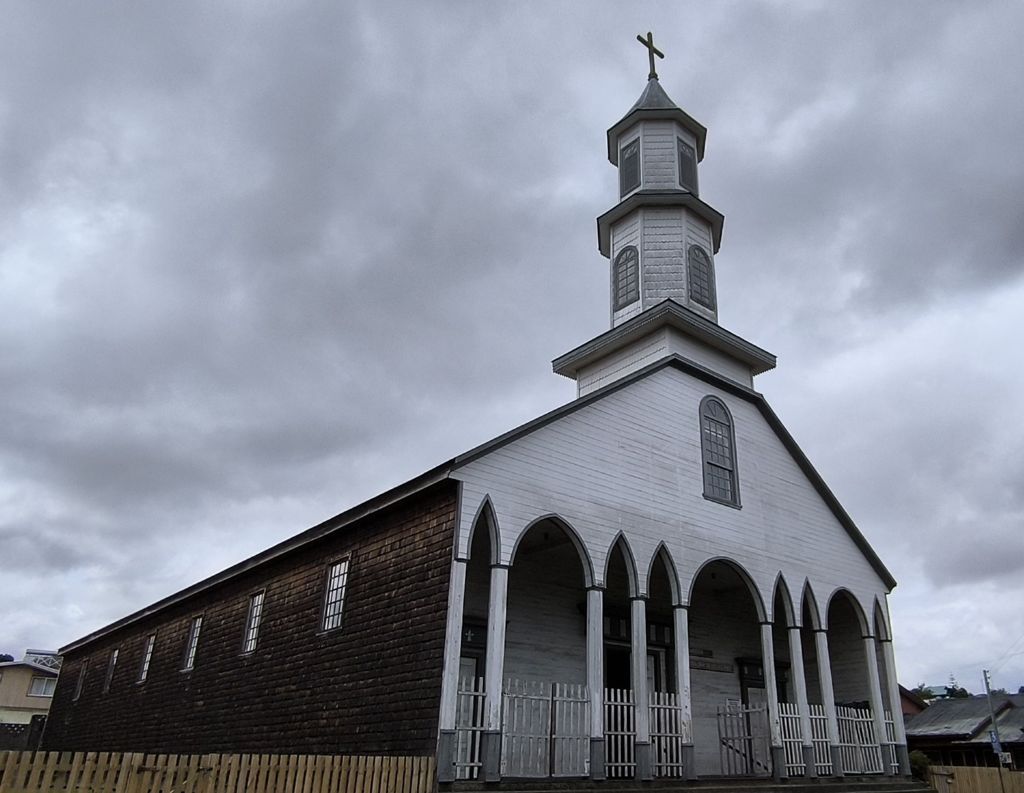
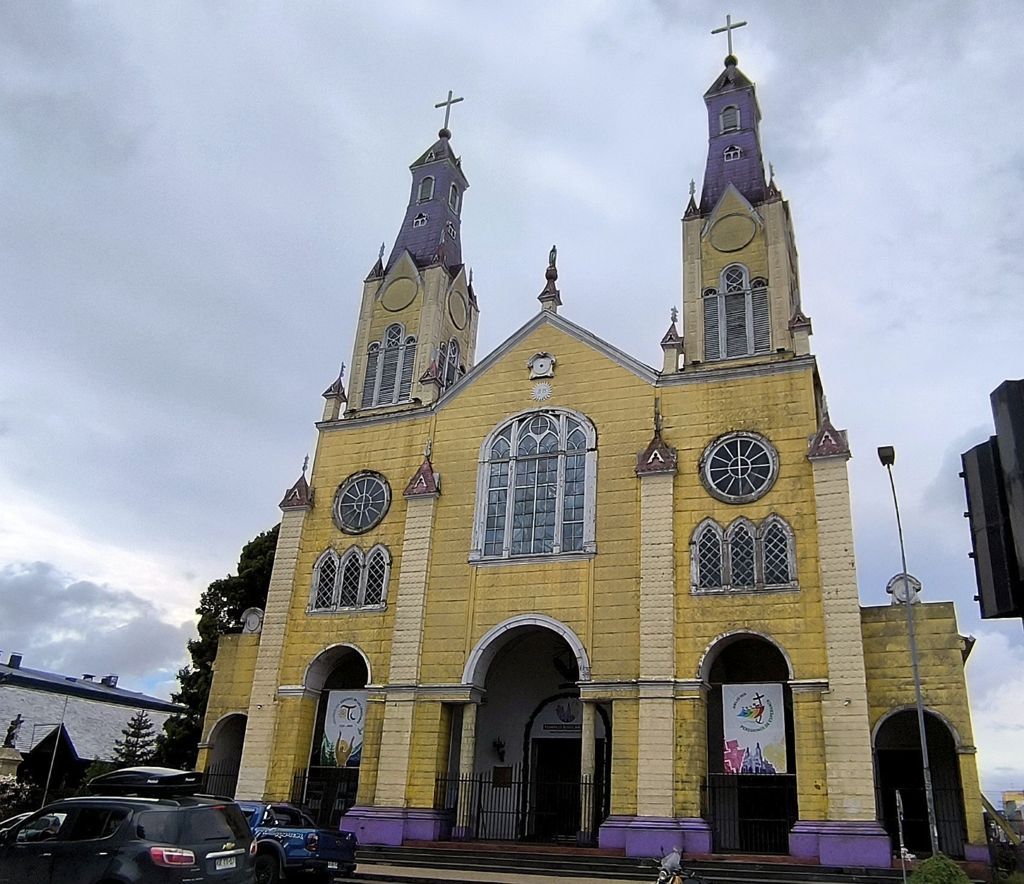
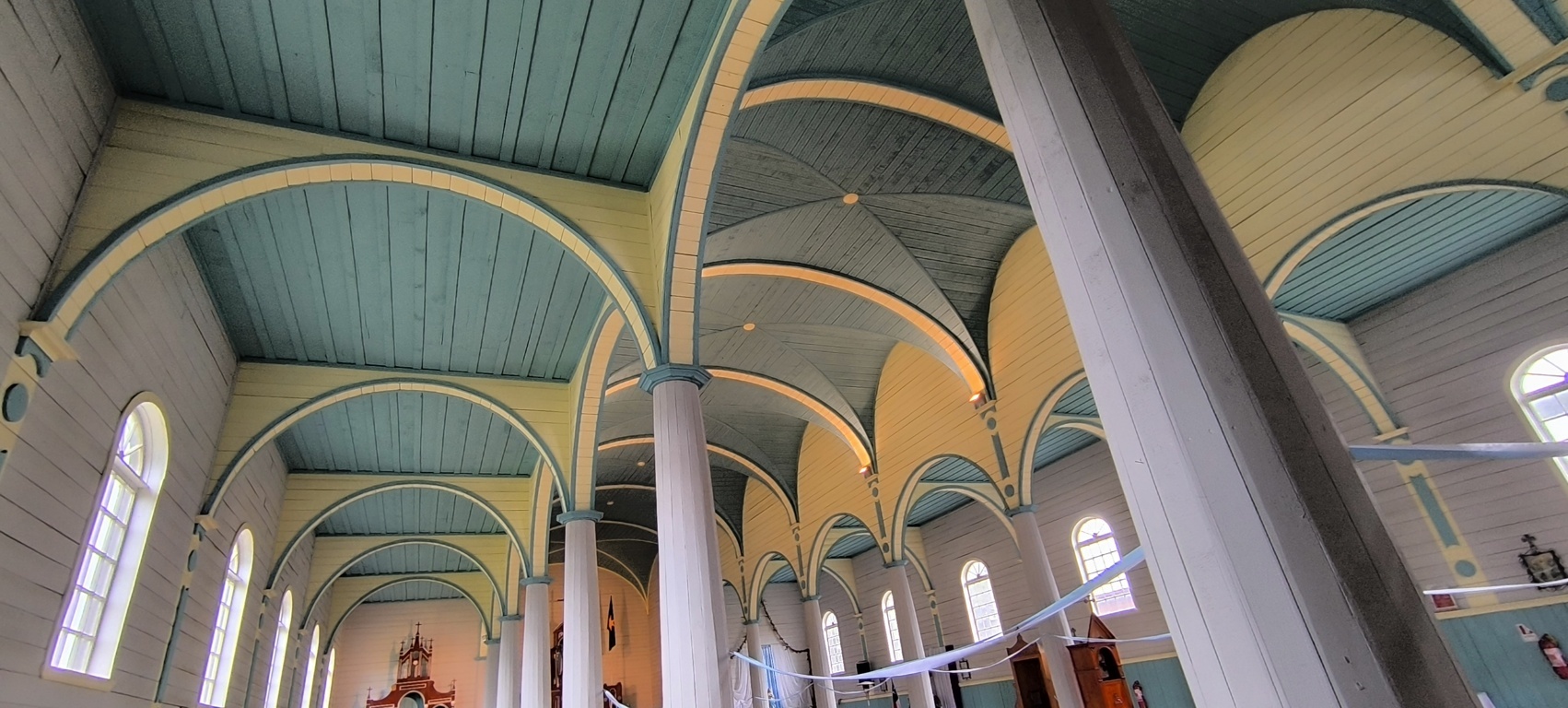
Today, the Chiloé Archipelago is a growing tourist destination. In 2000, UNESCO confers World Heritage Site status to 16 of the churches. Beautiful blends of Jesuit designs and indigenous craftsmanship. Vibrant, colourful structures, made from native timber without metal nails. Ceilings resemble up-turned hulls of boats! Walls boast indigenous shapes and patterns.
But what knocks our socks off, rests in the church, ‘Nuestra Senora de Los Dolores’, in the little town of Dalcahue. Here is a painting where mystical creatures surround Christ. It’s the ghost ship Caleuche, the seahorse Caballo Marino, the mermaid, La Pincoya, and the mischievous Trauco.

Is this what Darwin meant, when he said “on the borders of Christianity?”
We stay in the small capital of the main island, Castro.
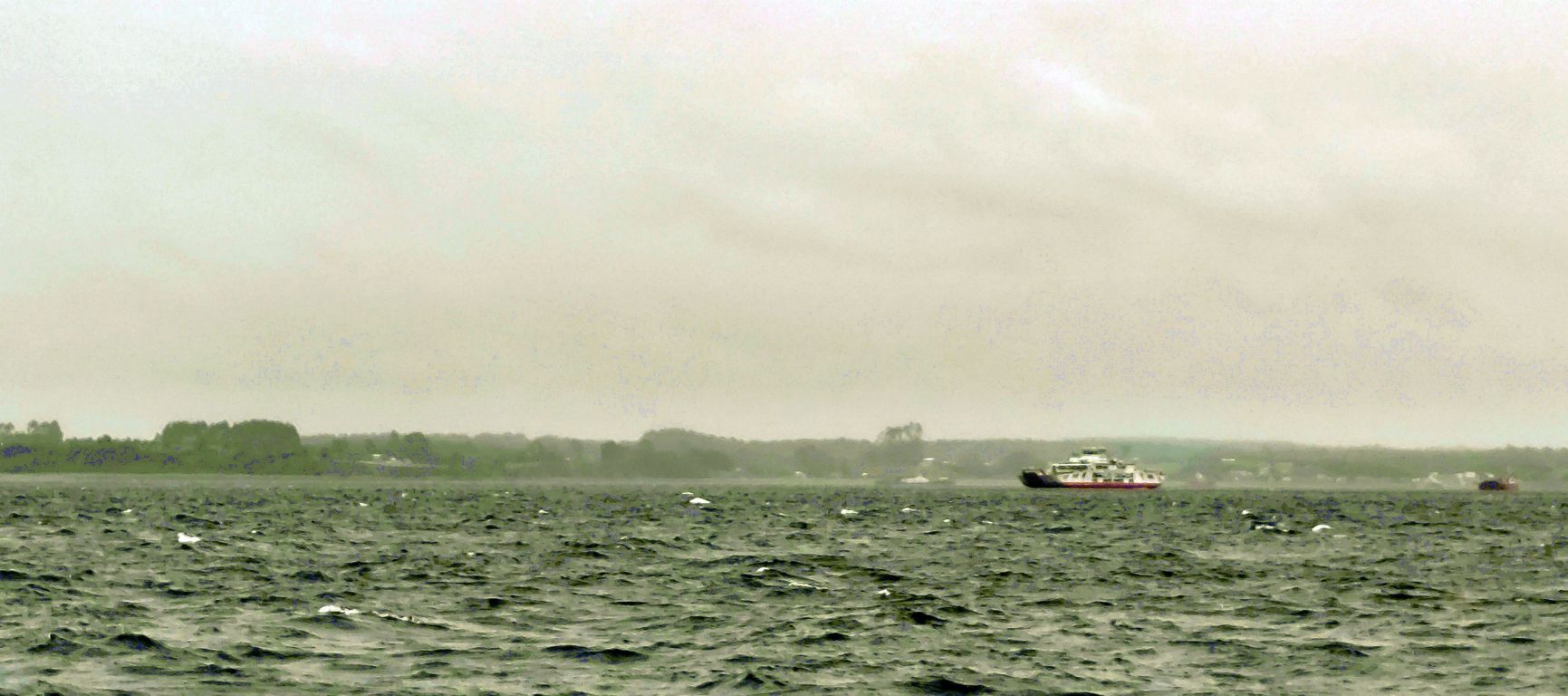
First, we board a ferry to get there ….
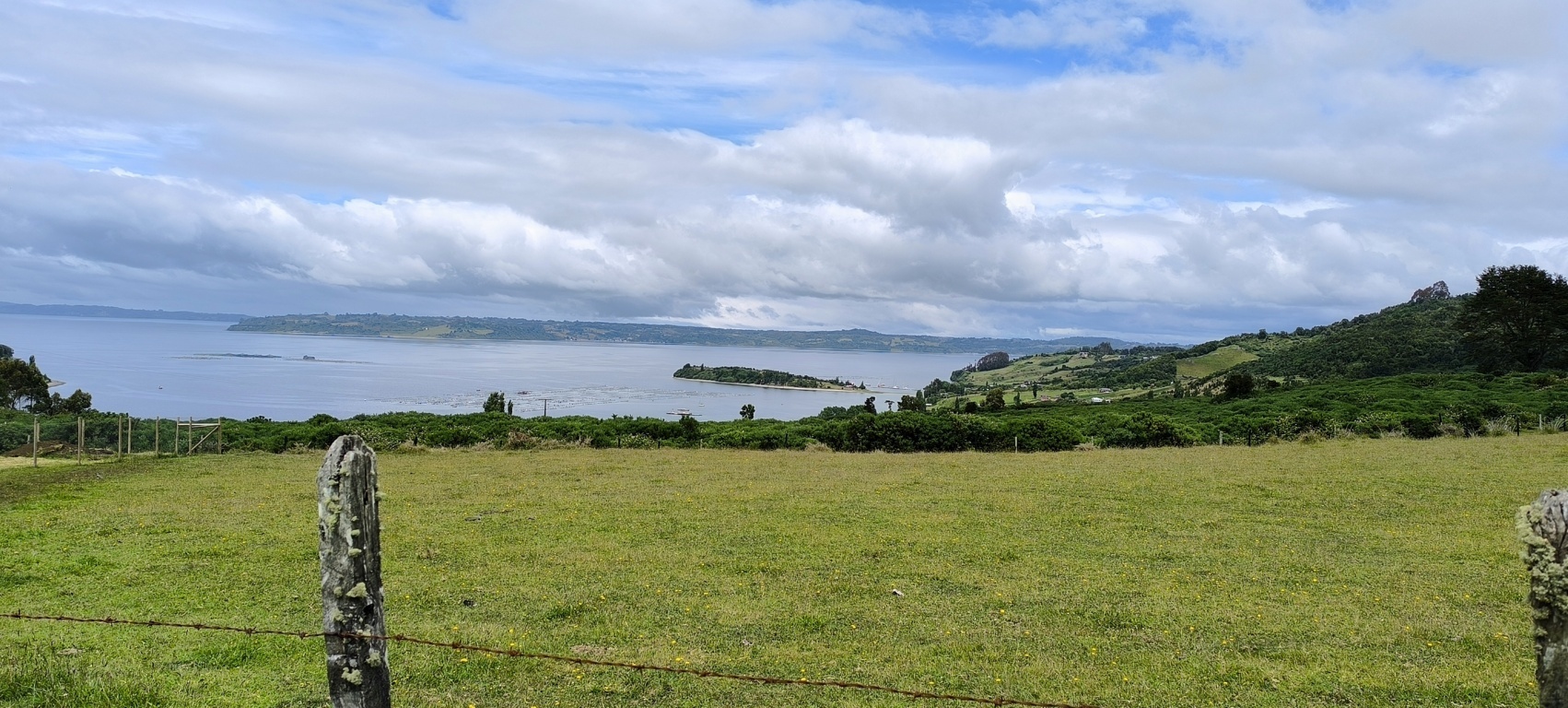
… and then ride down the main Island to …

…. the small capital, Castro.

The main island that carries Castro looks across to other islands of the Archipelago.

The homes are closely knit together.

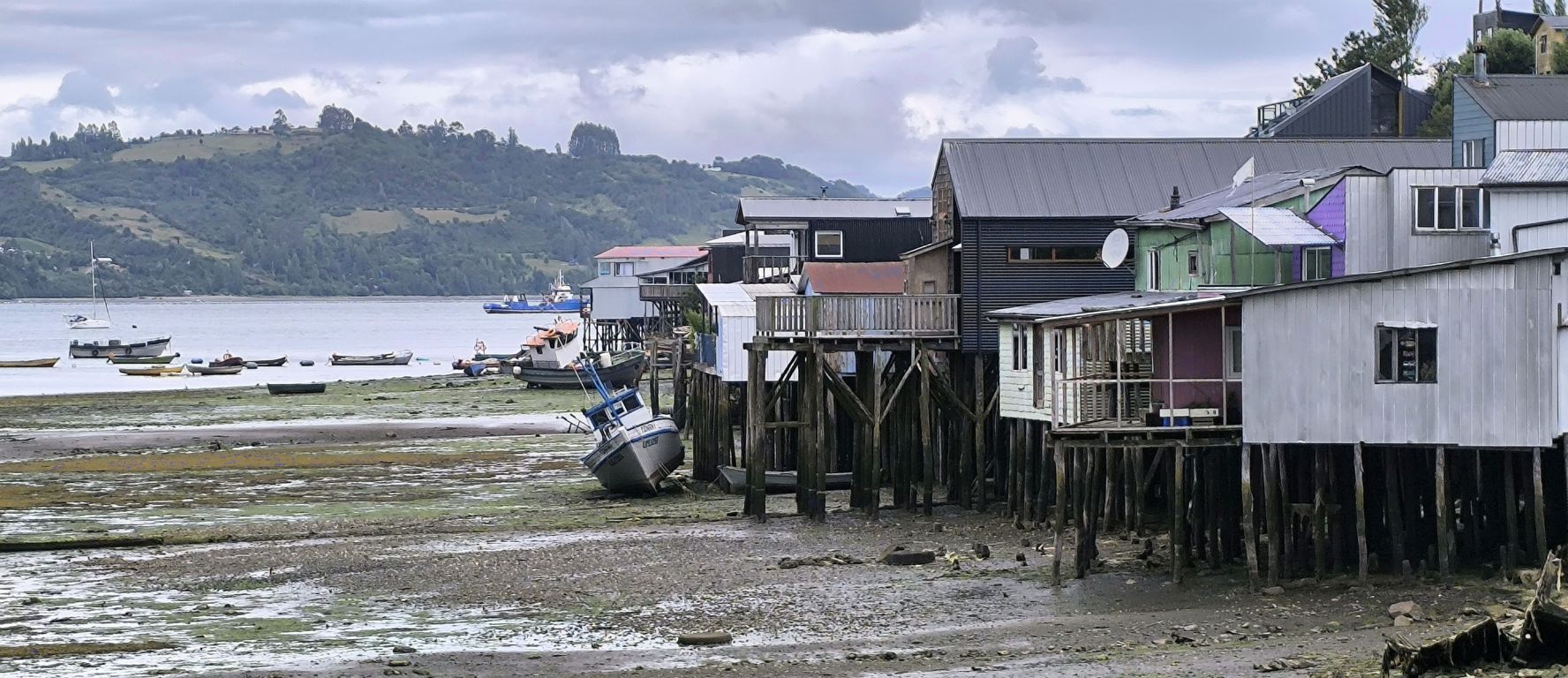
And it is predominantly a fishing community coping with the toughest of weather conditions.
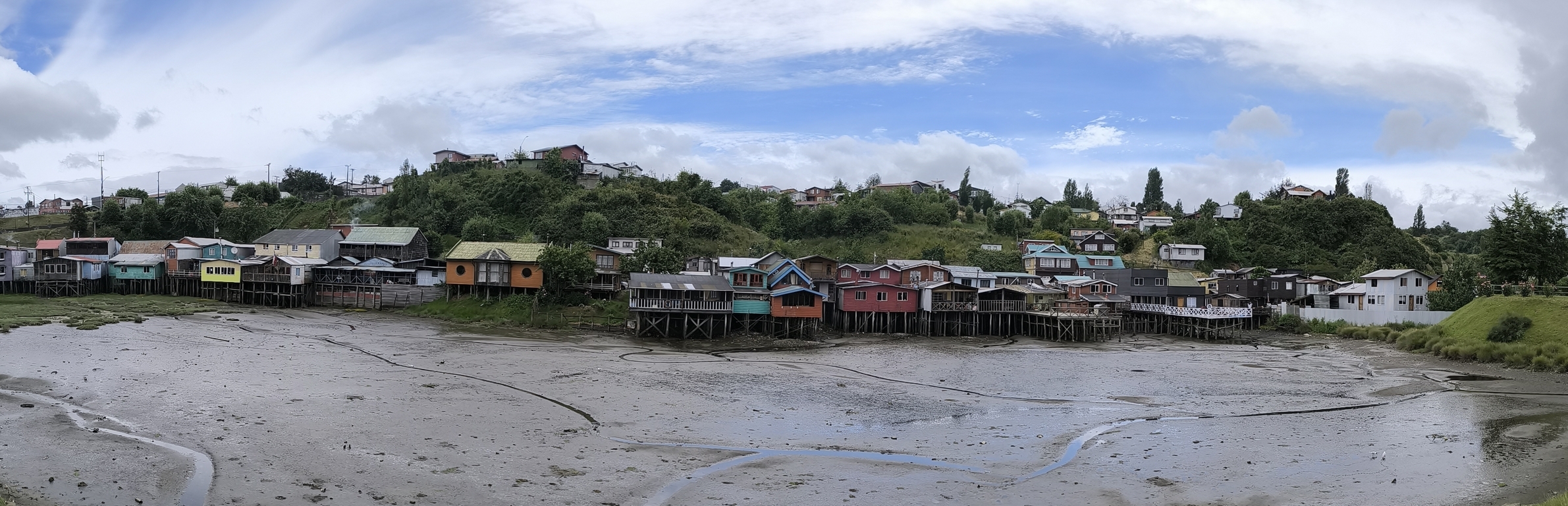
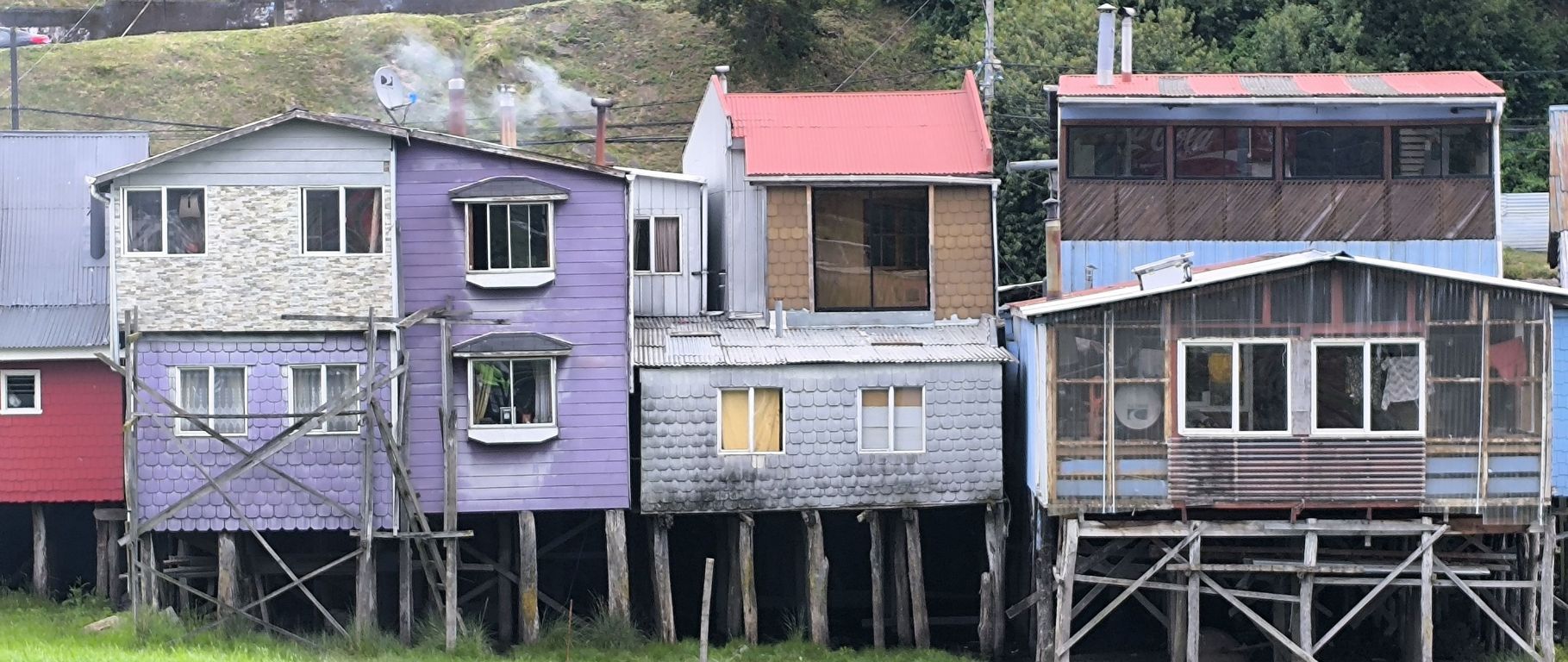
These houses wait for the tide to rise to their jetties. This area is called the Palafitos.
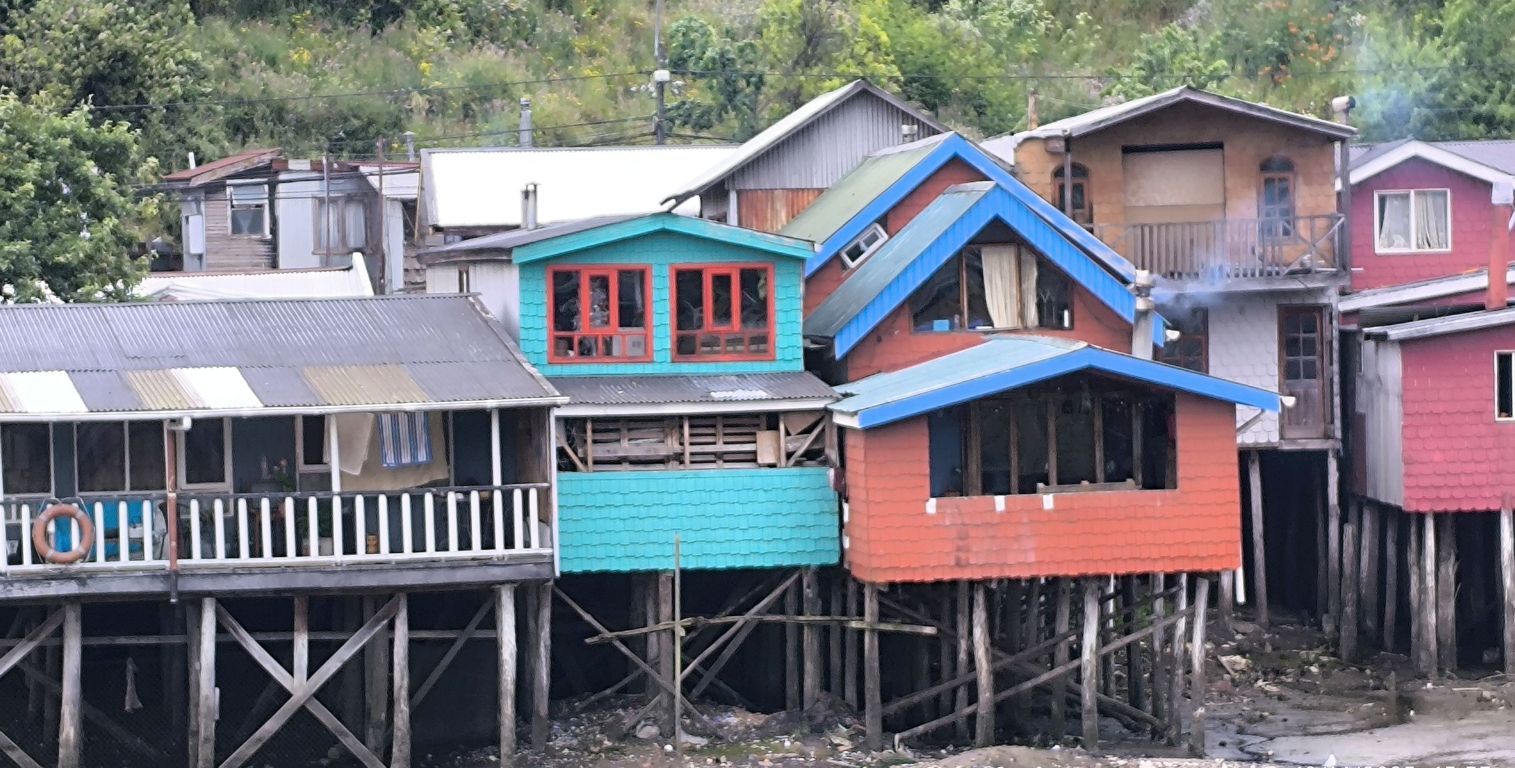
And here are some other views of the Palafitos …
…
…

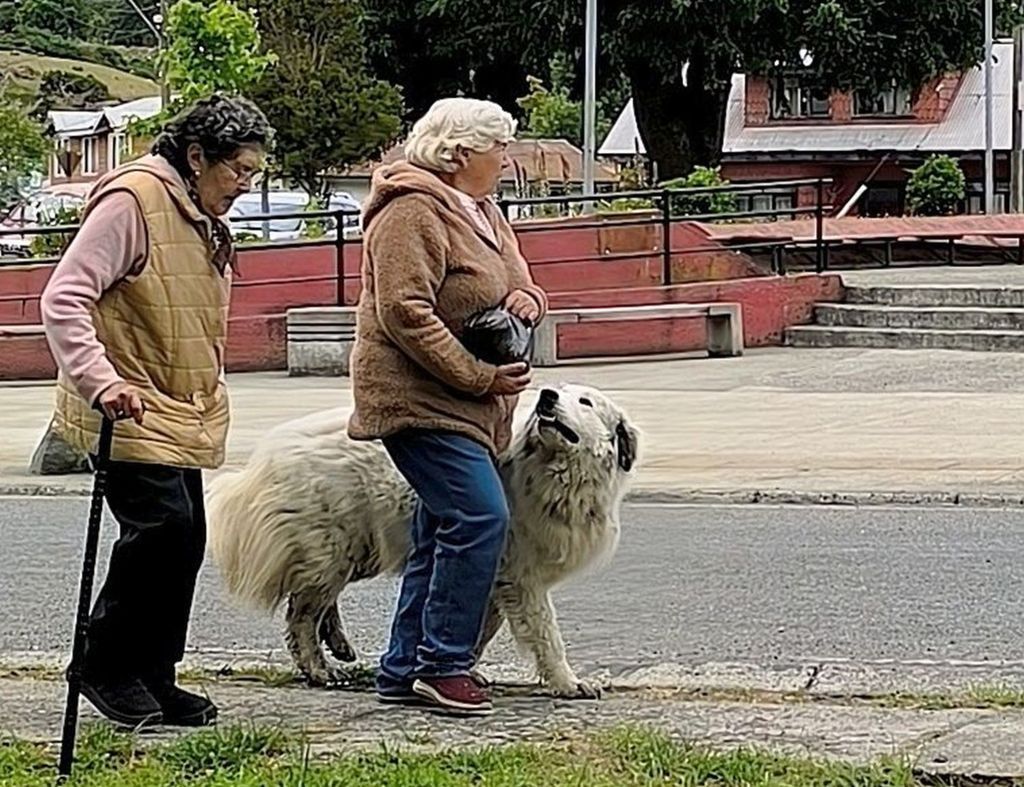
We are always amazed at how independent dogs are in South America. Like here in Chiloe, off the collar, free to follow their noses.
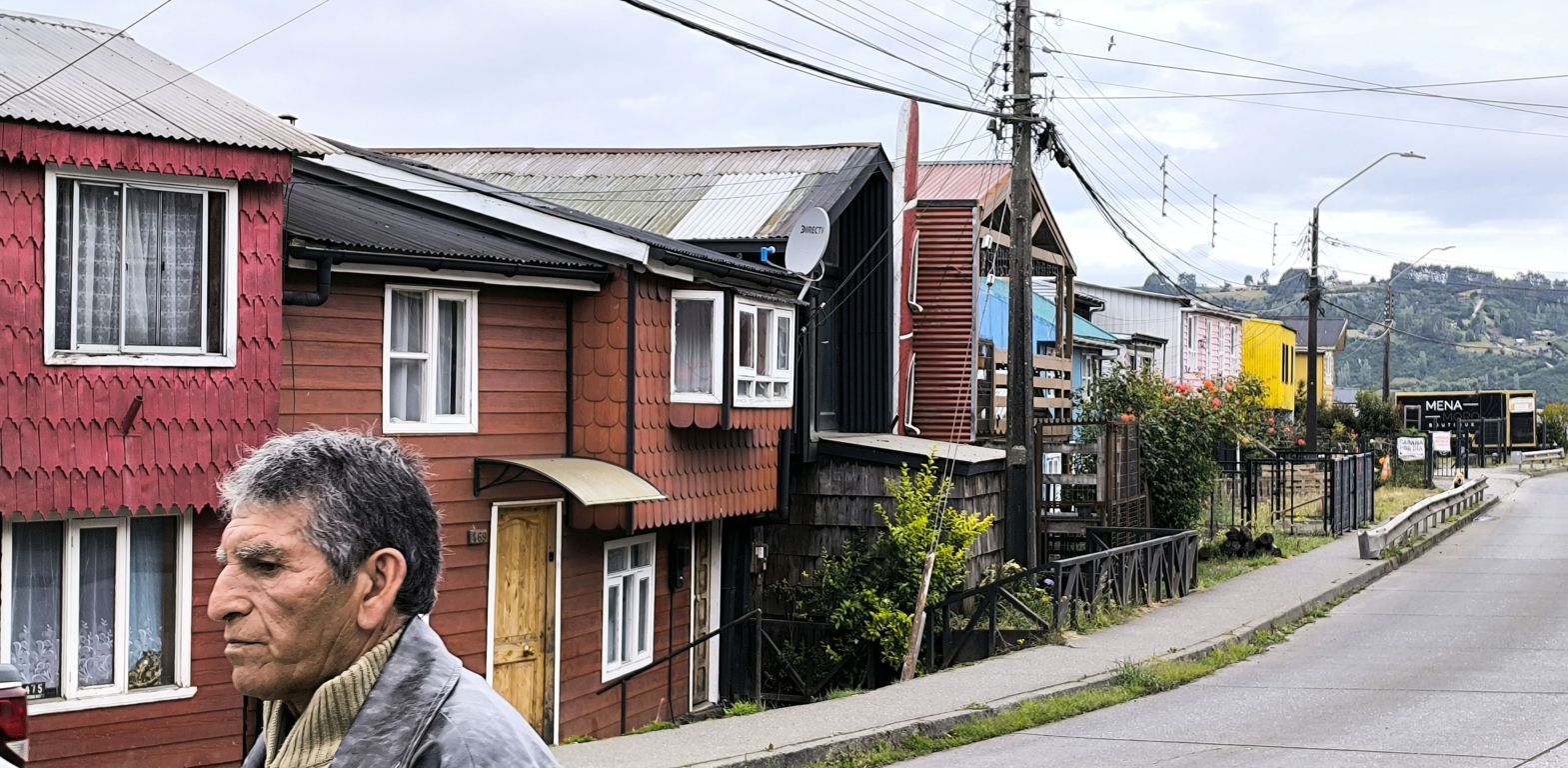
A typical street view in Castro.
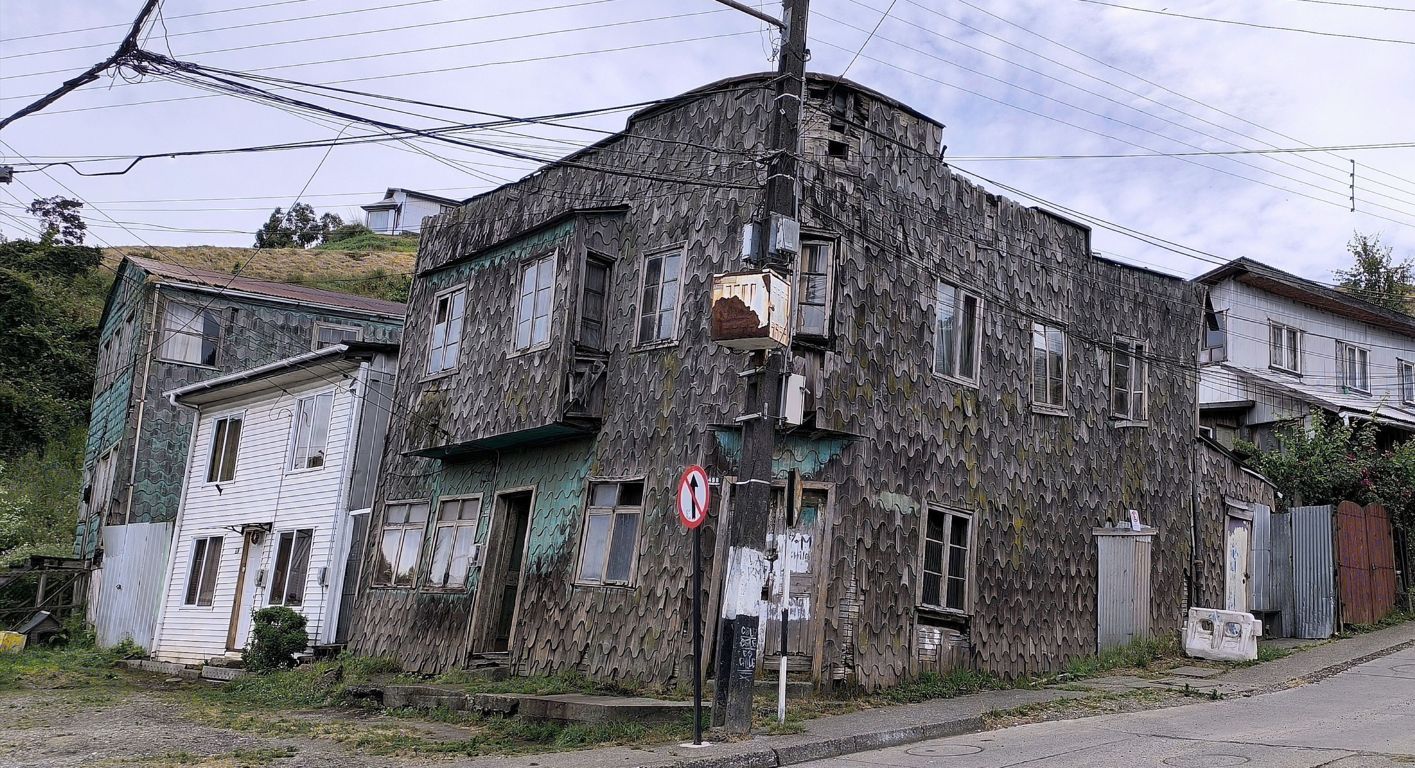
And an example of an old wooden shingles house.
And as we walk the streets of Castro; we feel Chiloé mythology underfoot, and Christianity above.
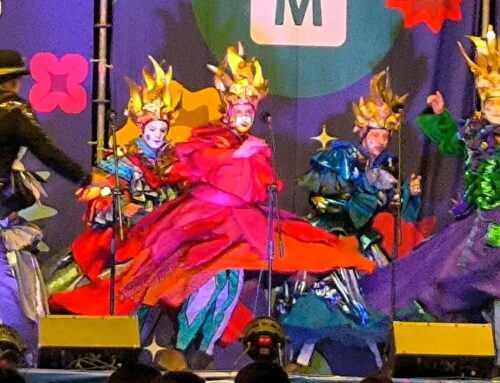
Here are some of the mystical characters ….
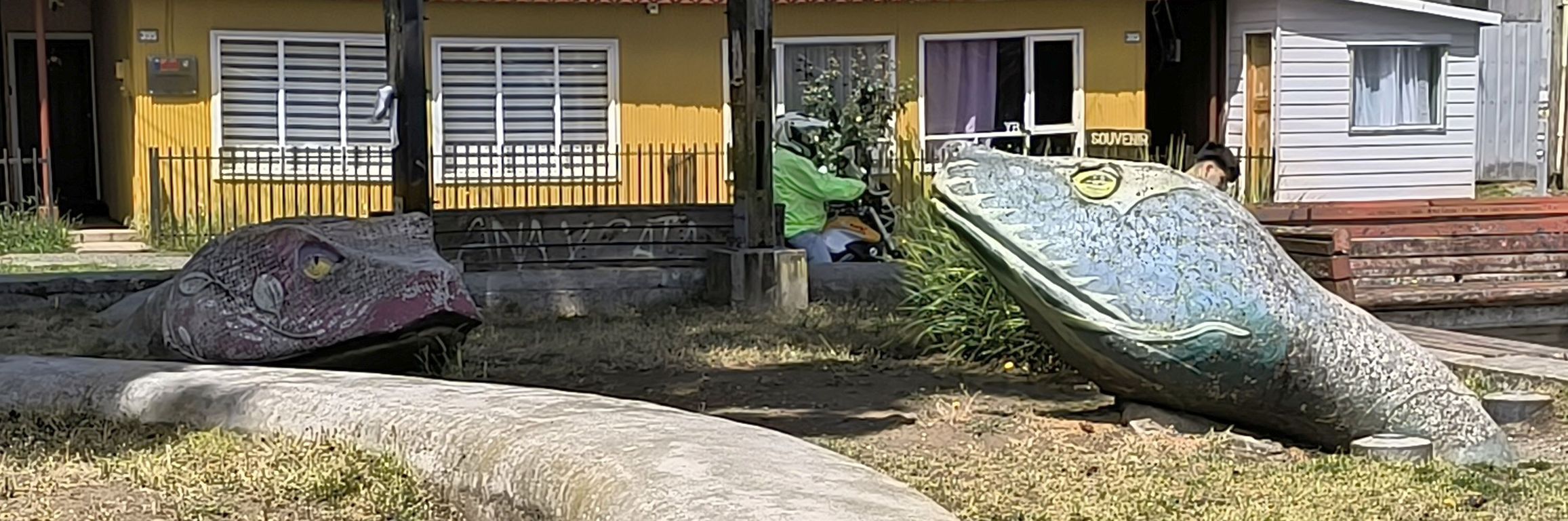
First up, are two Serpents. They are Caicai and Tenten. Caicai, the Serpent Spirit of the Sea, is furious with humanity and summons a great flood to punish the people. But his rival, Tenten, Guardian of the Land, lifts the hills and mountains to protect them. This epic struggle tears and scatters into today’s Chiloé archipelago.

Here one slithers again.
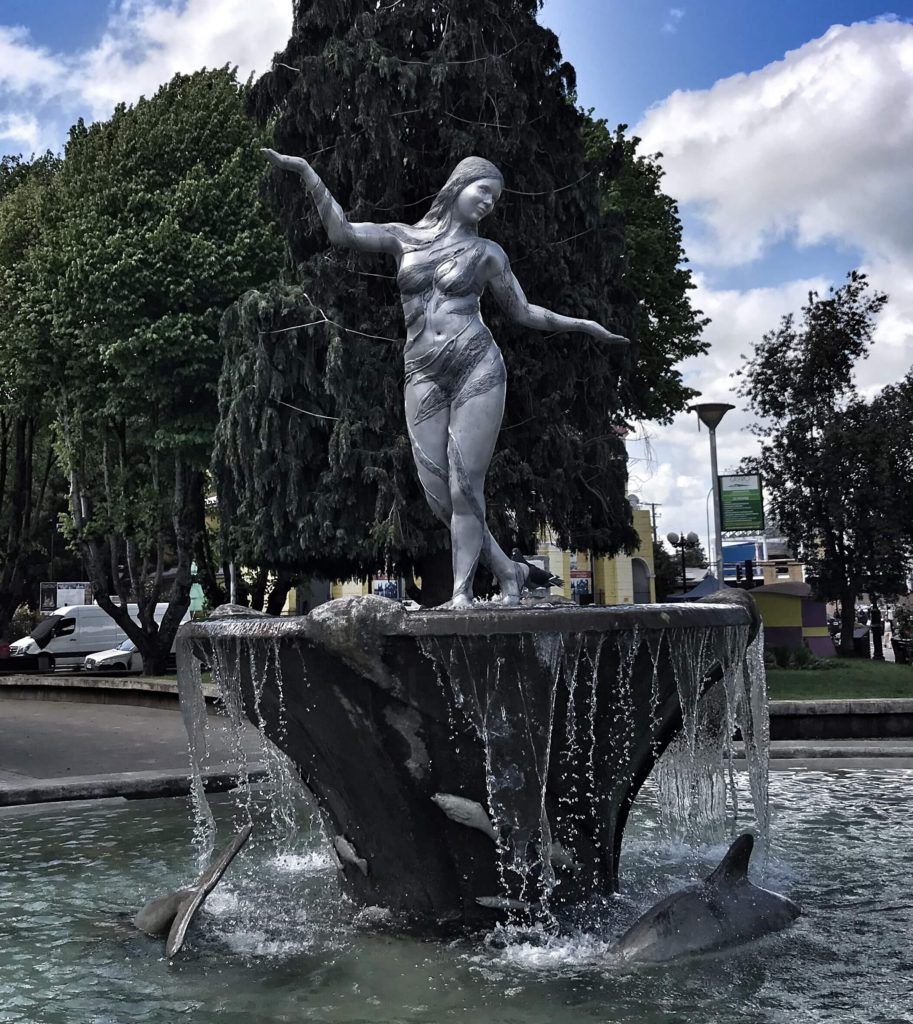
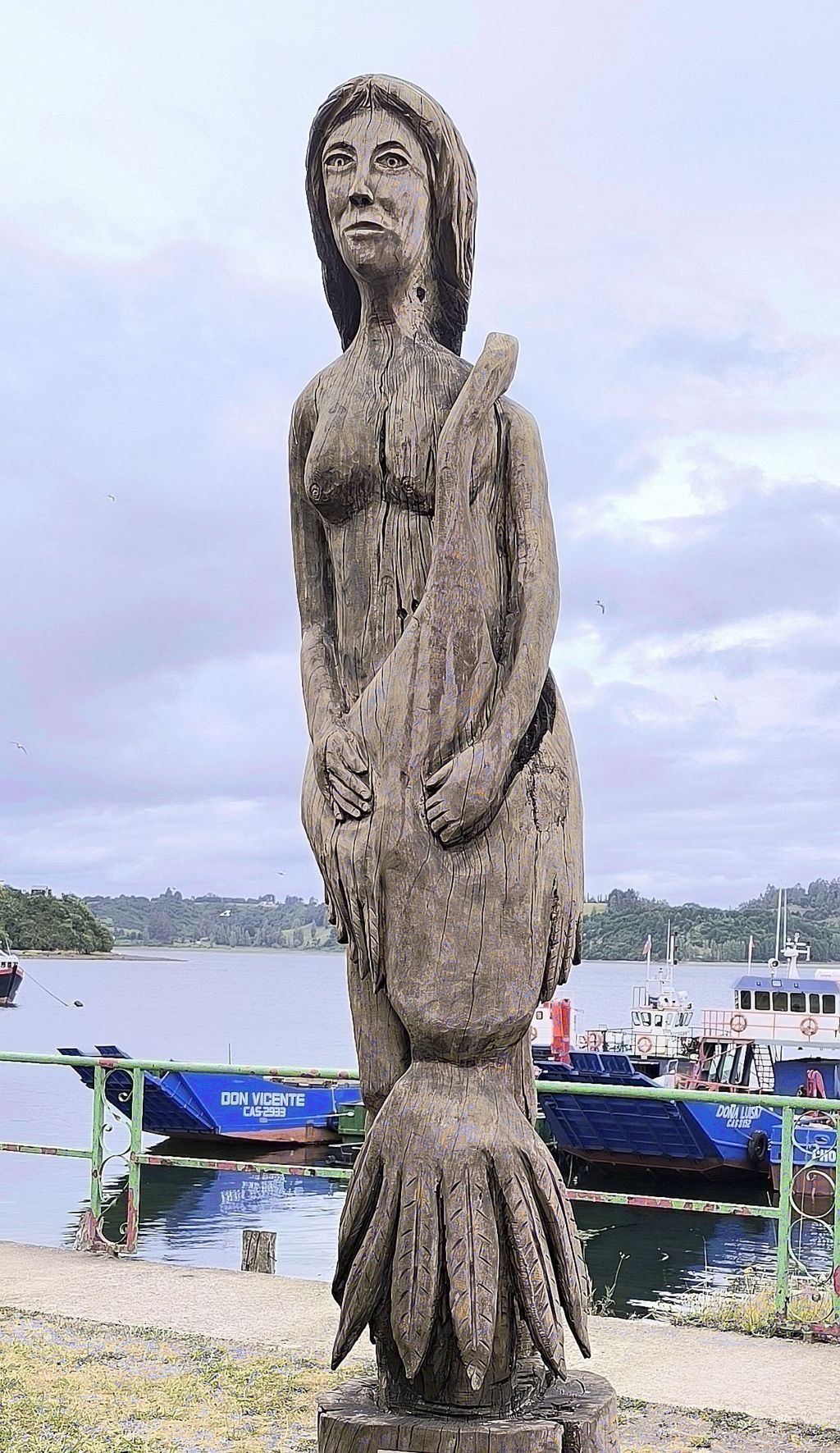
This is La Pincoya, daughter of the Sea King and a human woman. She emerges from the waves to dance barefoot on the sand. If she faces the sea the ocean will be generous. If she turns her back to the sea the fish will be impossible to find!
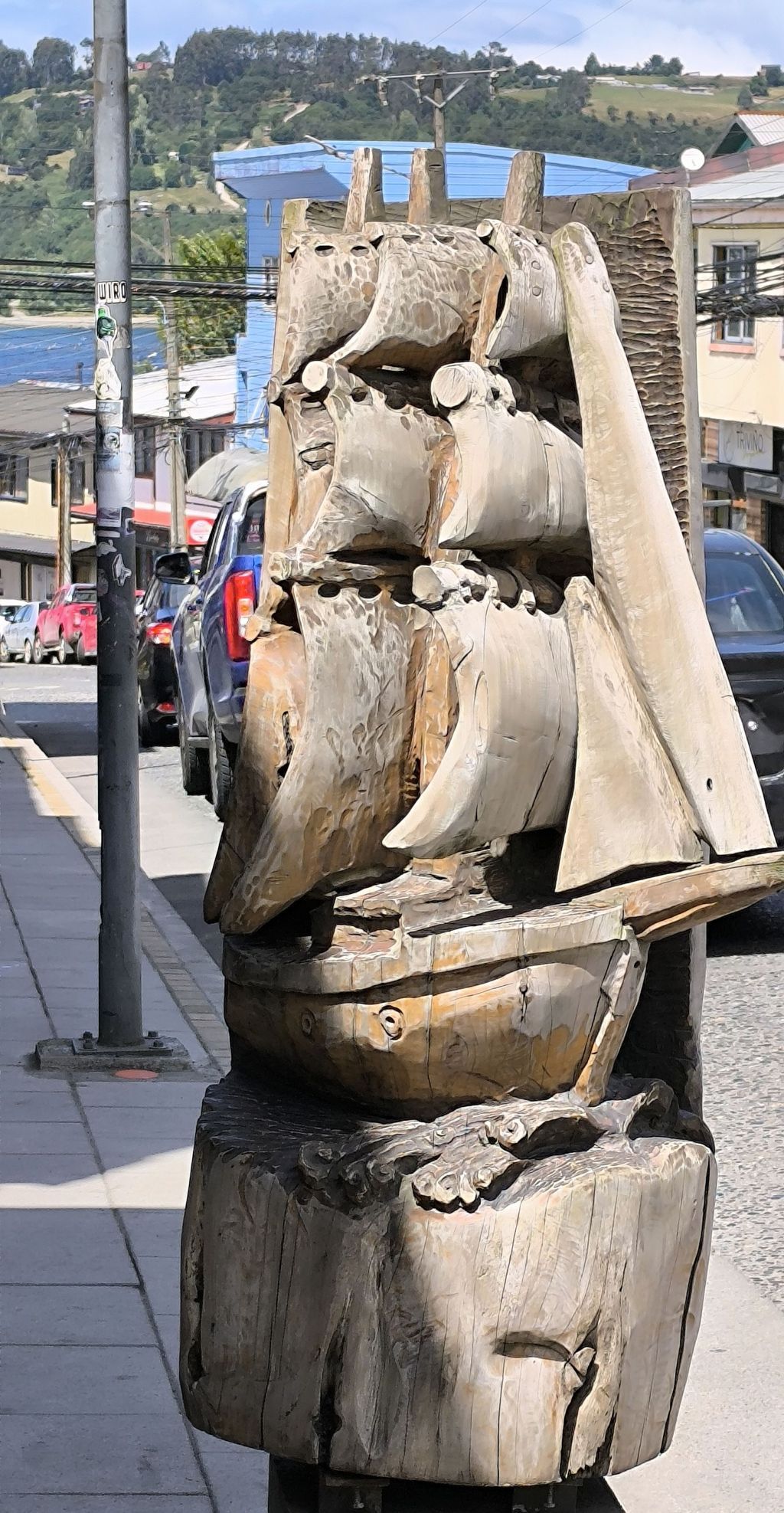
Ah, then there is El Caleuche, a ghost ship with the crew made up of drowned sailors. On stormy nights, even today, some claim to see El Caleuche’s eerie light dance across the waves. It’s a chilling reminder of the sea’s eternal power.

Fiura dresses in moss and has a foul breath. She’s a twisted forest witch with a wicked temper and a taste for single men. She lures them in, seduces them and leaves them deranged to wander the woods forever.
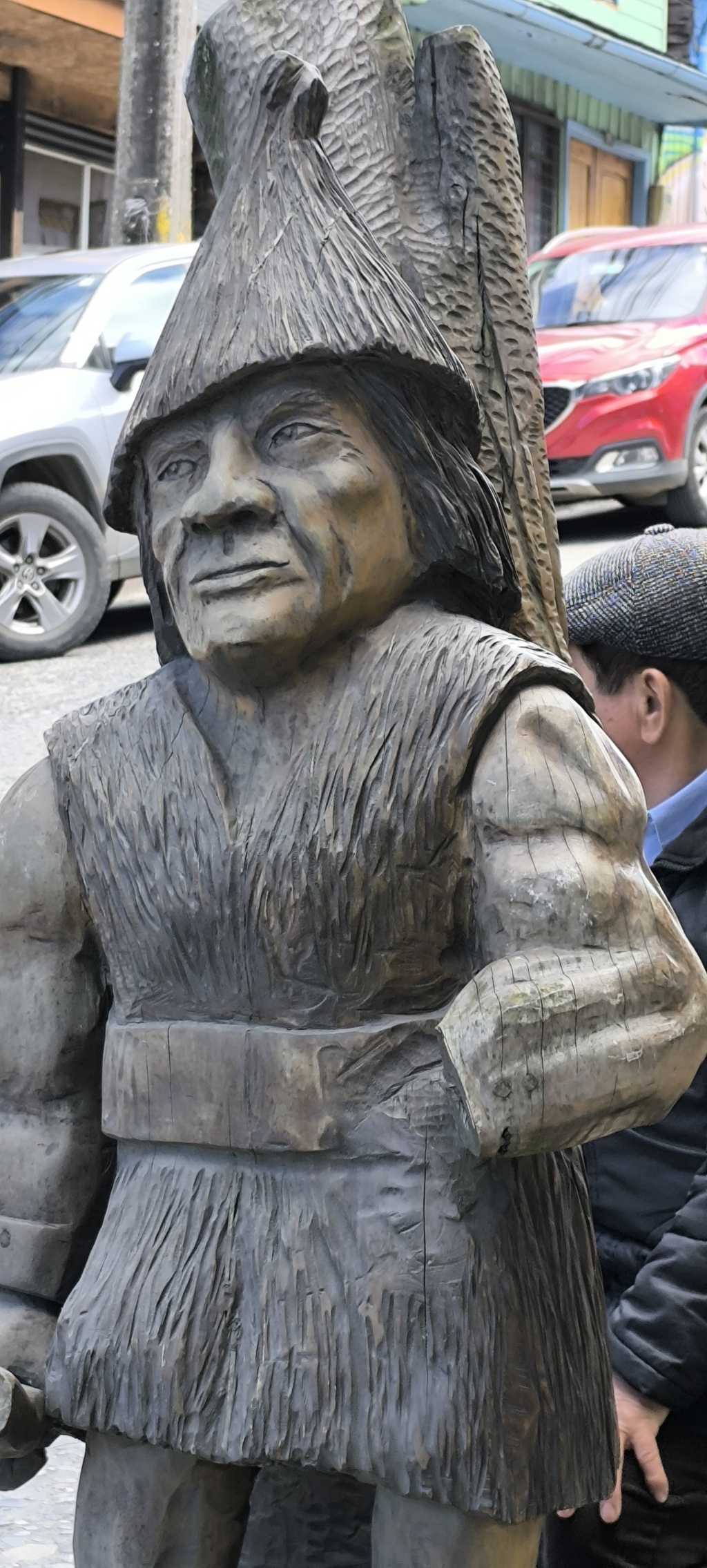
Then there’s Trauco, Fiura’s husband, with the same stunted height and grotesque features. This twisted dwarf possesses the power to seduce young women. With just a look or a breath, he leaves them spellbound. According to legend, women who disappear and later turn up pregnant; it’s Trauco. Of course, a convenient supernatural explanation for unexpected pregnancies on Chiloé!
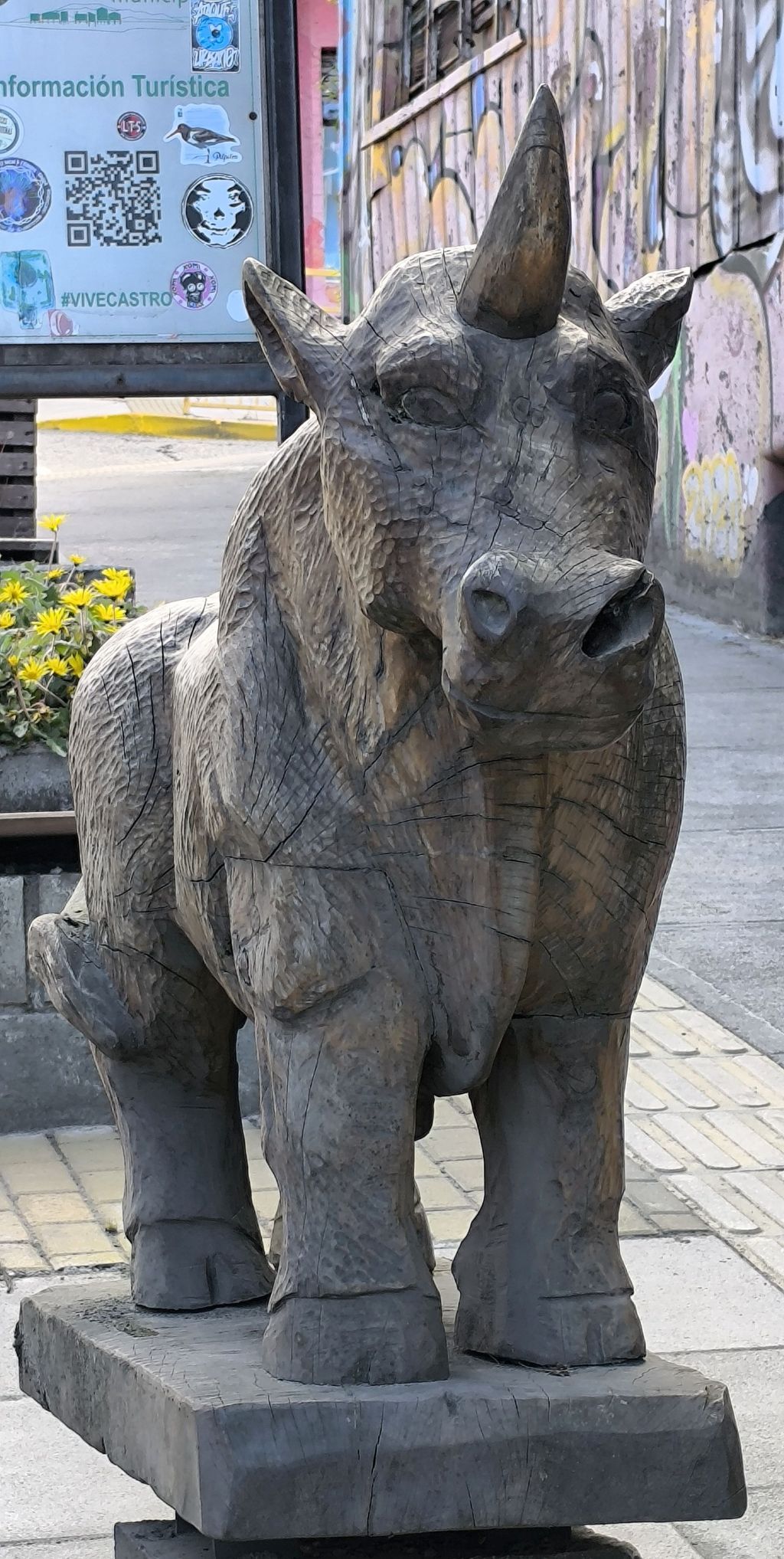
Camahuetos are calves with single golden horns. They are eternally desperate to reach the sea. And on stormy nights, as they attempt to get there, they destroy everything in their weather-beaten paths.
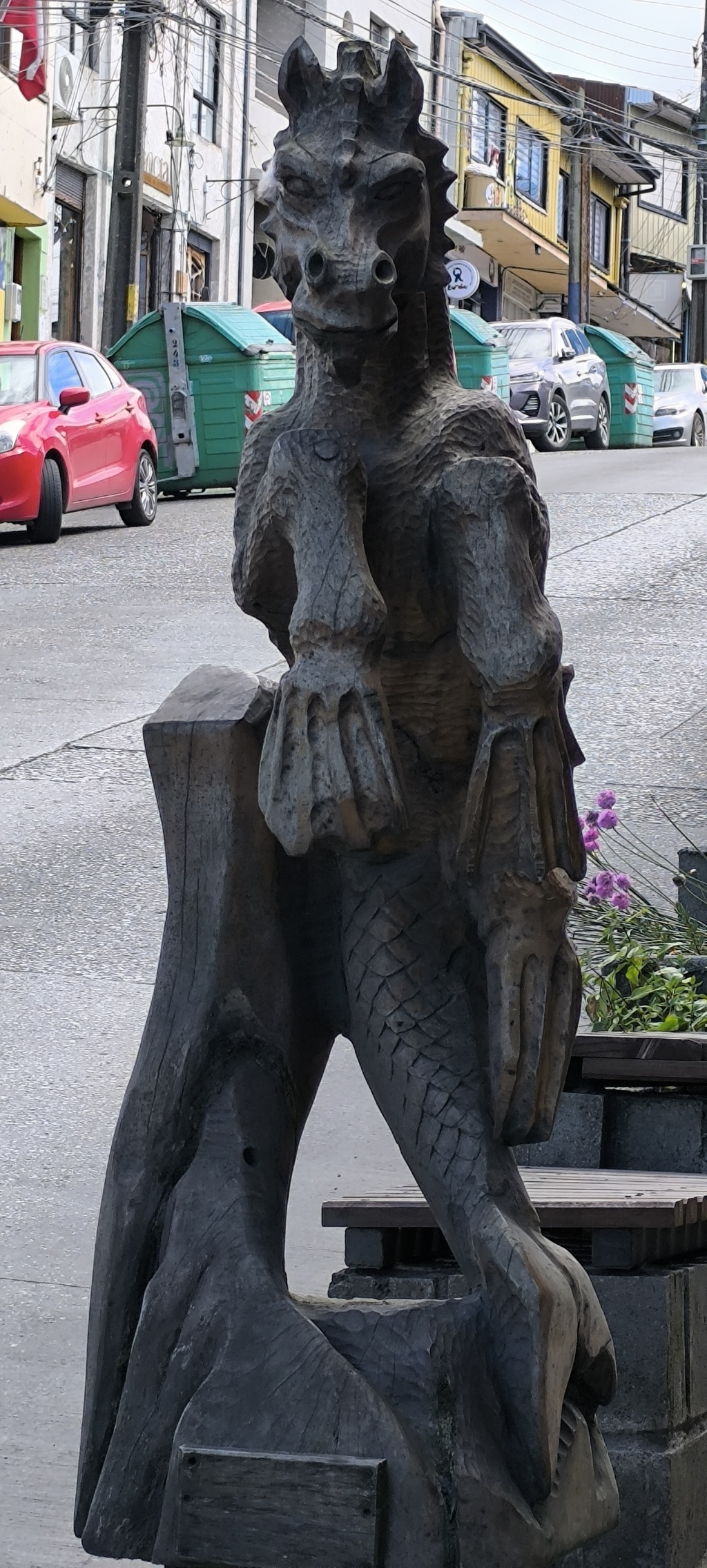
Caballo Marino is a sea horse. It has a golden mane and a long tail like a fish. Only Brujos (male witches) are able to see them. The Brujos then catch, tame and ride them to the Ghost Ship, El Calueche.

Invulche terrifies. Brujos (male witches) steal and mutilate this child. They disjoint his hands, arms, legs, and feet. His head is twisted to face backwards. His right arm they stitch into his right shoulder. Invulche can’t speak but guards the entrance to the Brujos’ secret cave. That’s more than enough to make any child behave!

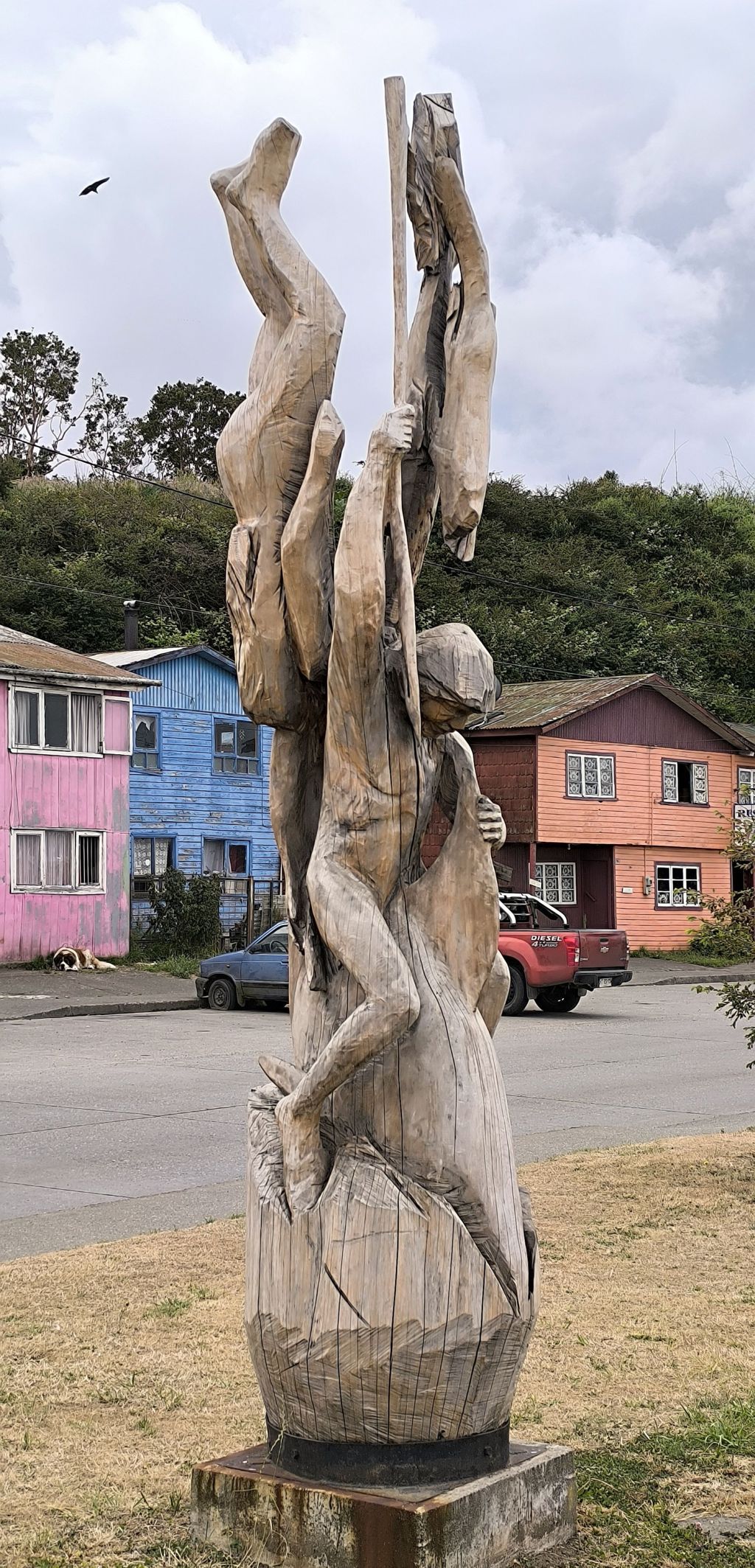
And we spot many other creative myths all around the place ….
…
…

…
We venture further afield and visit 7 of the 16 WHS churches. And as we ride the island; we feel Chiloé mythology underfoot, and Christianity above.
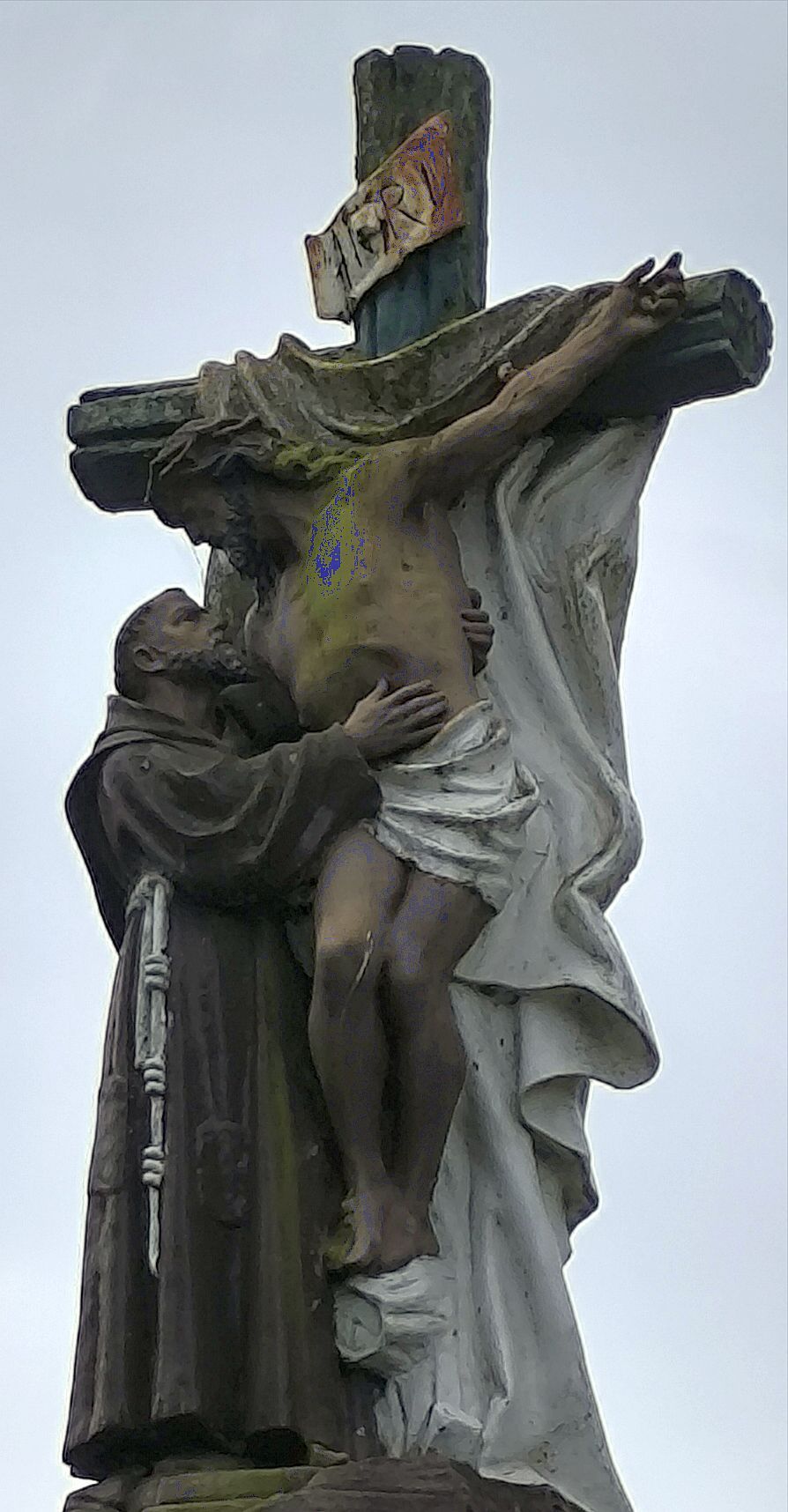
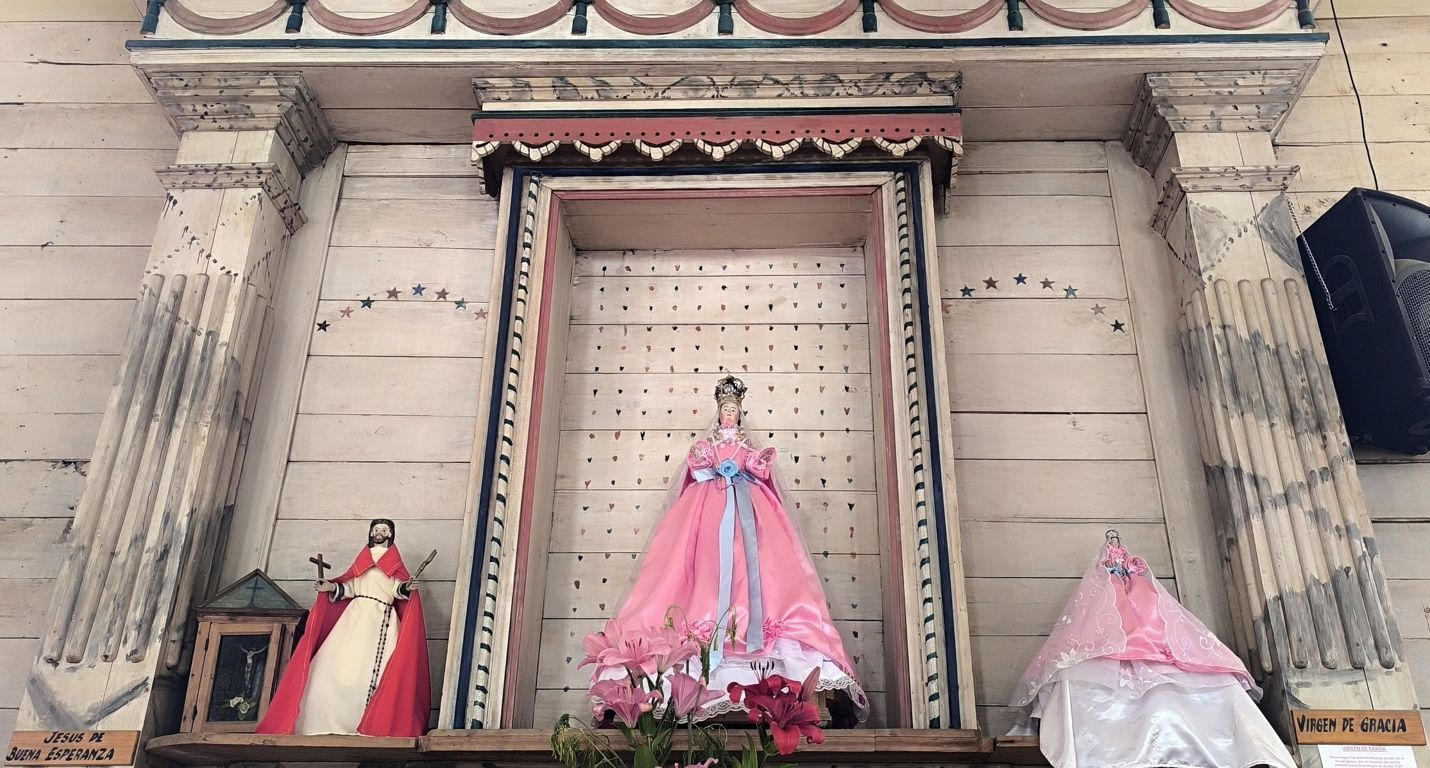
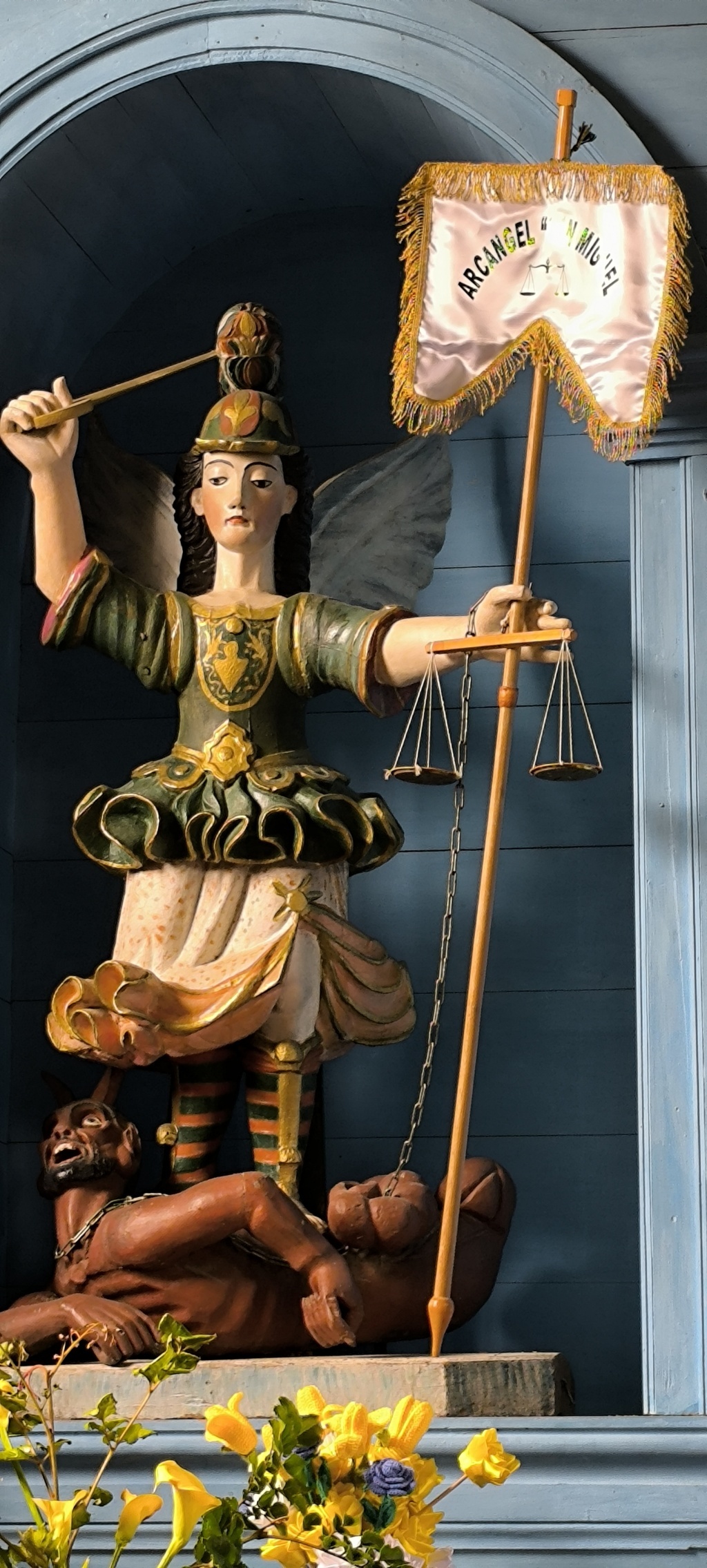
Here are some of the many photos we took of the Churches …

This chart shows the 16 churches that have been awarded WHS status. Today, including these, there are more than 60 churches still standing in Chiloe.


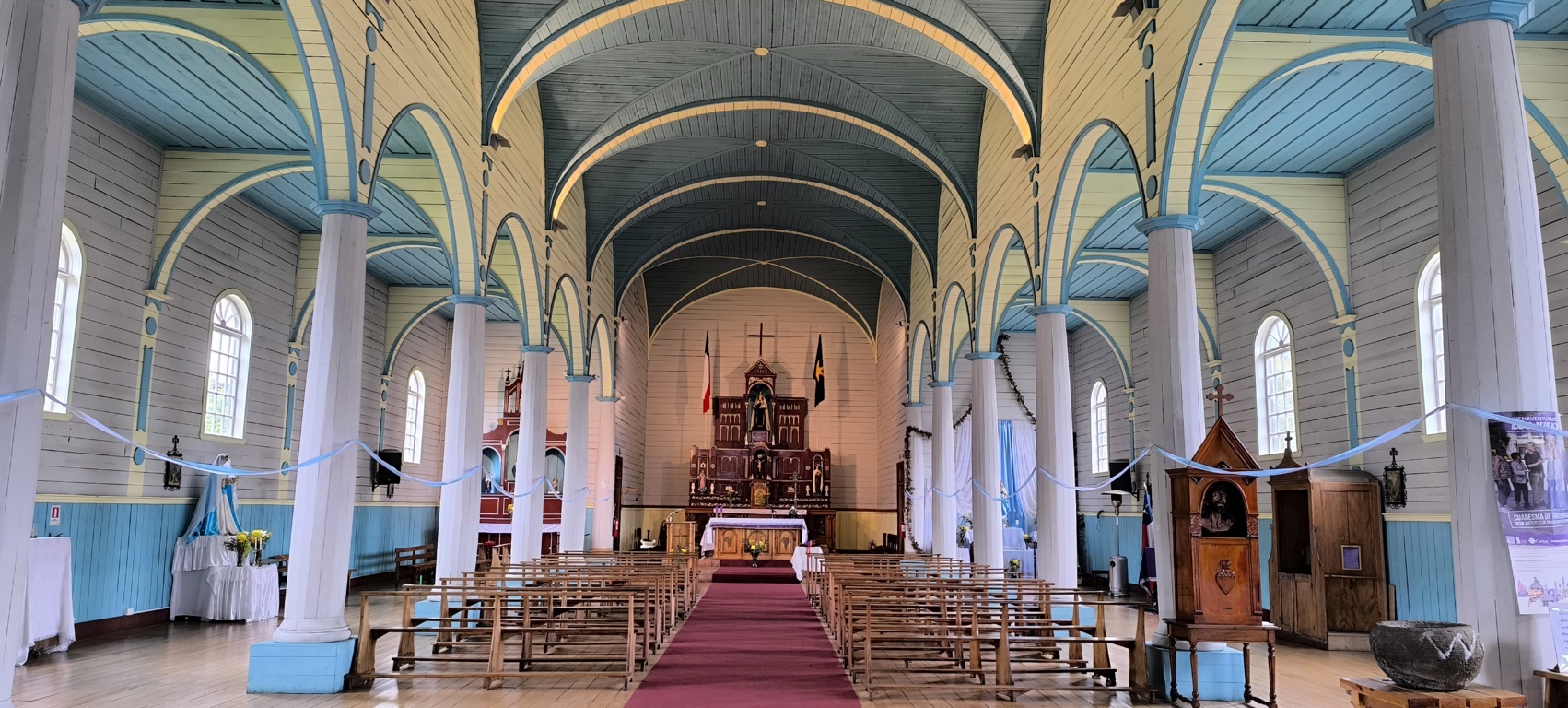

An example of the joinery work used in these churches. No metal bits and pieces.
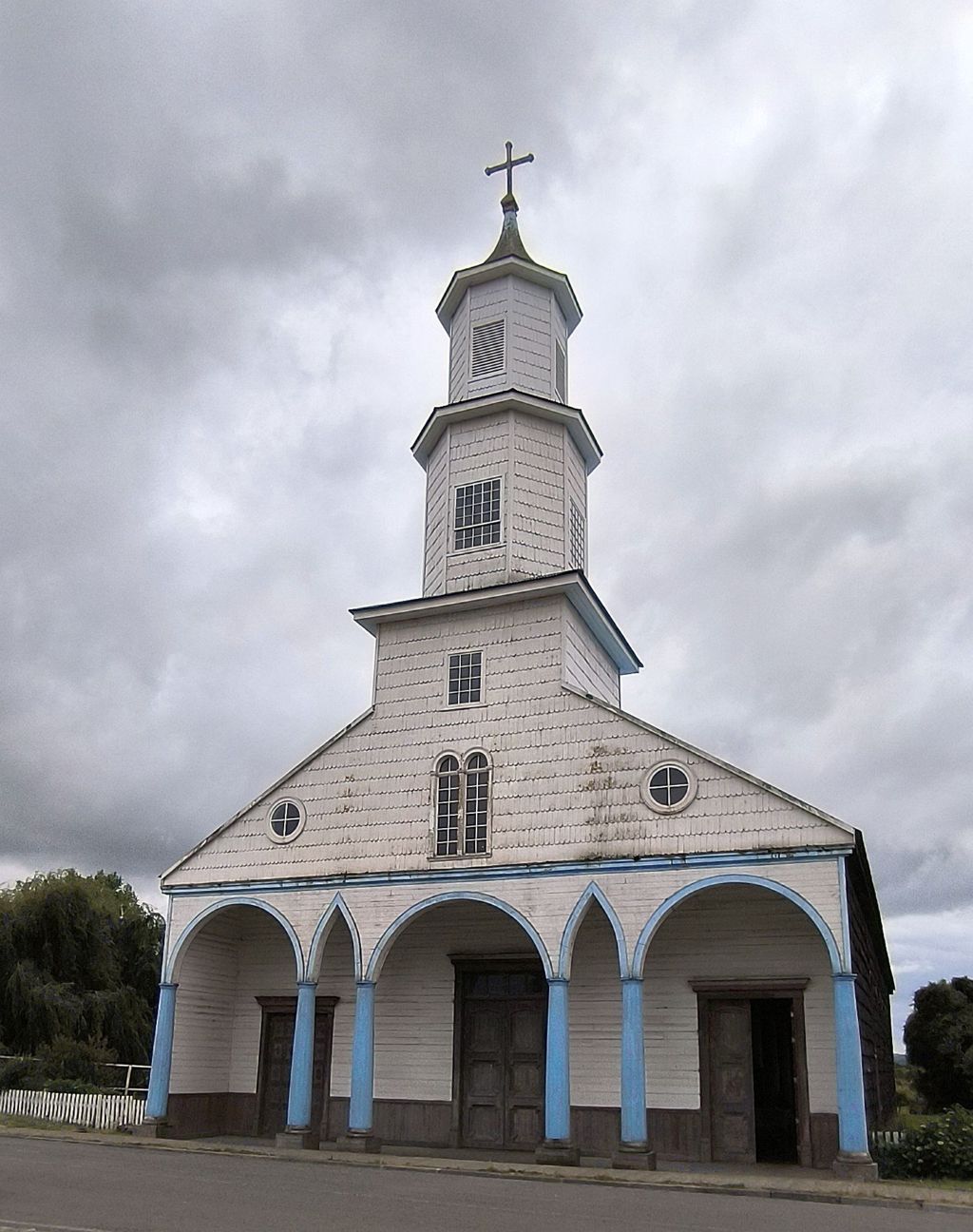
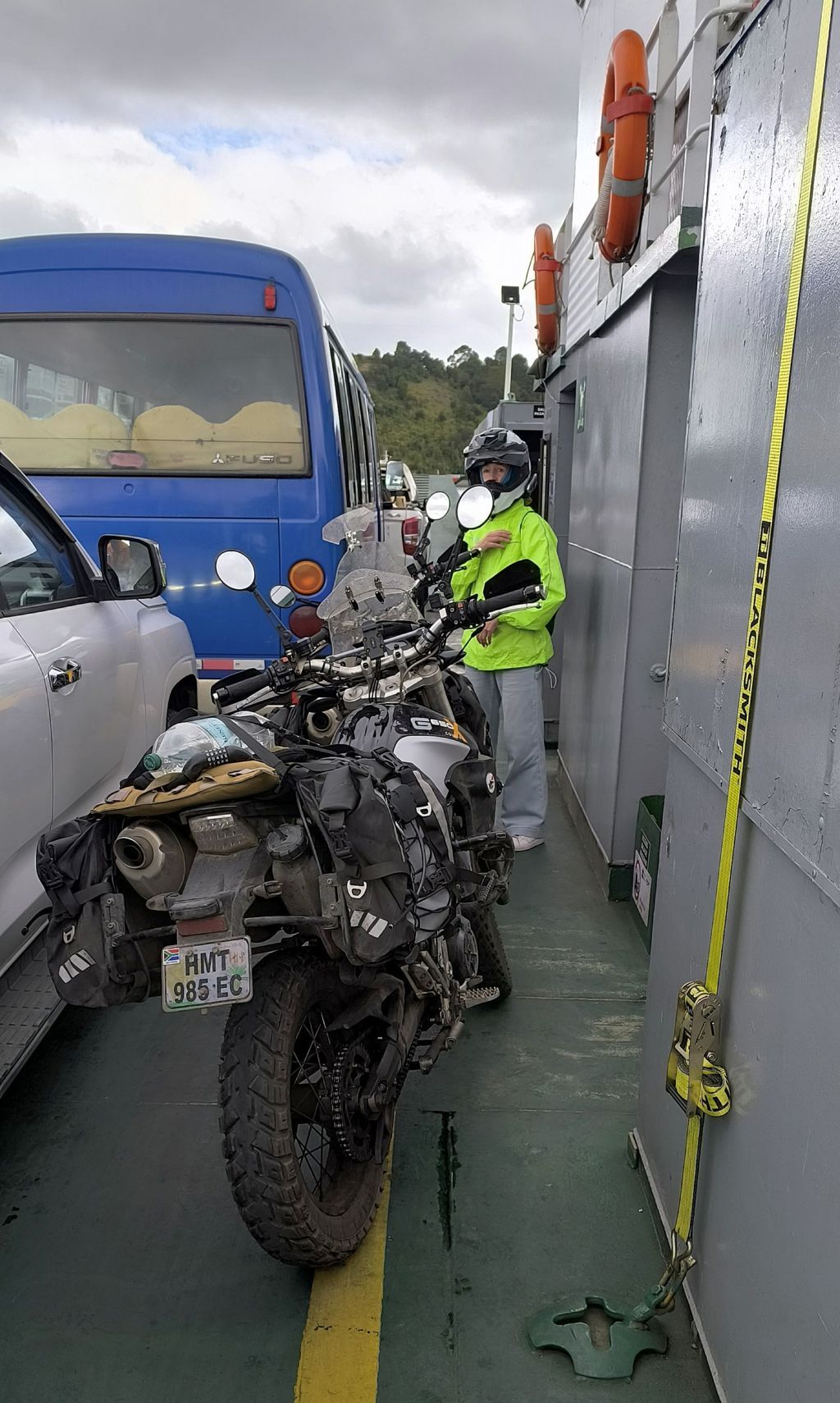
And here we take a ferry to another island in the archipelago to visit slightly more remote churches.
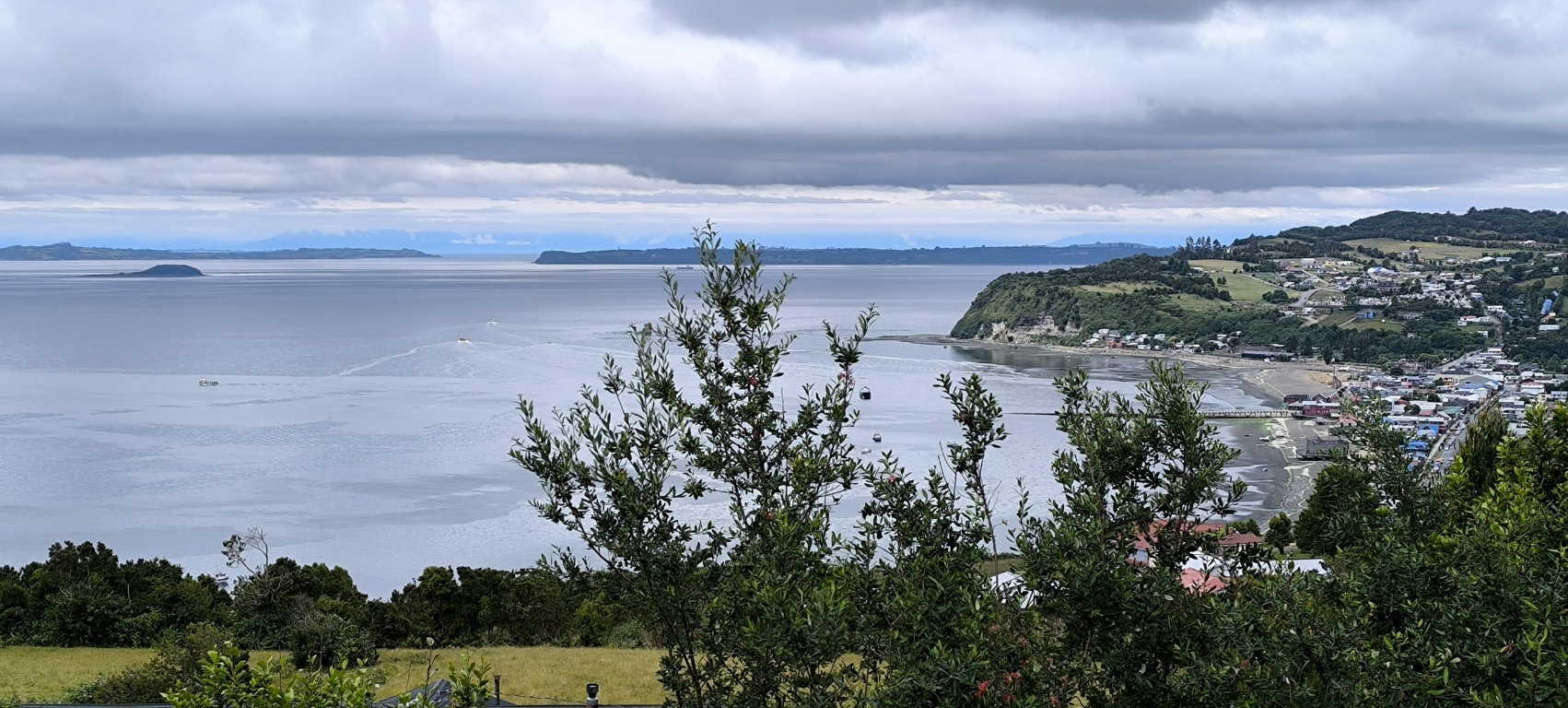
Breathtakingly beautiful on this good weather day.

What a ceiling!

The Islanders are master boat builders. This illustrates how the technology for a boat hull is used for the construction of church roofs.


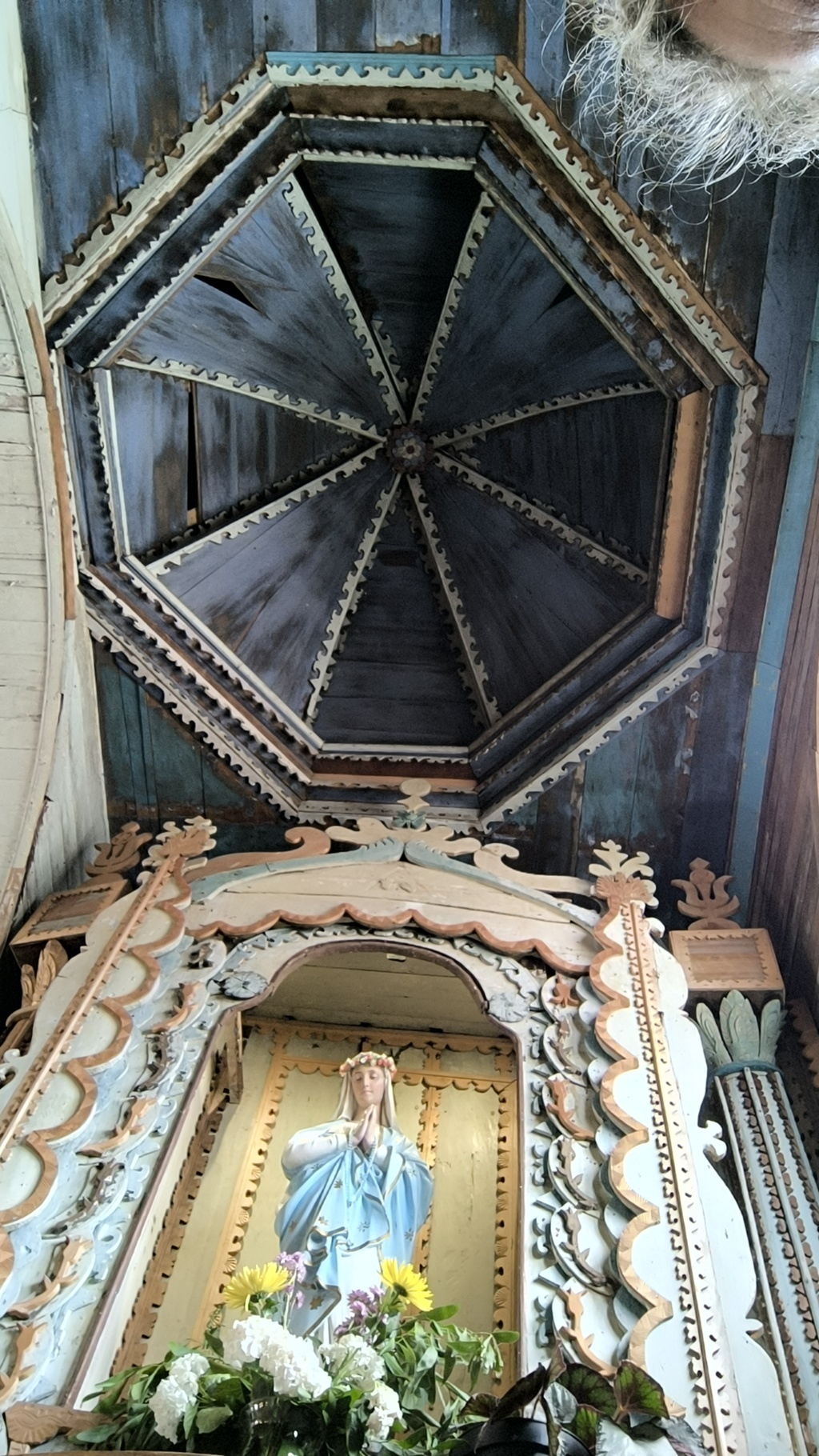
Spot the mop of Harry’s hair …
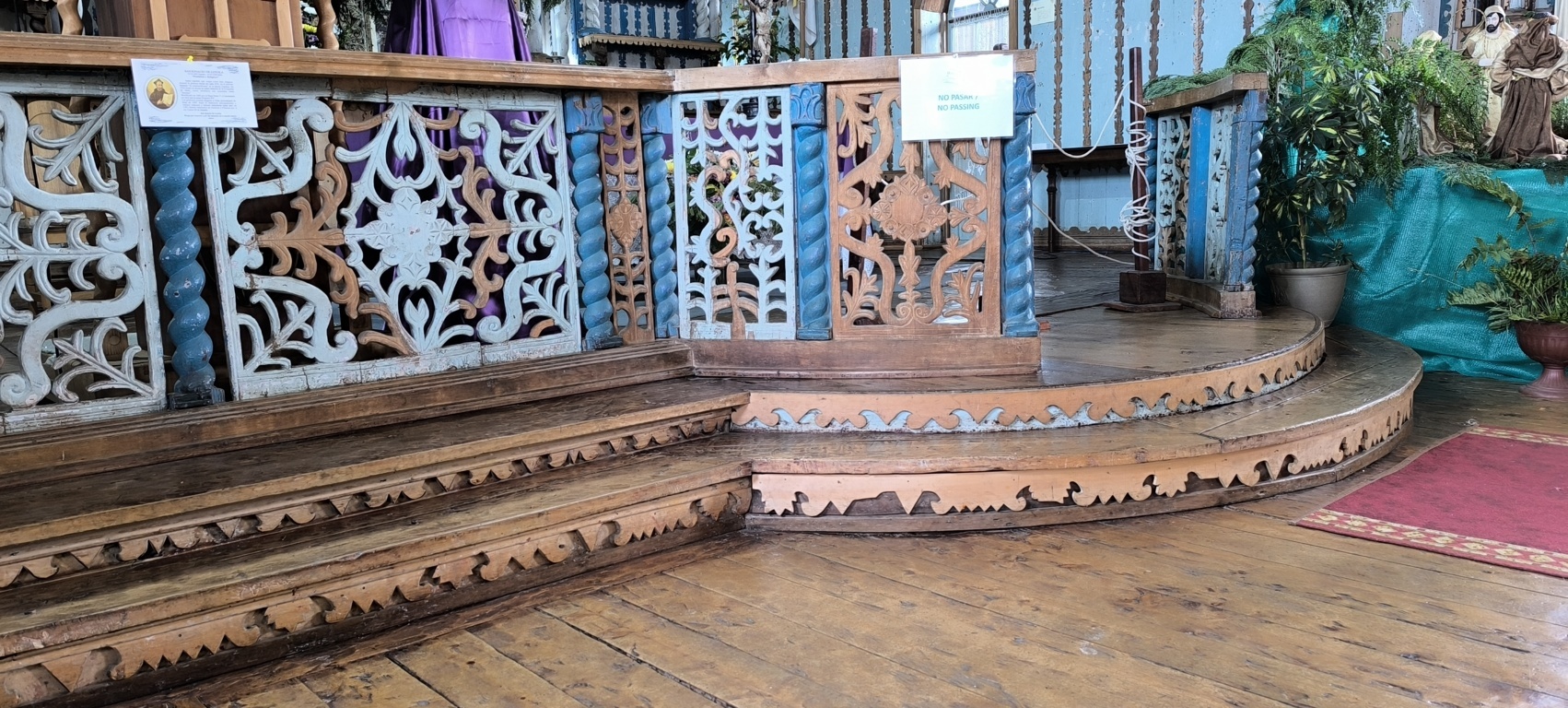
Beautifully crafted local designs.
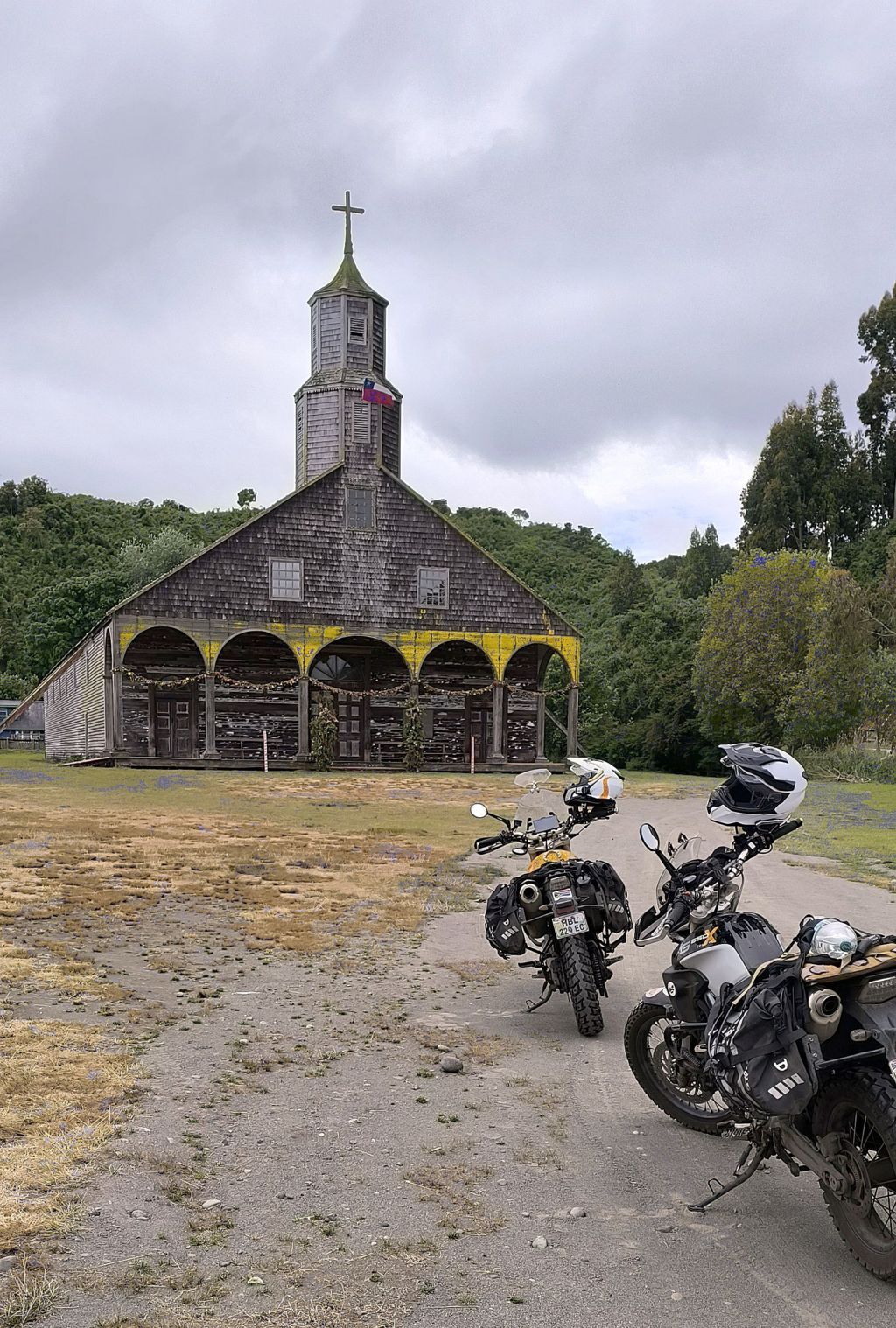

But slowly a deeper story reveals itself to us. Yes, these islanders weave fear, faith, and folklore into meaning. Creatures and legends are fantastical. Churches are living, glorious structures to Christianity. Real histories and emotions give birth to both. They shape the survival strategies of the Chiloé people. Who live at the edge of a very wild and unpredictable world. A world some call a ‘miserable hole’.
A miserable hole? Hardly!
Chiloé Island, you and your residents take us down the most enthralling rabbit hole …
Thank you!

On the streets ….

… and on the walkways, you, Chiloeans are …

…. expressing yourselves in utterly unique ways ….
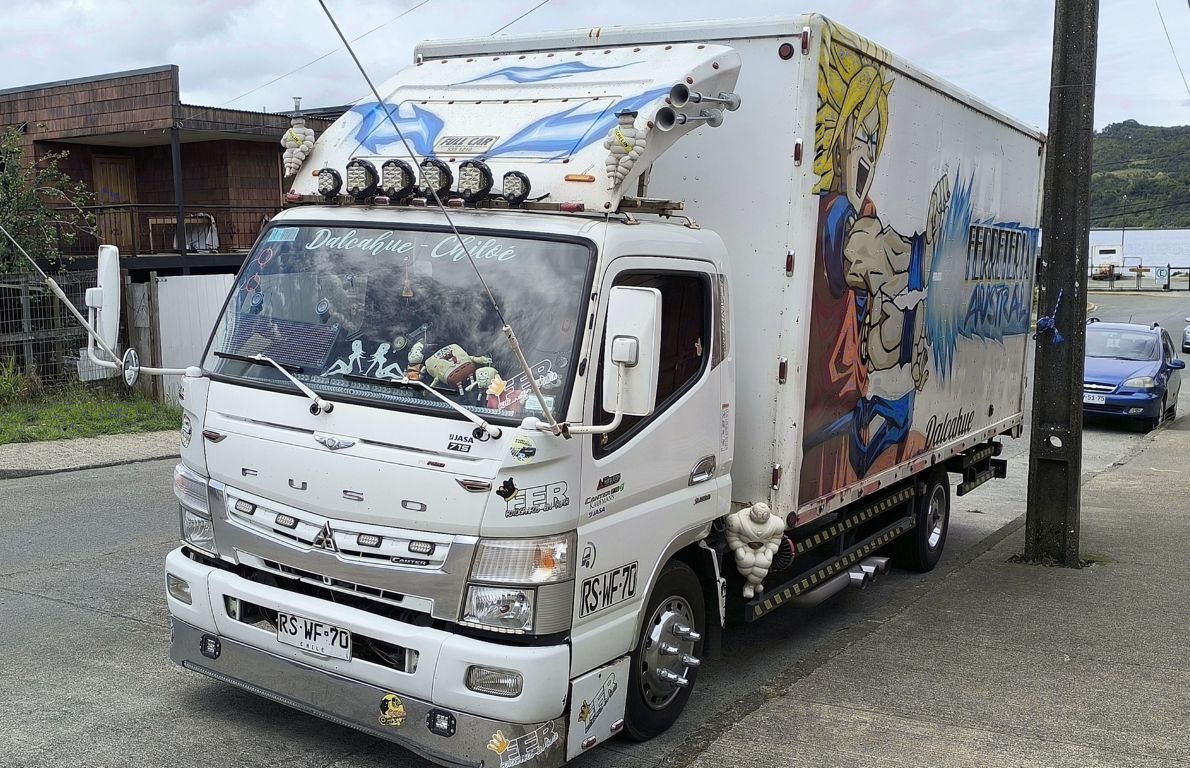
… even on both sides of the same truck!
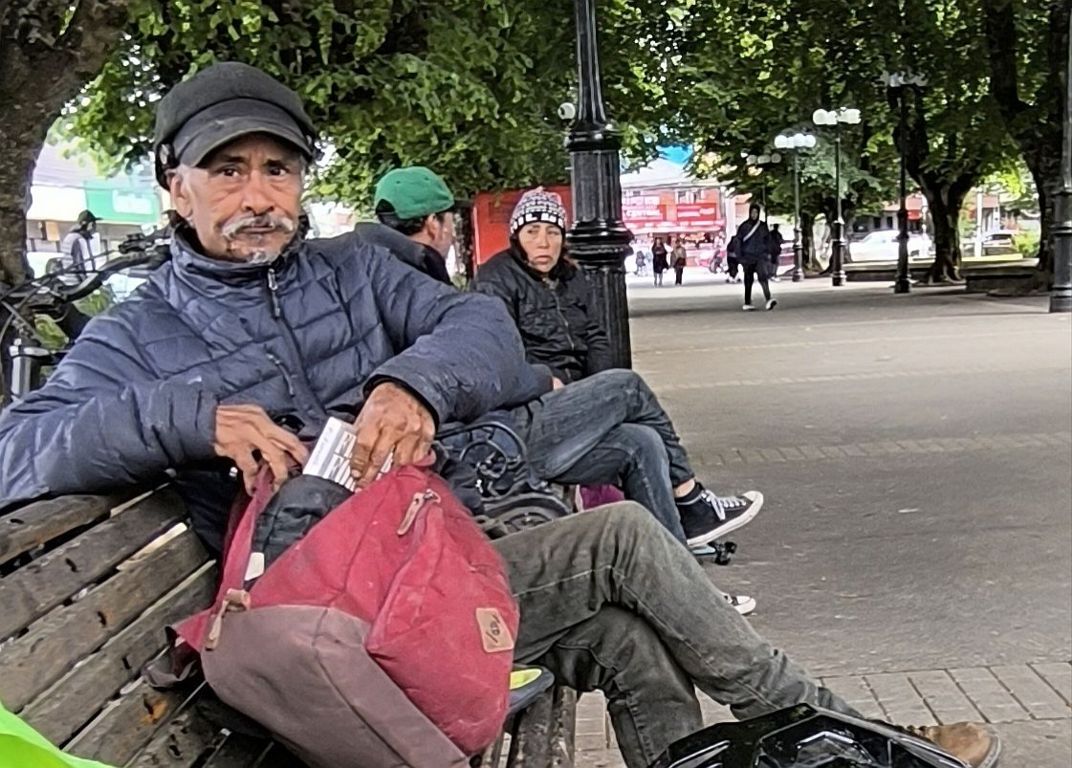
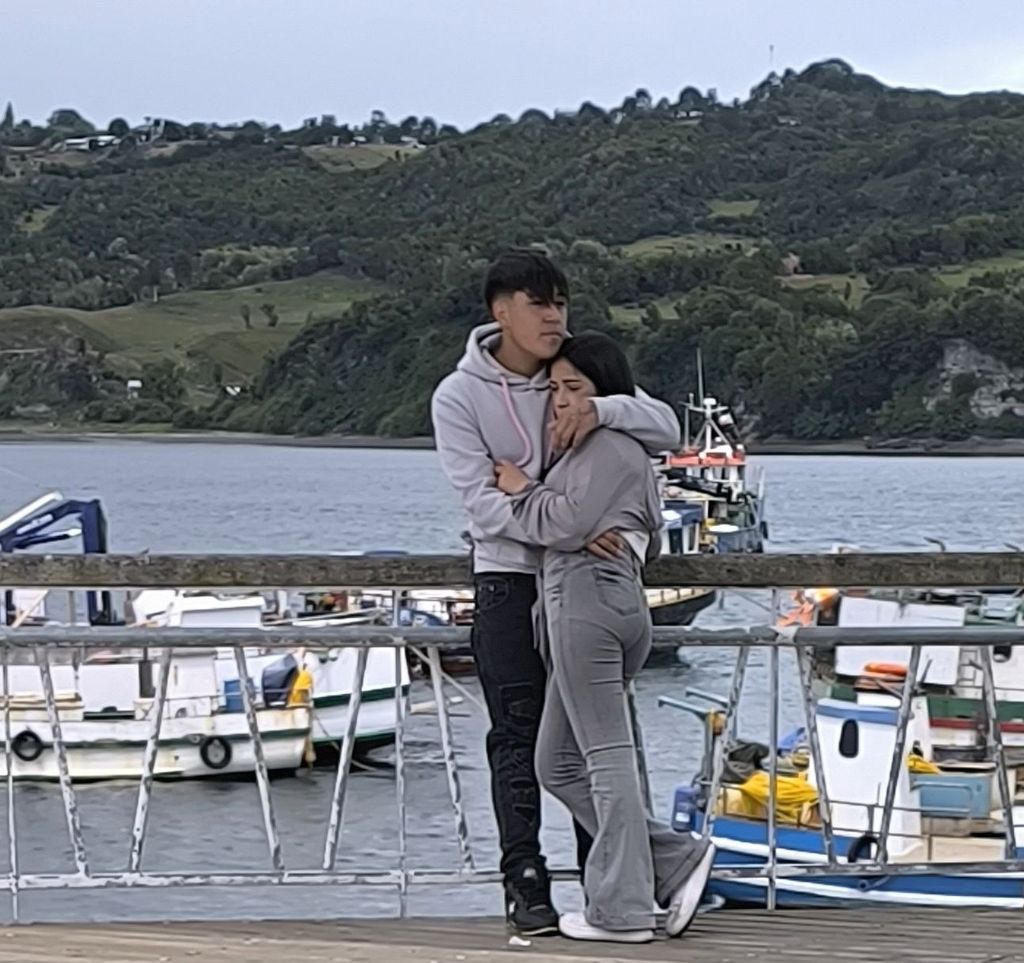
We enjoy spending afternoons with Chiloeans in parks …

…
…
…
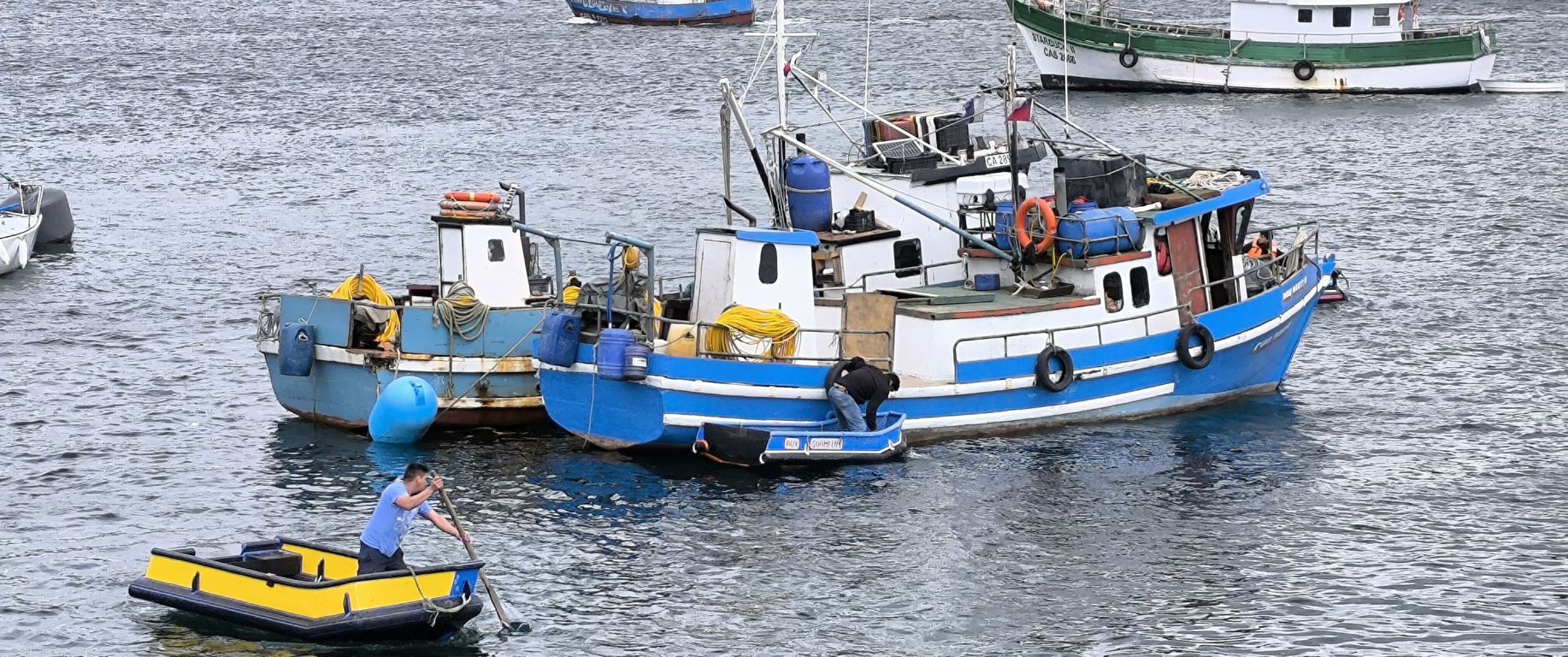
But are constantly aware that Chiloeans are an extremely hard working fishing community.

The Island’s traditional dish is ‘Curanto’. I’m allergic to shellfish so Harry took one for the team.

A fishing net of clams, mussels, with a piece of pork, chicken, and sausage, served with sloppy potato cakes and a herb broth.
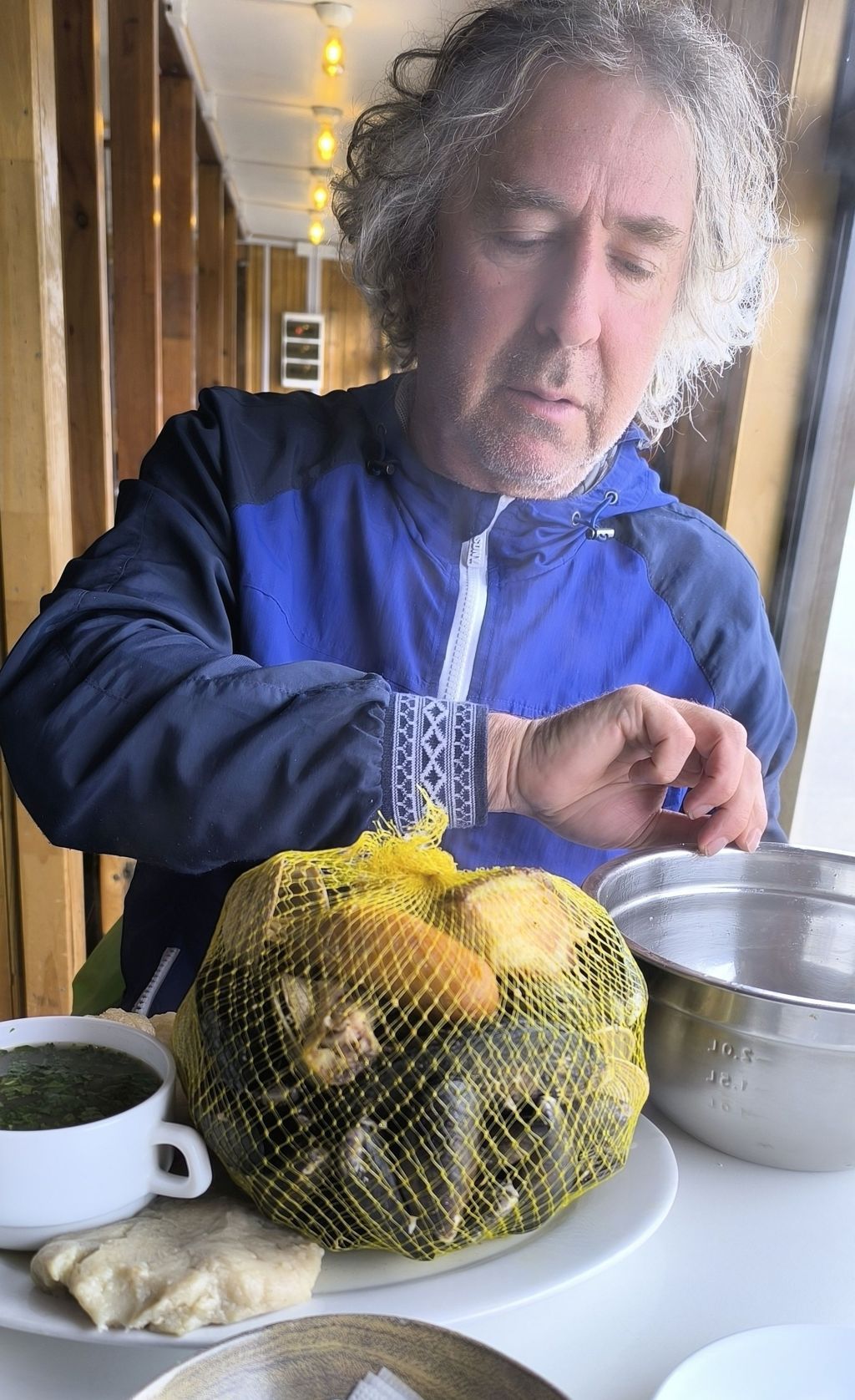
Readily available and affordable ingredients in Chiloe ….
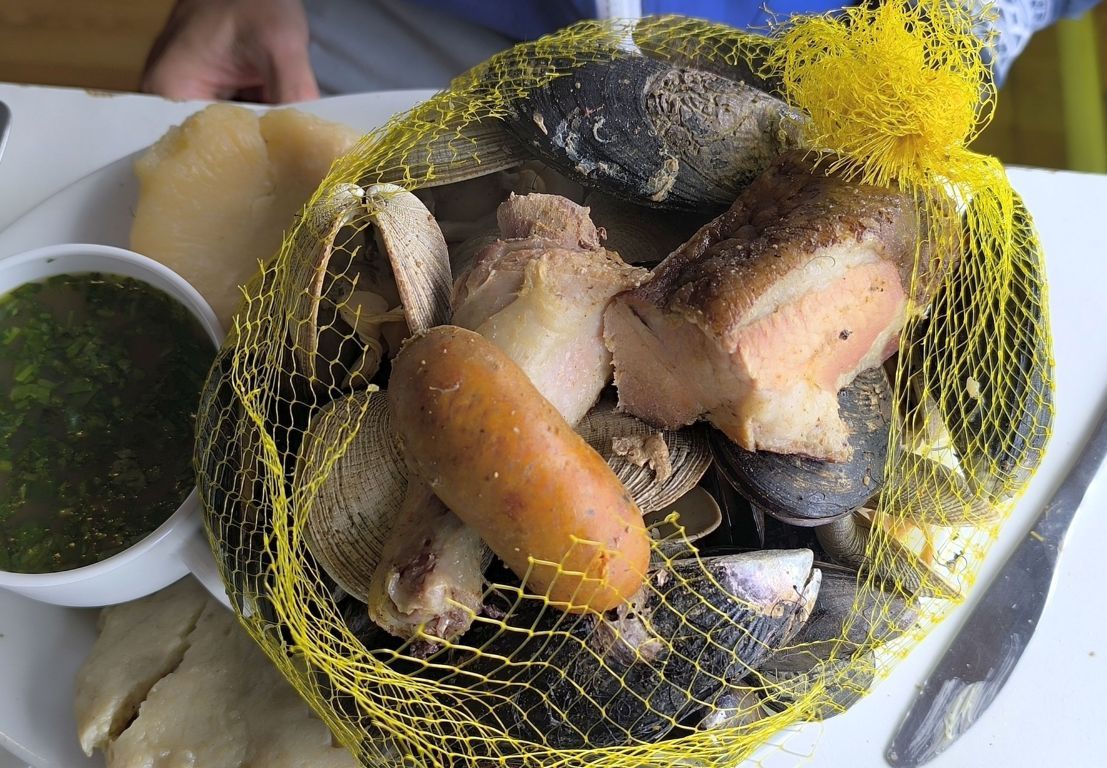
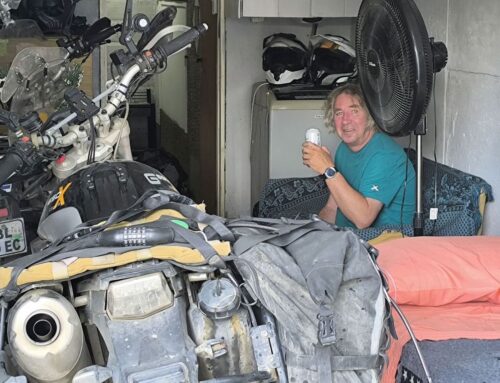
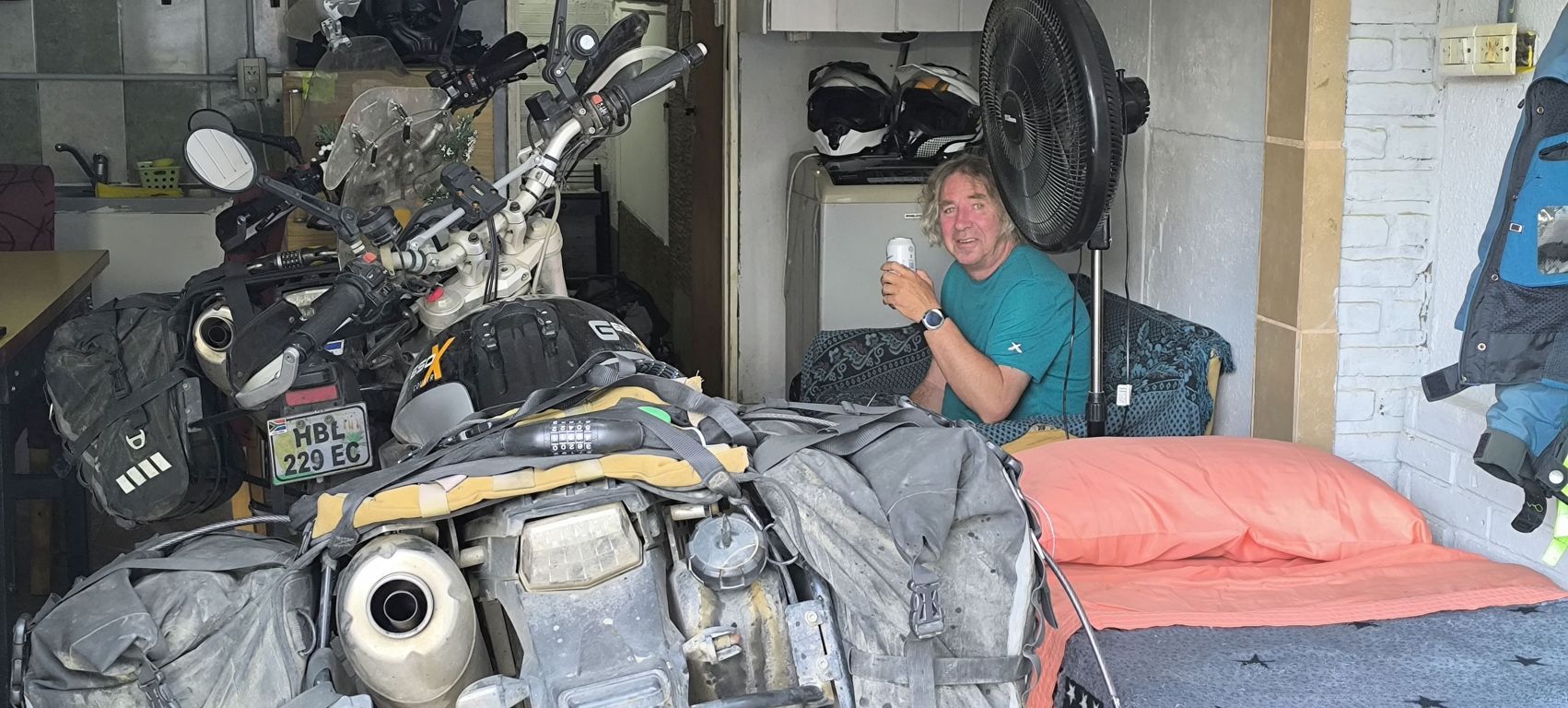
…. which Harry soldiers through ….

While I guiltily enjoy a fantastically ordinary piece of fish.


An amazing place and thanks for the insights. Especially the marriage of traditional and Christian beliefs…so often the reverse. Harry , you don’t look so sure about that Curanto spread :-)
Lekka island hopping and interesting things to see. Enoy . Lucky Harry to get all the seafood. Take care.
I never realised that there are all those islands there. Also didn’t think it would be so desolate and harsh a climate especially with the islands kind of protecting each other. Interesting the pressures that make people migrate to less than ideal places. Thanks you two for widening our horizons.
What a journey you have been on , what a journey you have taken us stay-at-homies on. Thankyou for sharing a little of your amazing experience. You two really get into the heart and soul of the places which you visit. I love what you share thankyou again.
Having read through this I feel transported to fairy tales of my youth with the accompanying fear and eventual delight.
You have certainly put Darwin to shame on Chiloe Island. Very brave of you Harry to tackle that fish net for the sea.
Amazing WHS churches! Amazing dogs! Amazing Islanders! Amazing history!
Thank you to you two intrepid travellers!
extremely interesting H+L…A vicarious journey of insights xxxx Thank you Gail xxxx