
This story only needs pictures and a few words. So you’ll be spared my ramblings.
It is not a short attention span one though, which seems to be in vogue with social media these days,
Our route home passes through the Patagonia Steppe, a vast space that stretches from the Atlantic to the Pacific coast, encompassing the Andes, a desert, and lakes of glacial origin.
It is an eclectic mix of topography, coupled with a harsh, unforgiving terrain and climate.
Travelling through the Desert
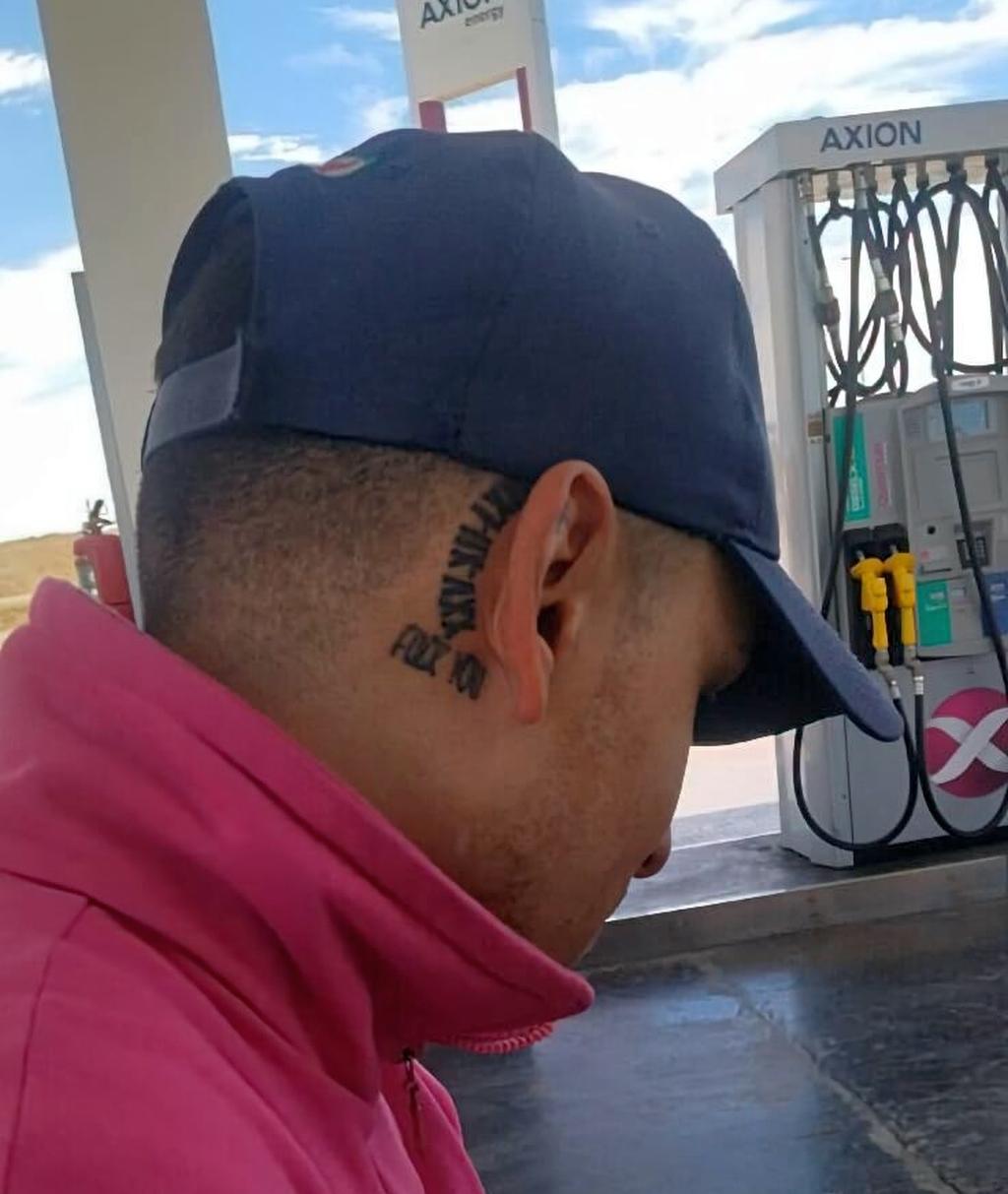
We fill up at Guer Aike, a miserable wind-swept place, & the last bit of life before the Patagonian Desert. His tattoo speaks volumes. We hope this part of the passage is not a FU from nature.
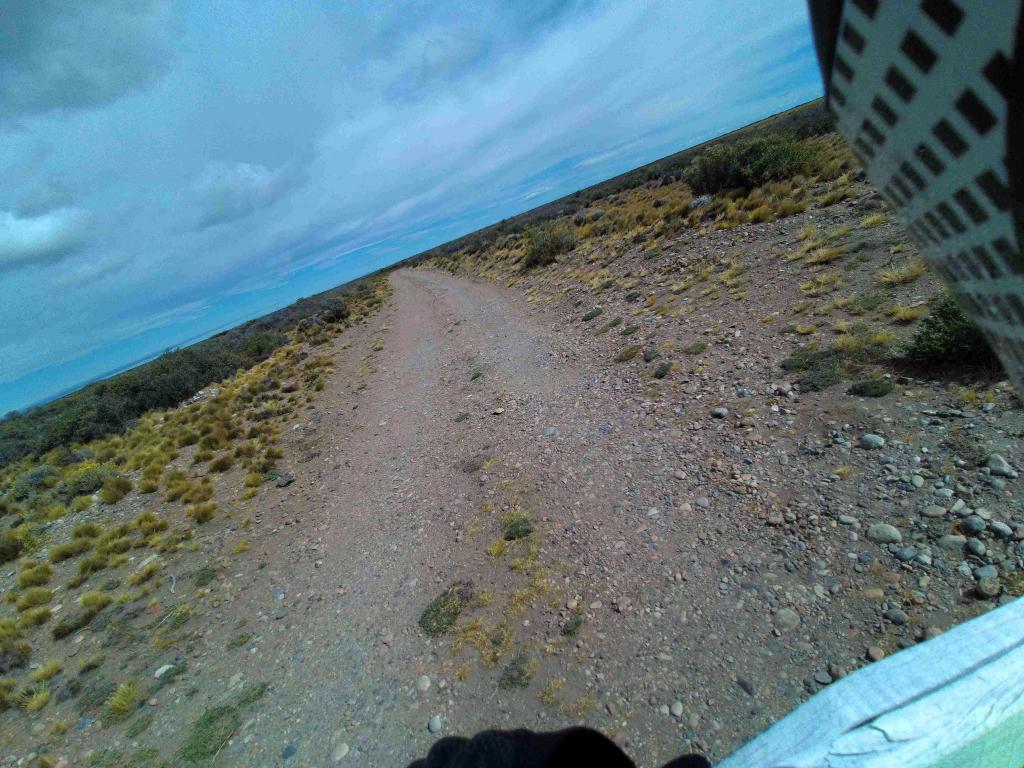
It is days and days of nothing. Not that we are complaining.

Punctuated by the odd gate.
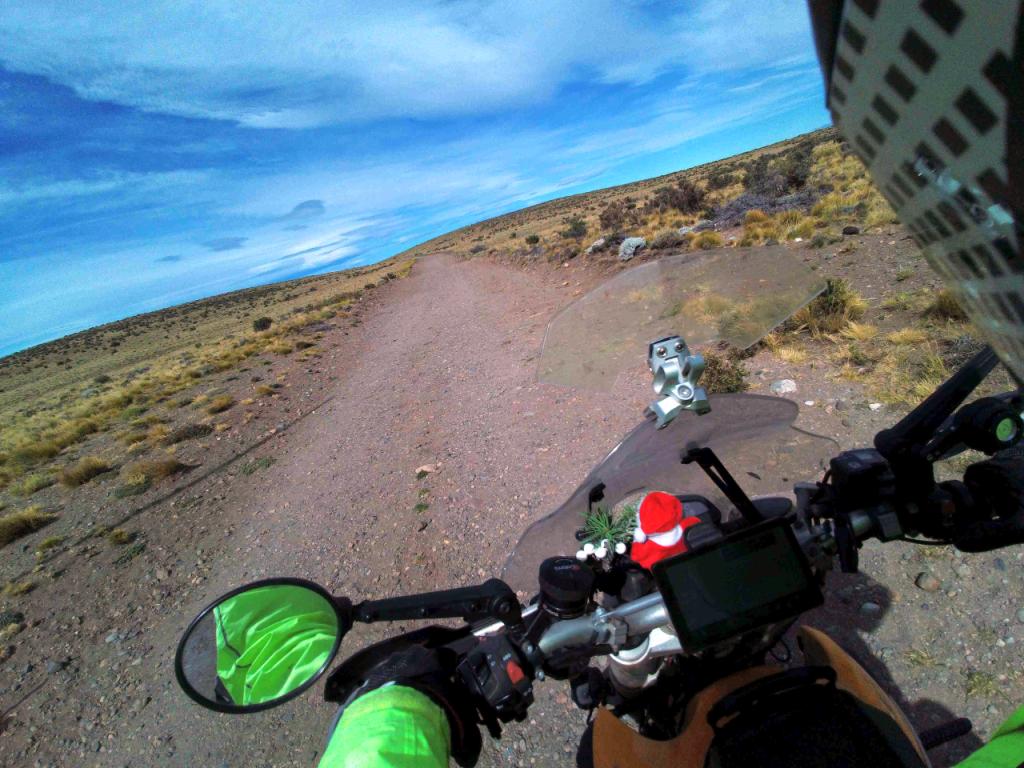
And the odd curve. If you look closely, you can see it.
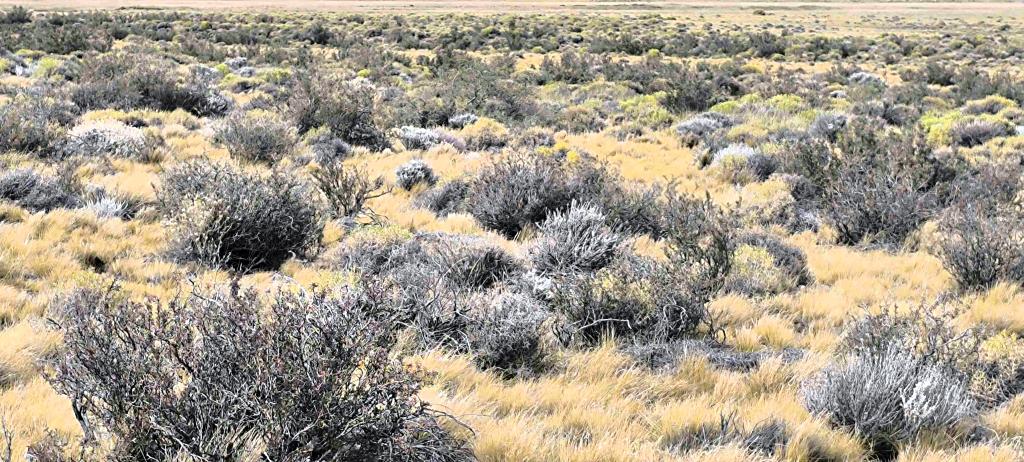
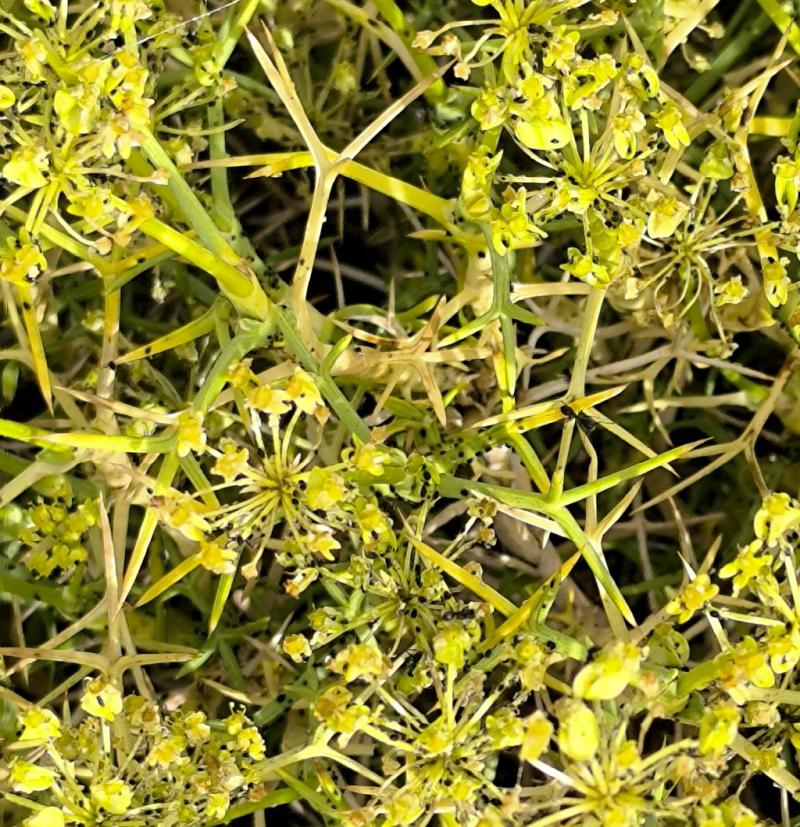
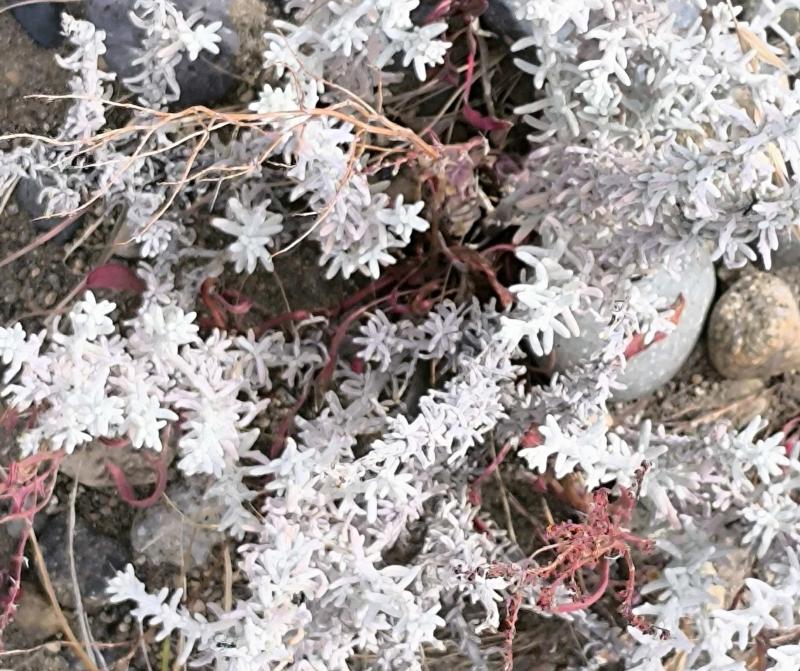
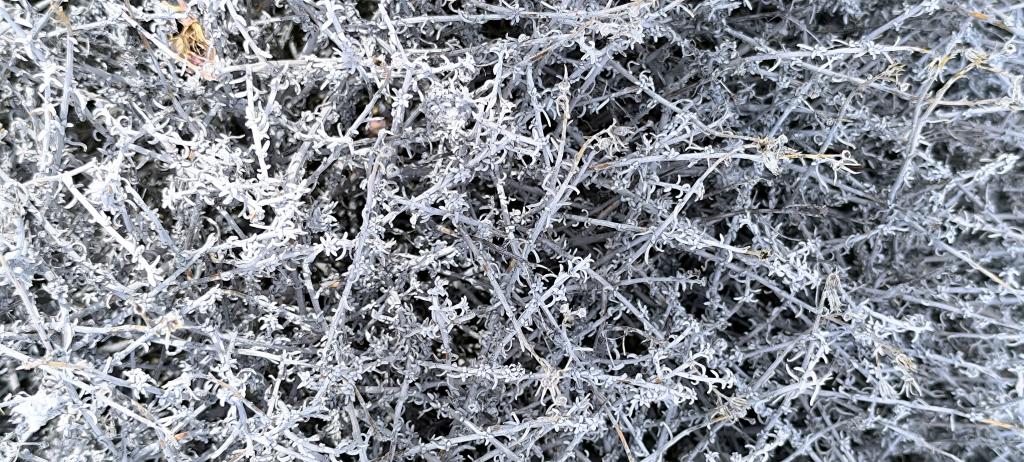
What looks like dry, dead shrub.
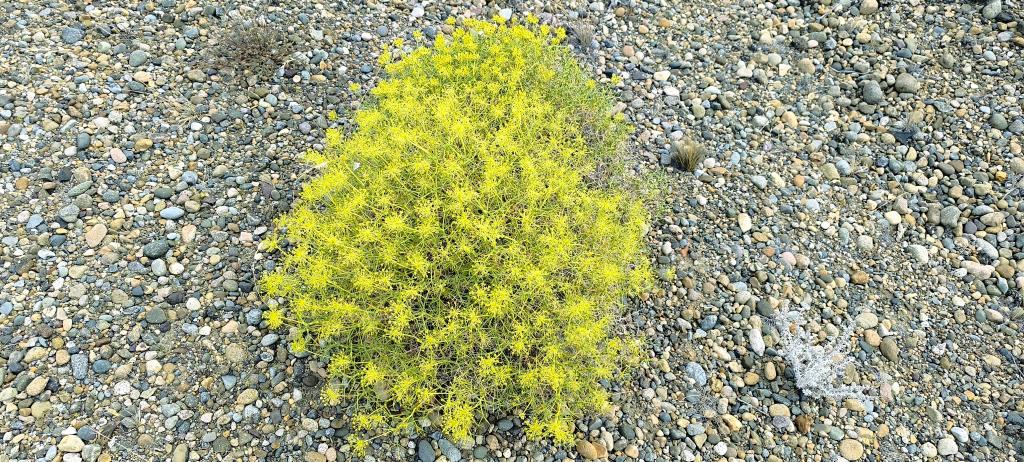
Is alive!
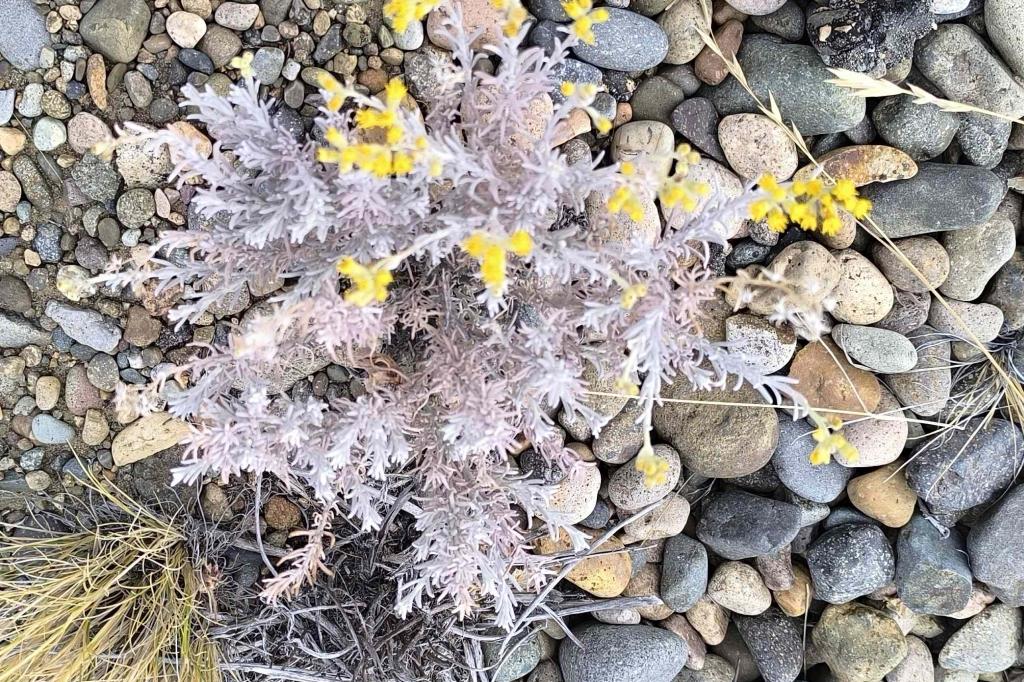
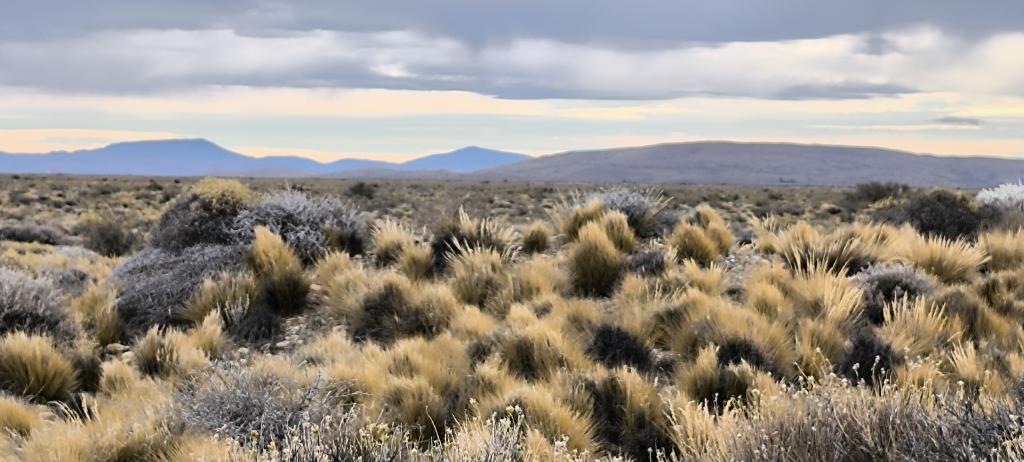
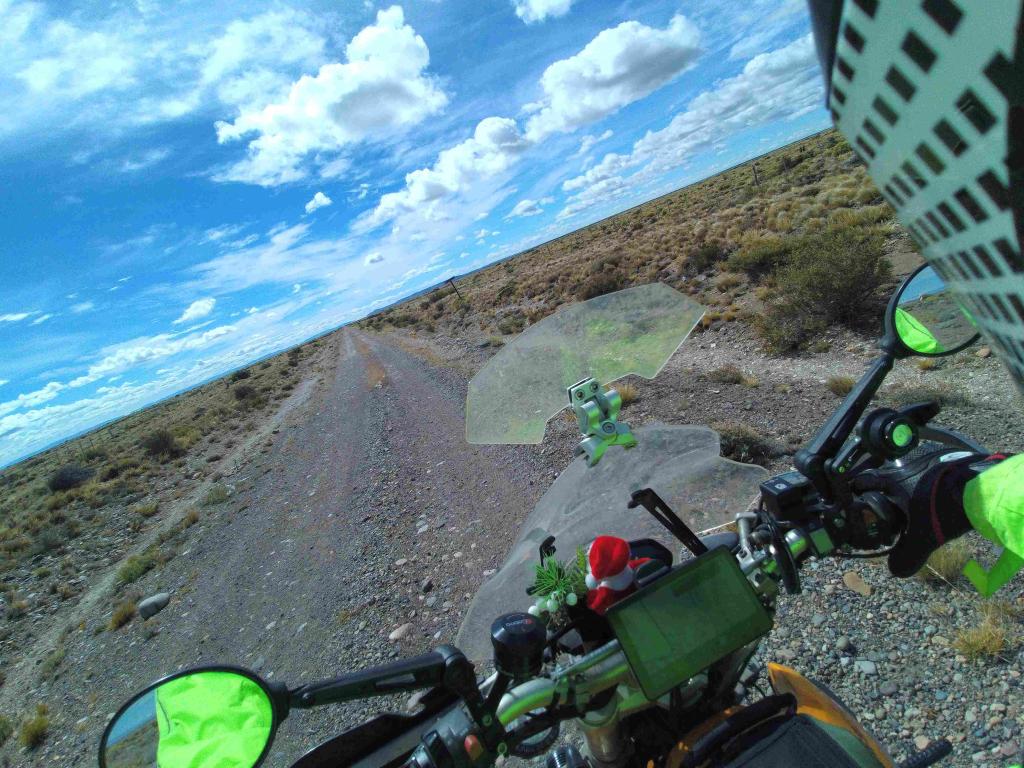
Even though we are in a remote region, what surprises us is that the land has fences, but no people. Or anything else.

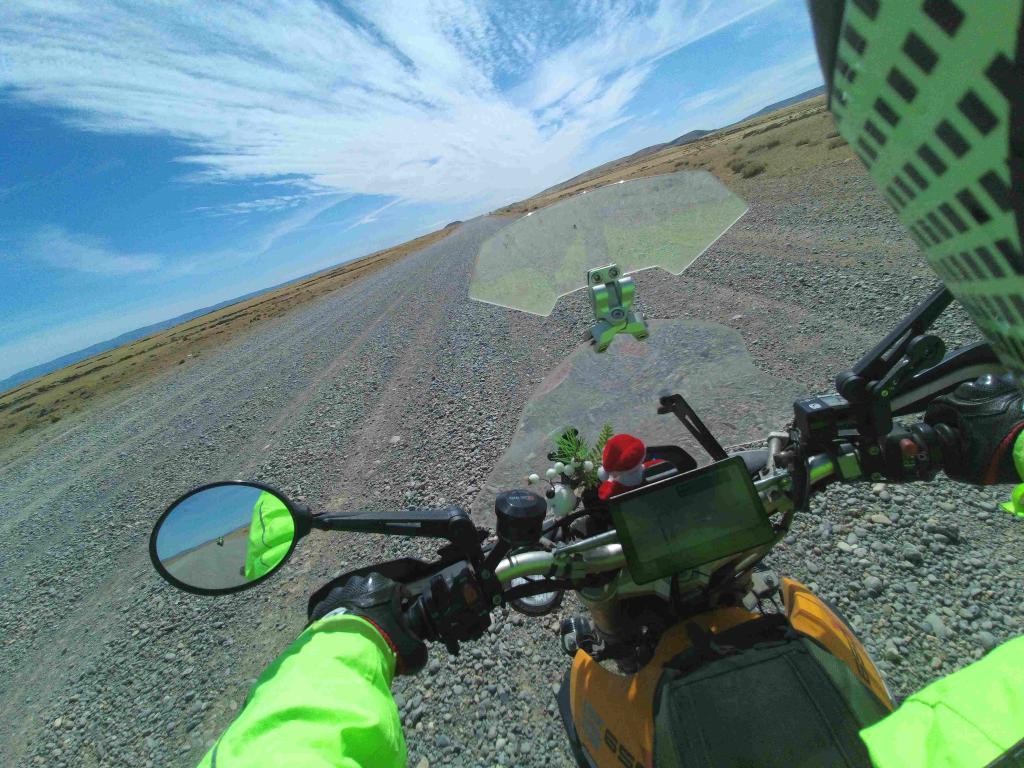
The landscape becomes more arid. Can you spot the difference? Spoiler- no fences.
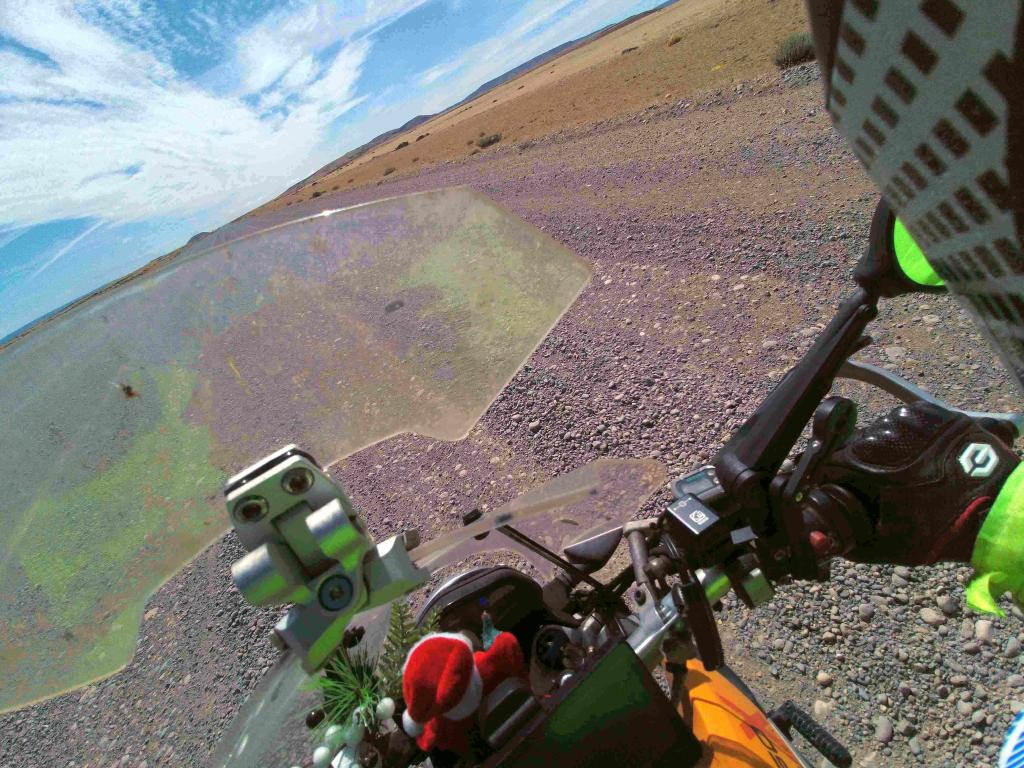
What looks like a rock (at one o’clock) through my screen is actually ….
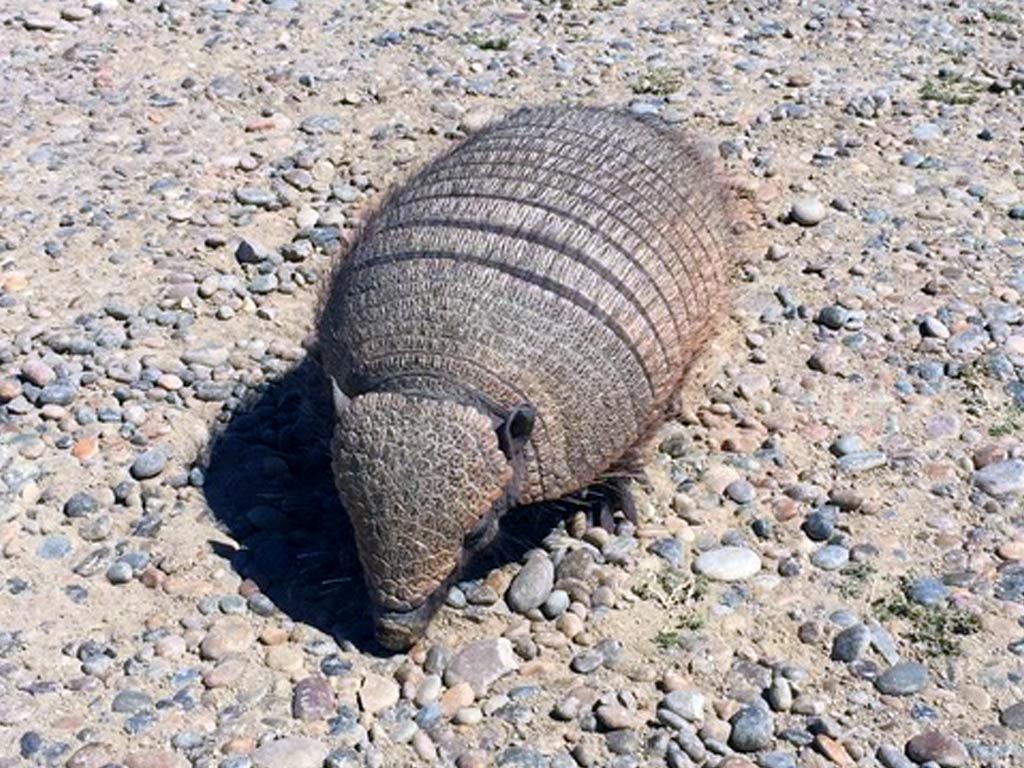
…. a Patagonian Armadillo.
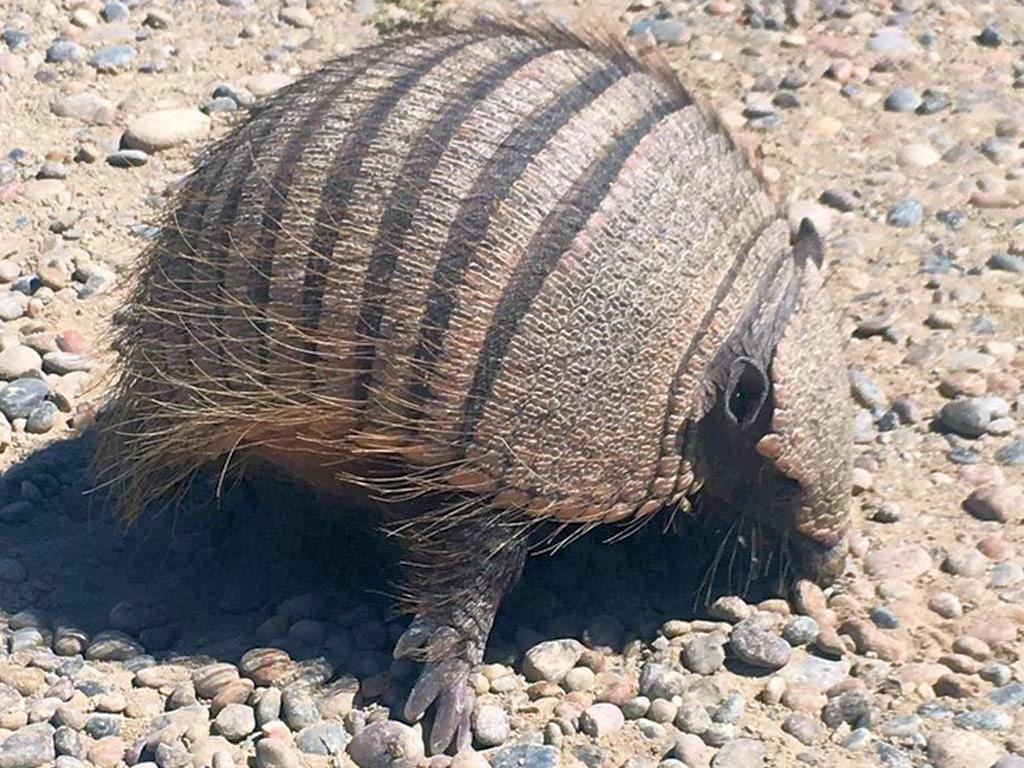
It is the southernmost Armadillo in the world.
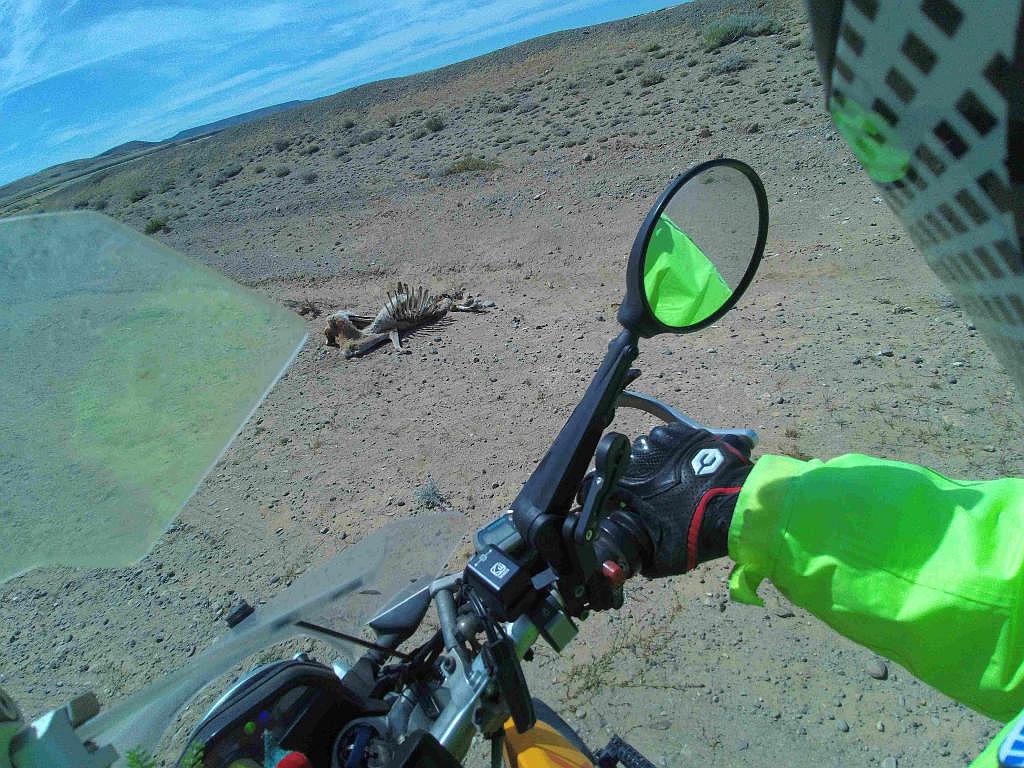
This Guanaco did not make it.

In the middle of nowhere, there is this shelter for travelers. The statue is a reminder of the vast amounts of fossils found here, as it was once a sea.

We dread seeing this. A biker down. They have been waiting for an ambulance for 2 hours. An hour later, we see an ambulance heading in that direction. These types of things stay with one and are hard to forget.
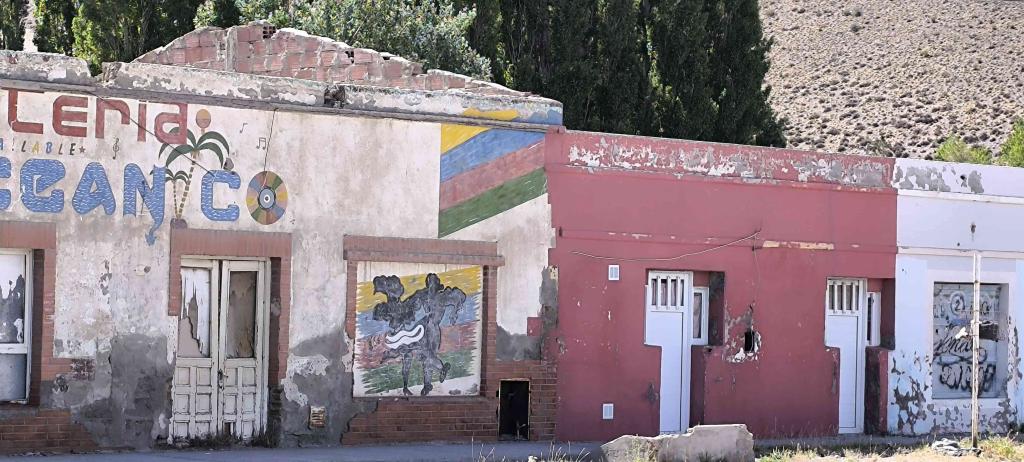
Settlements along the way are deserted. This one harks back to happier times.
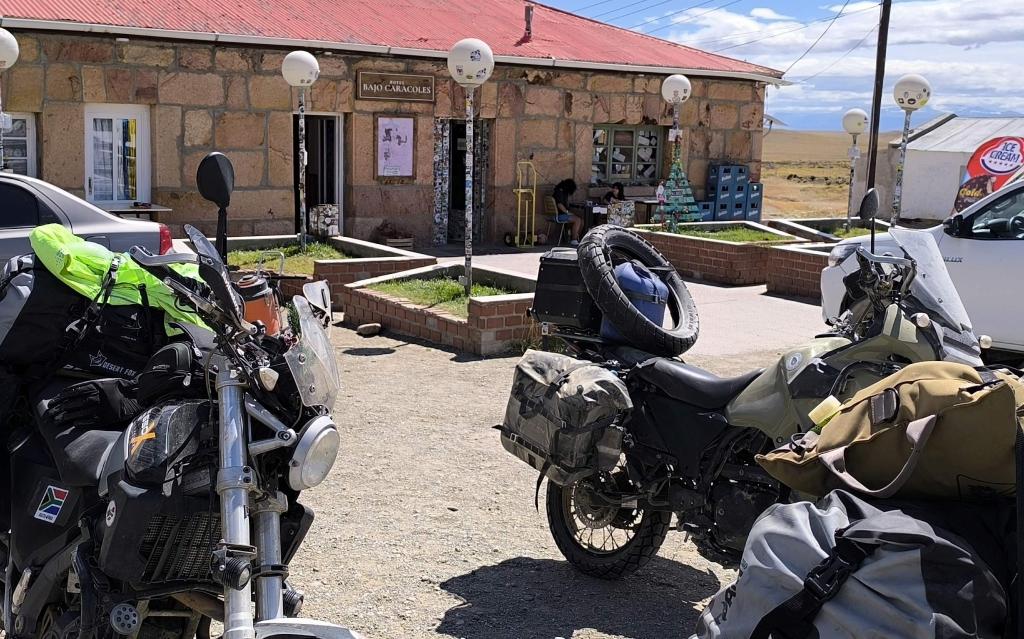
A welcome fuel & ice cream stop at Bajo Caracoles. An odd place that comprises a shop and 2 petrol pumps. Nothing more. We meet a fellow biker going in the direction we have just come from.

Everything one could ever hope for. Or carry.
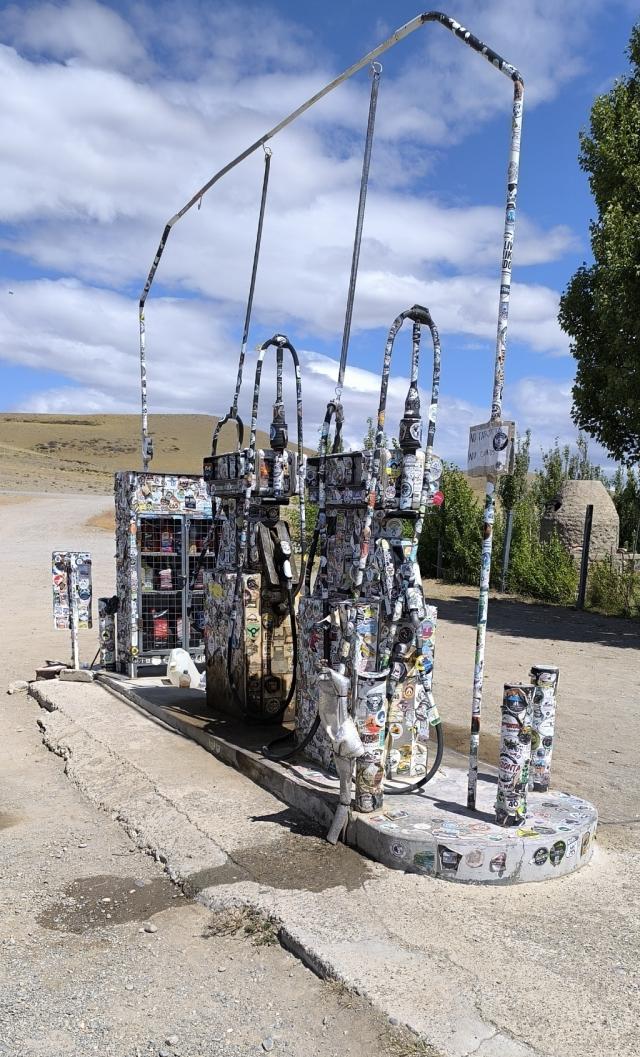
And fuel!
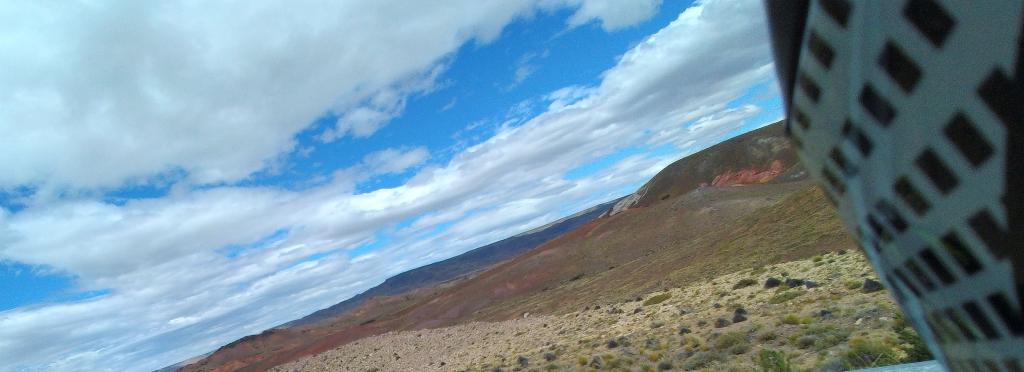
Every day brings a new topography.
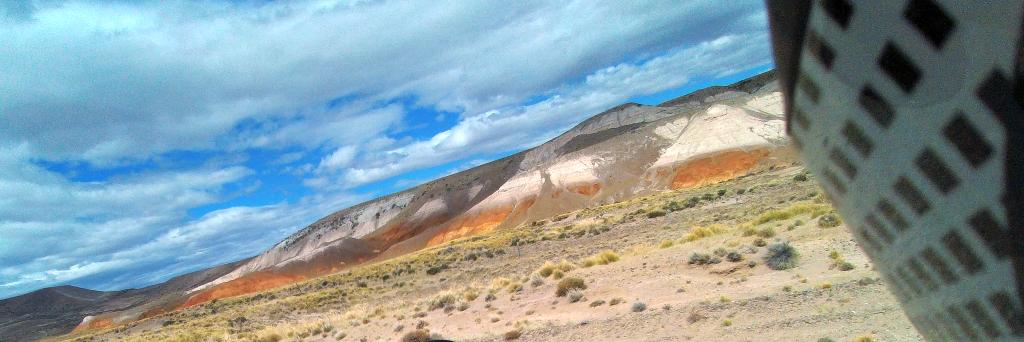
With colours that change constantly.
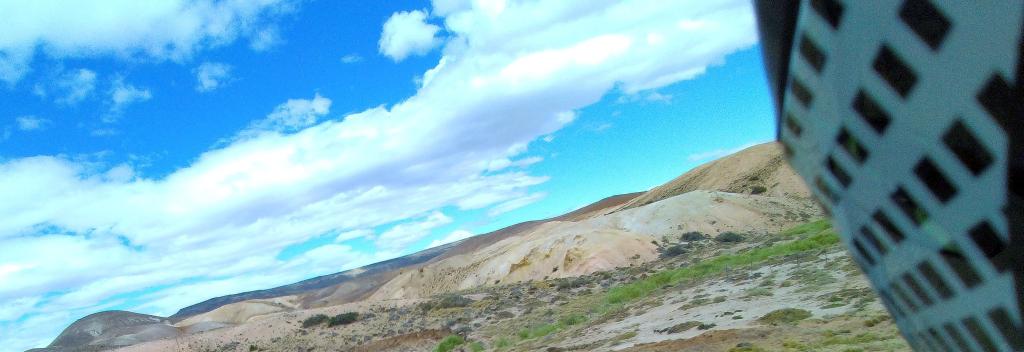

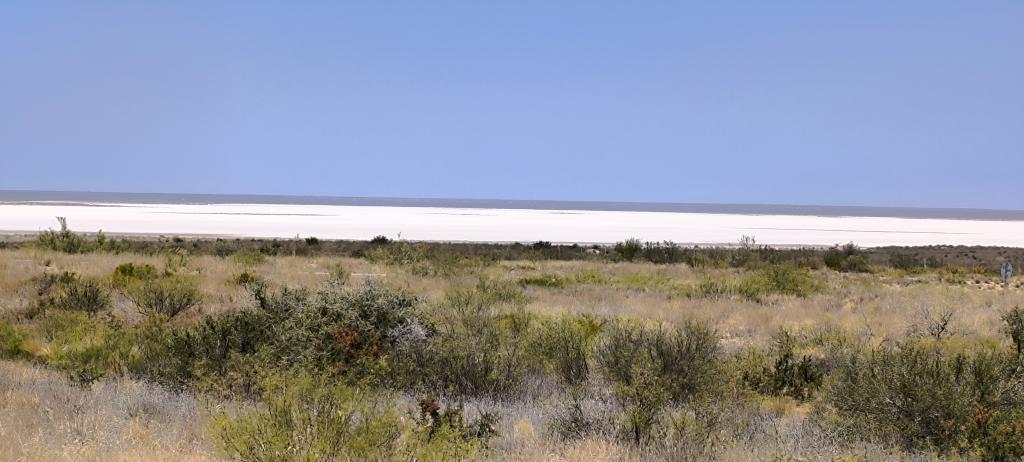
Even salt pans.
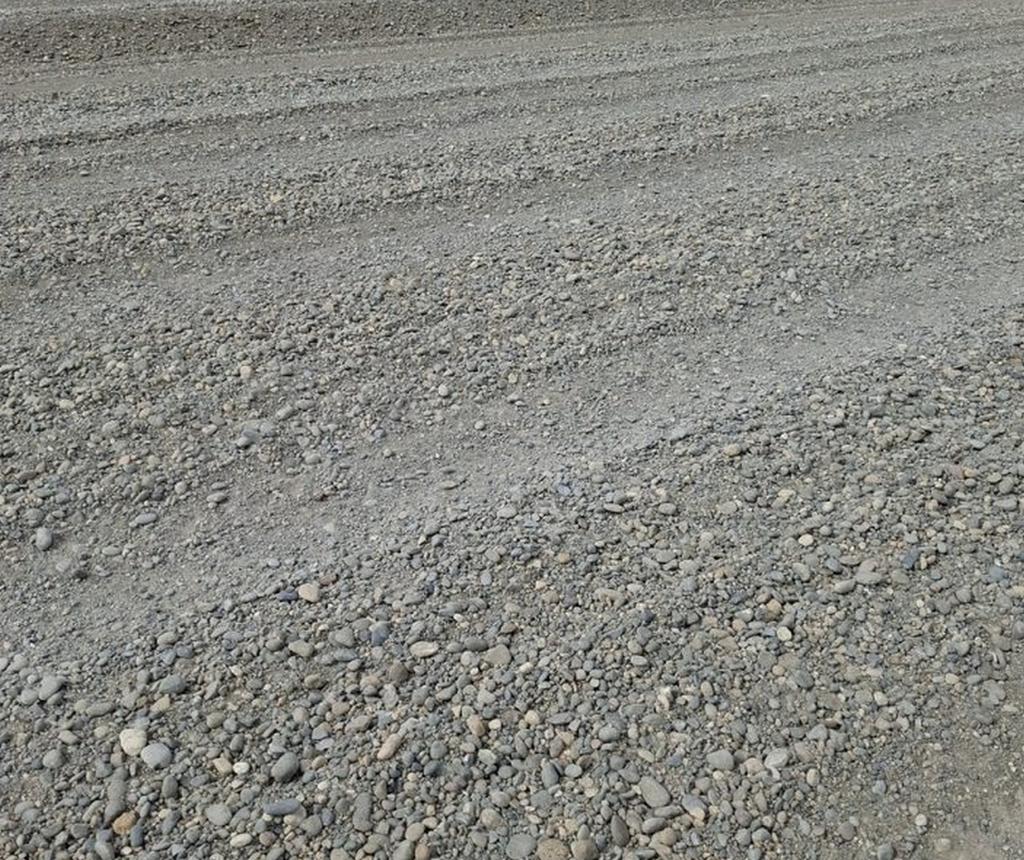
Two-wheeled penance. At times, we travel along Ruta 40, a 5224 km road that runs the length of Argentina. This section, called “the cursed 73”, is infamous for its 73 km stretch of golf ball-sized stones.
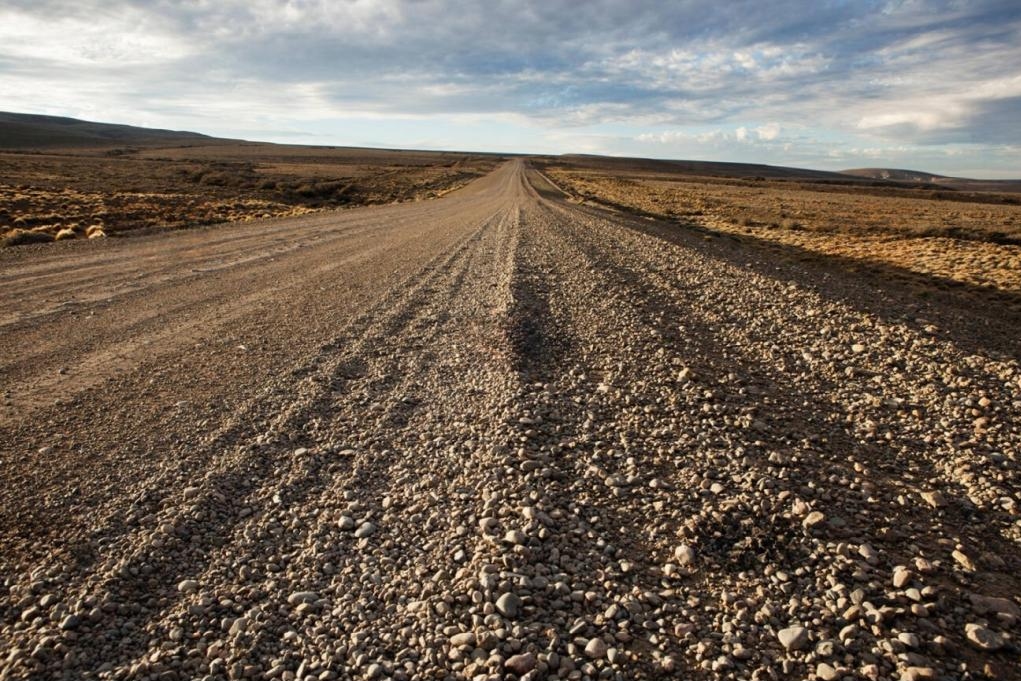
This could have been the inspiration for the Talking Head’s song – A Road to Nowhere. For us, it’s more like Jailhouse Rock.
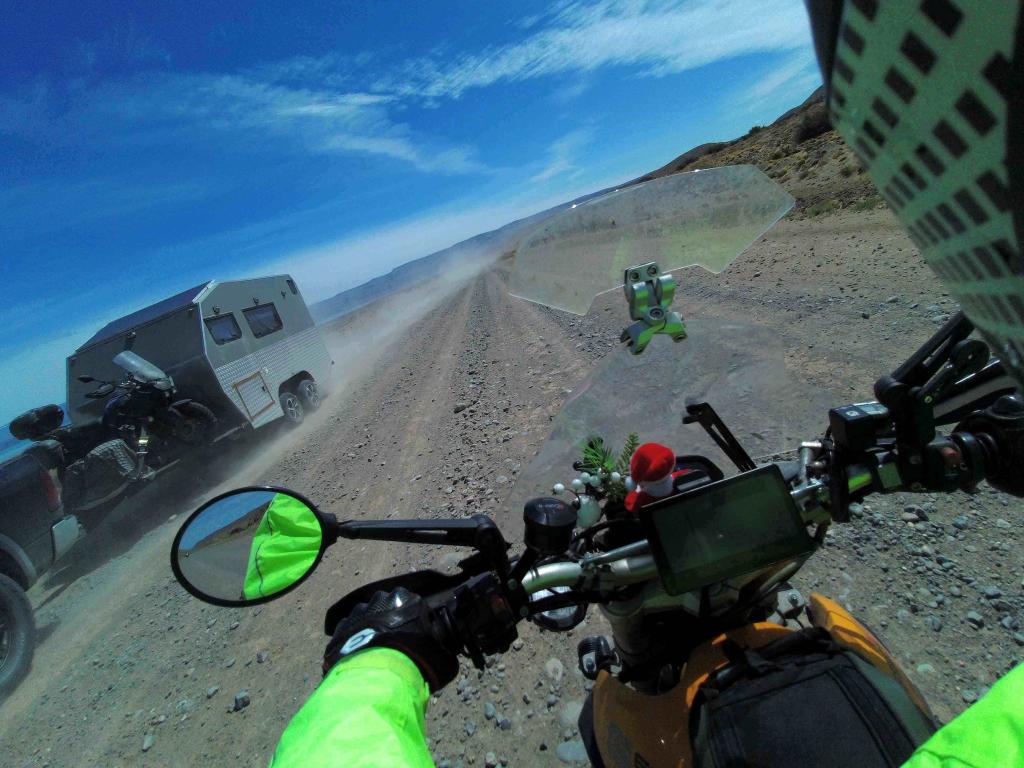
As we exit the cursed 73 this truck passes us. Turns out it offers bike transport through this section. I wonder what it would cost in ZAR ….
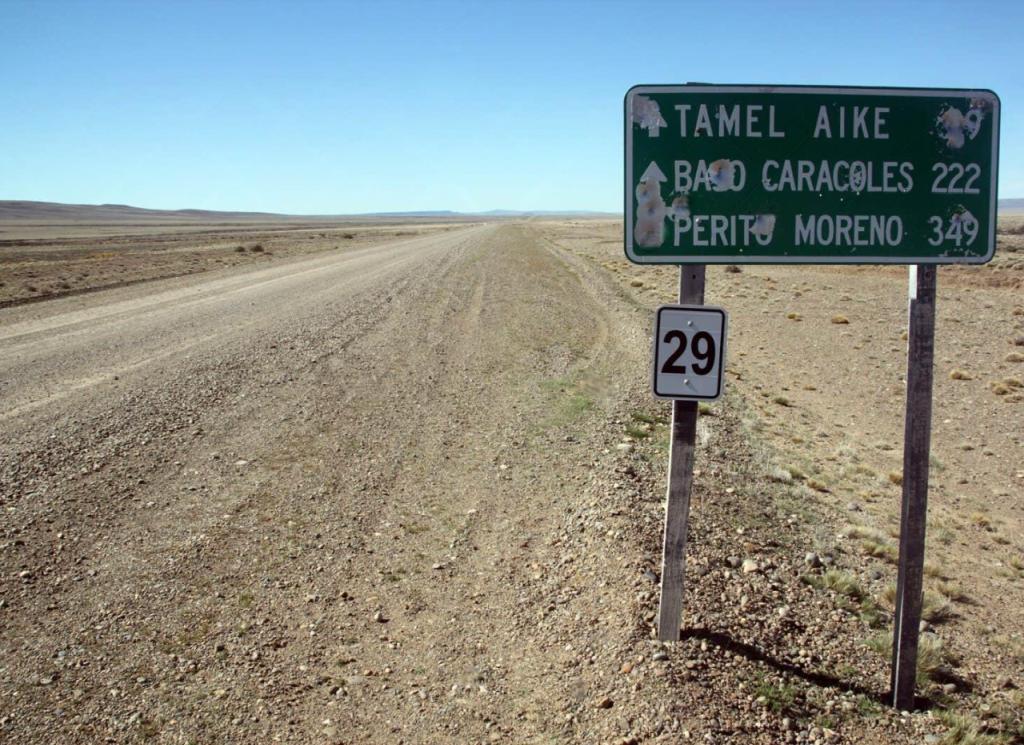
We are going places. Perito Moreno next.
A layered Lasagna of Breakdowns
After the Los 73 Malditos we chill at Gobernador Gregores, a green oasis.
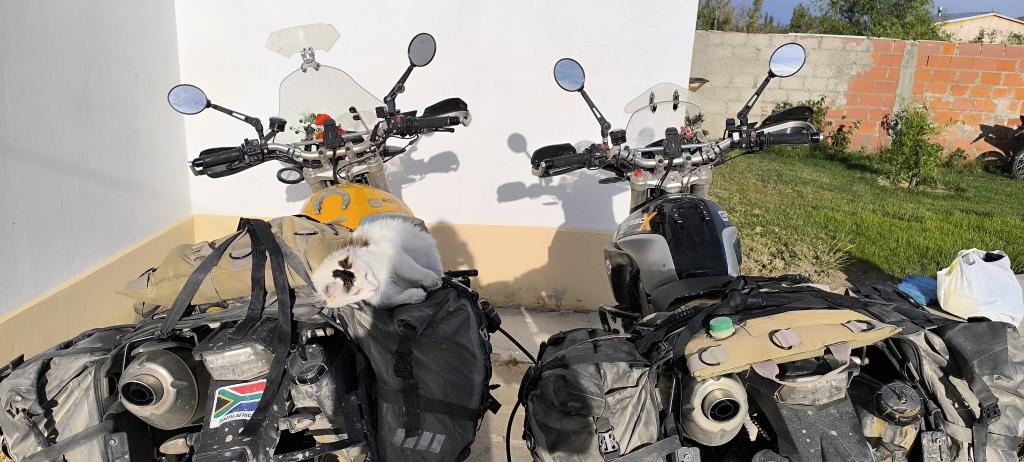
This fur baby loved our fuel cells.
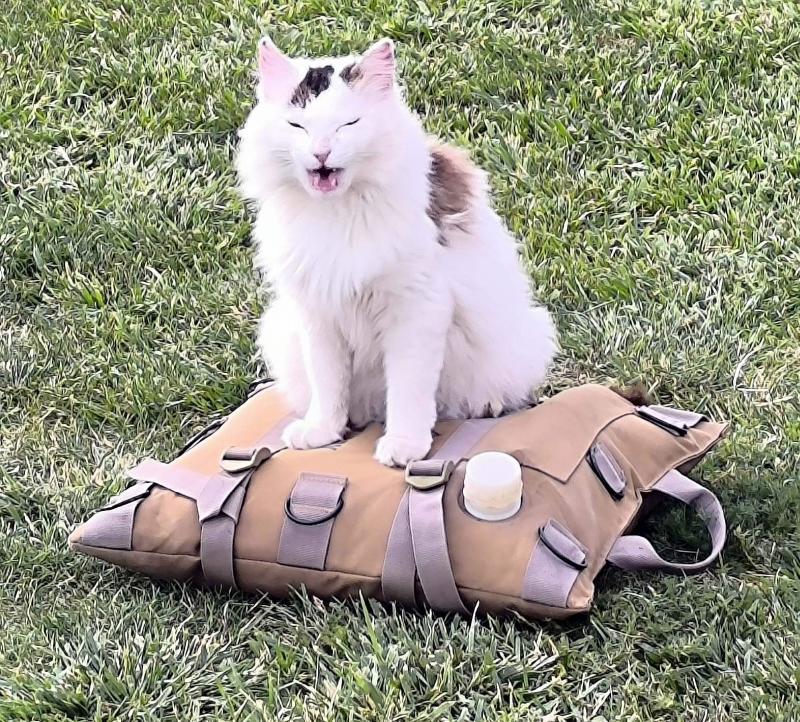
When we try to get our fuel cell back, it turns into Psycho Cat. A face only a mother could love.

The 1st layer of the Lasagna. There was a sickening click when trying to start the motor. If it’s a flat battery, push starting is a PITA (pain in the ass) as these are high-compression, single-cylinder thumpers. Turned out to be corroded Solenoid connections. 10 mins to fix, 1 hour to diagnose. Much like other issues in life. In the meantime, psycho cat tried to reclaim the fuel cell. We cover it with bike parts.
The next layer of the Lasagna occurs 2 days later. And proves to be more challenging not only regarding the problem but also the location.
We stop at 4.30 pm to refuel the bikes with the extra fuel we carry. I fill my bike and lock the fuel cap. The key snaps in the fuel cap. This is the same key I need to start the bike and unlock the seat.
I can only think it is metal fatigue. Not a problem as we have spare keys. Except we packed the wrong keys.
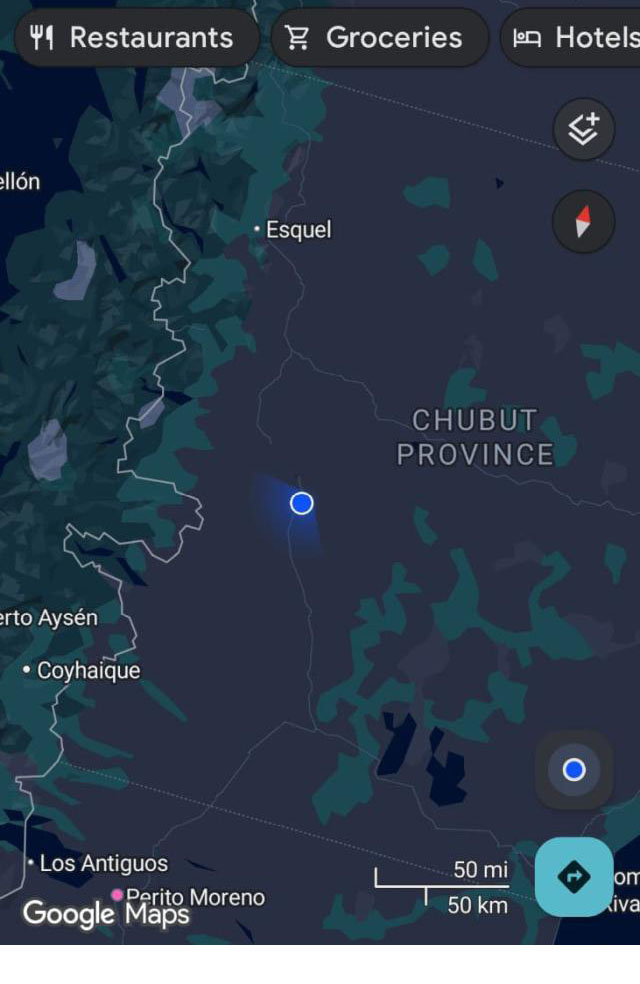
Not much is going on here. The blue ray is us. The green bit to the left is Chile. Got to love Google’s optimism for restaurants, groceries & hotels.
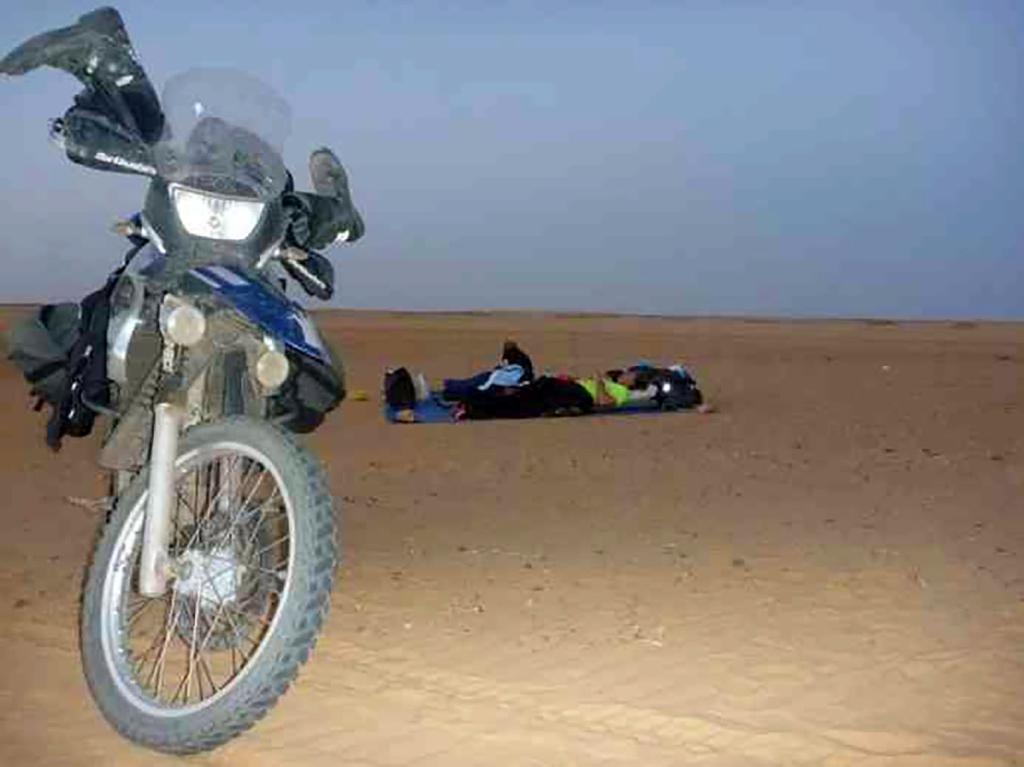
Bike karma. The same thing happened to Linda’s bike on a previous trip in Sudan.
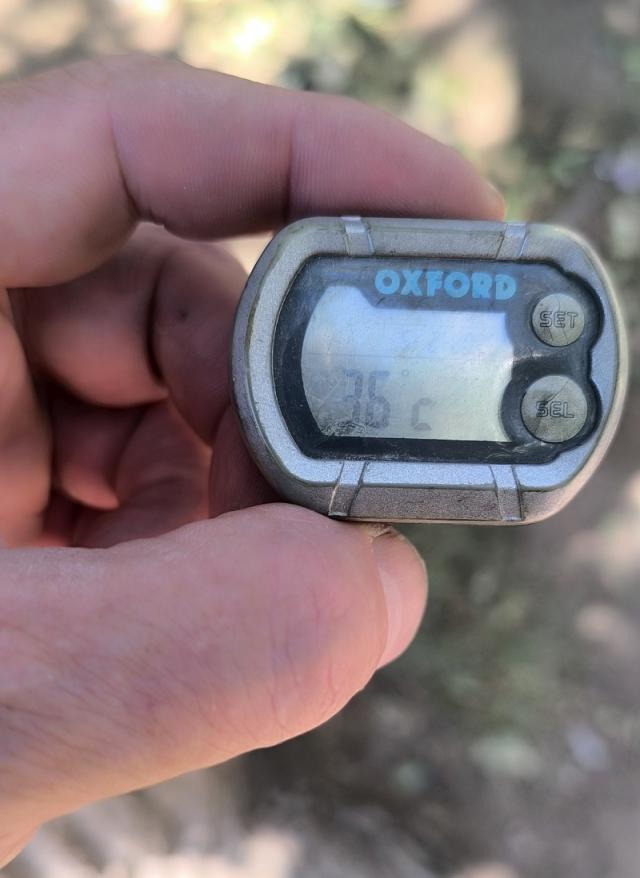
36 C at 4.30 pm and ‘my moet is op’.
I hate the sun, that tingling feeling when it slowly roasts you. If we can put the bike on the back of the pickup, I can look at it ‘manana’, hopefully in a shady spot.
We decided that I would ride Linda’s bike to the nearest village, which is 80 km away.
One positive of small places is that you either find what you need very quickly. Or not.
Fortunately, I find Pedro in Gobernador Costa. Not only does he have a pickup, but also a trailer.
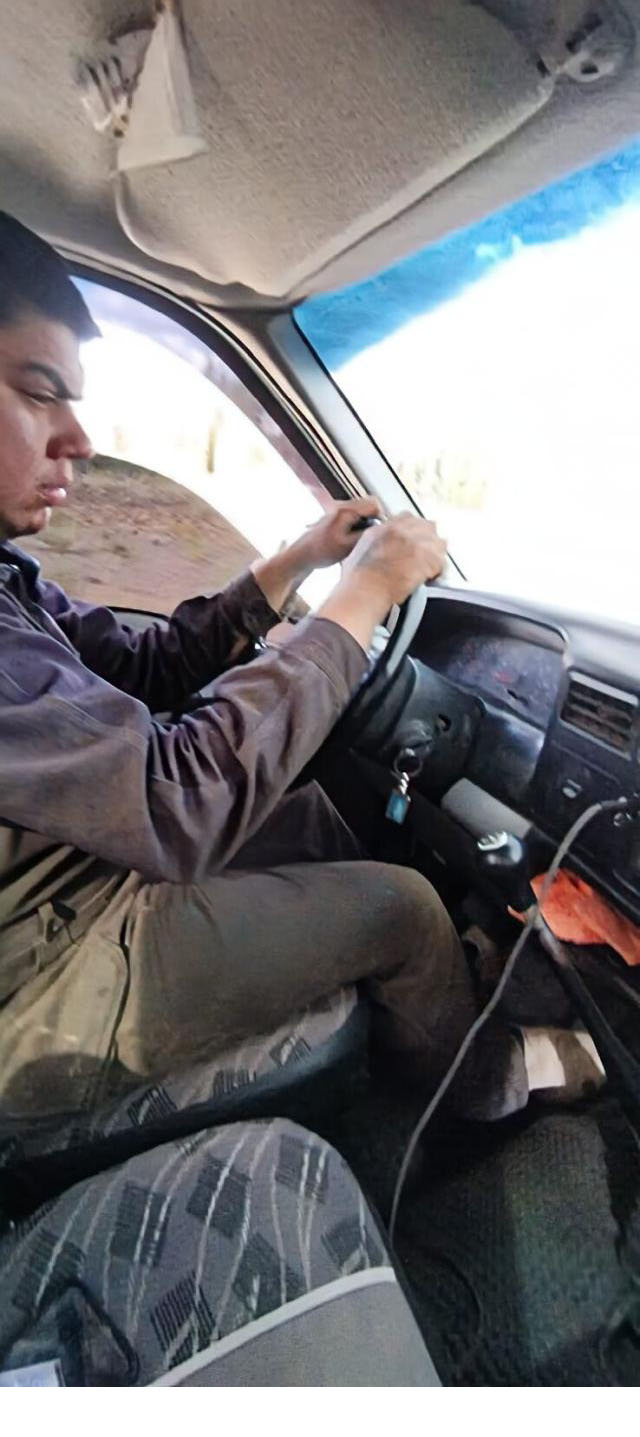
Pedro. A man of few words in Spanish. None in English
We bounce back to Linda, listening to soulful ballads that are as long as the flat horizon.
Although I cannot understand a word it is clear they are are about lost love or crushed crushes. It seems to go on for an eternity as his speedo is broken, the needle rattling at 15 mph.
Finally, we see Linda on the horizon.
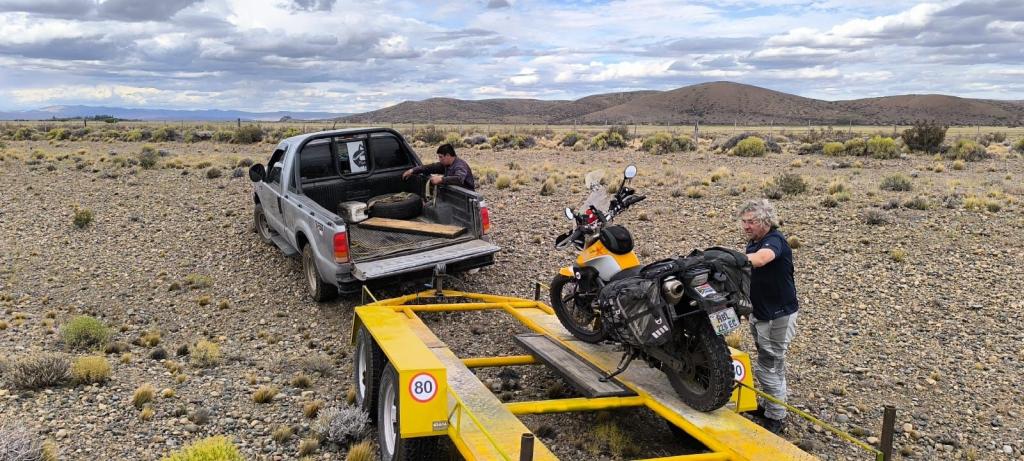
Bike loaded, we bounce back to Gobernador Costa.
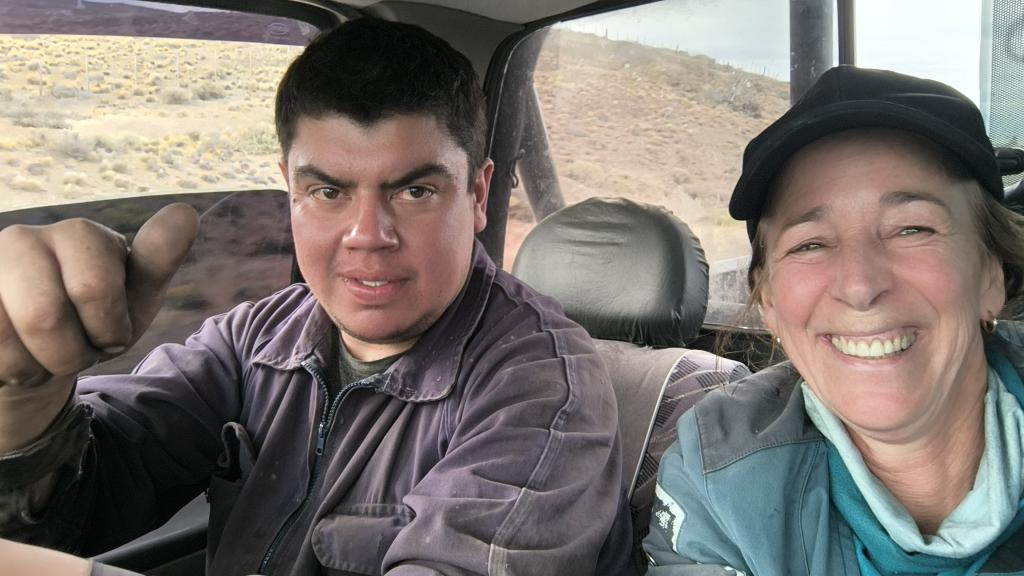
Pedro’s F100 has a bench front seat, making for a closeness similar to being at a drive-in in a Valiant. Linda can bring out the best in people. Pedro whips out his cell phone and starts showing pictures of his life as a bachelor.
He is a resourceful person. A mechanic, when there is work in his village. In summer, he shears sheep. When the season is over, he repairs the shearing machinery. In winter, he hunts.
A lesson in not pre-judging a person.
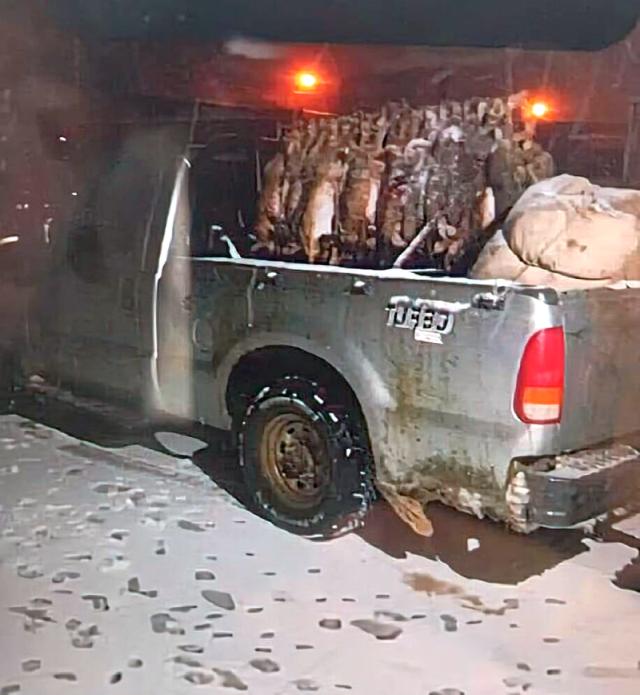
In winter, he hunts Patagonian mara.
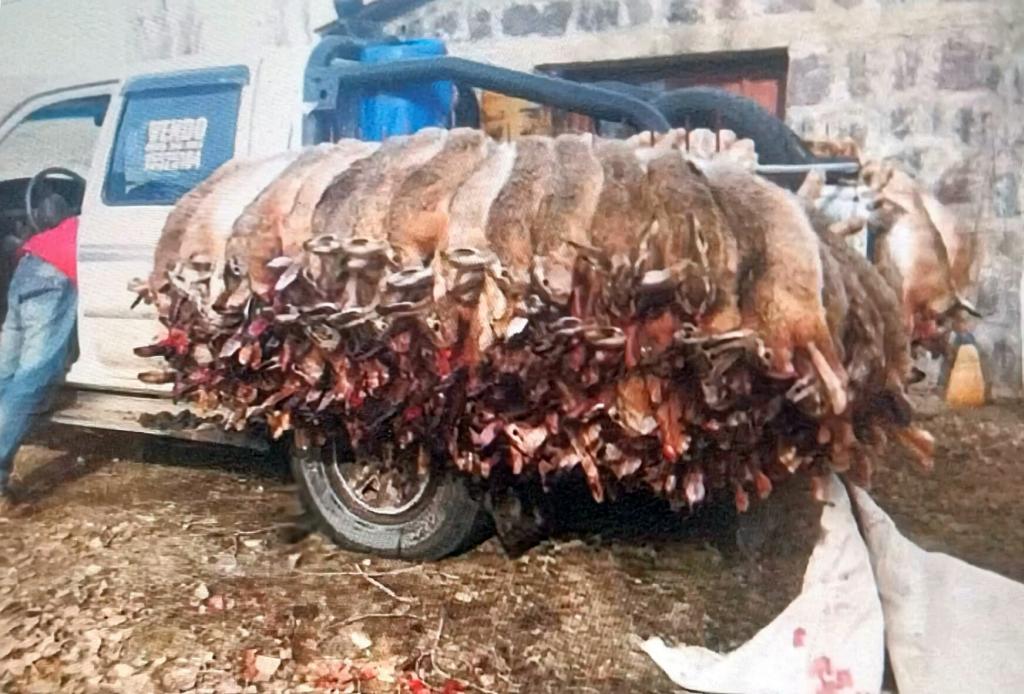
The flesh they consume. The pelts are exported to ultra-high-end manufacturers in Europe. Not sure as to the ethics, or lack thereof, though.
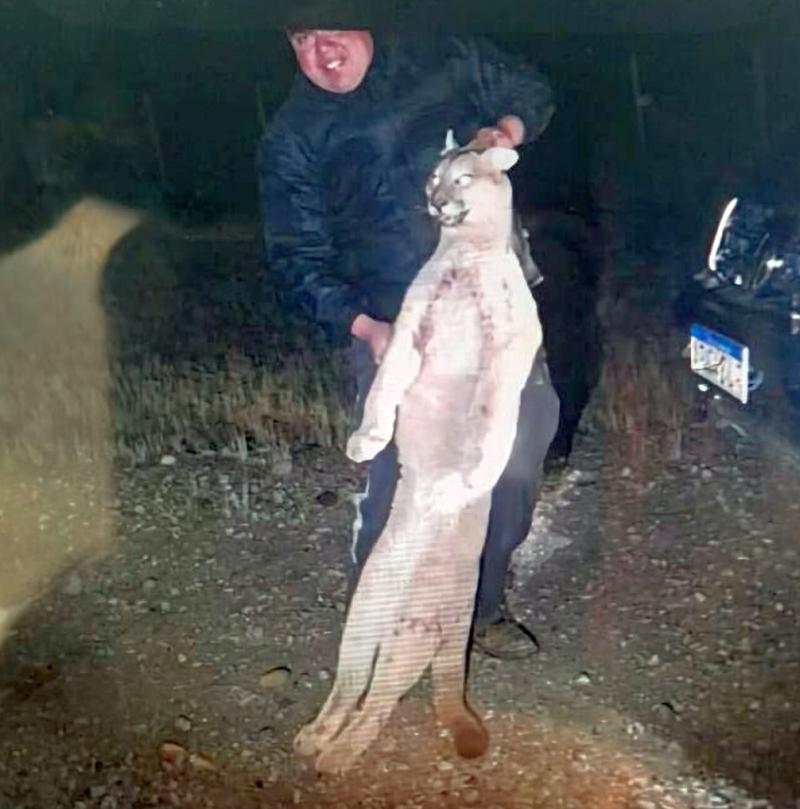
A hunting trophy.
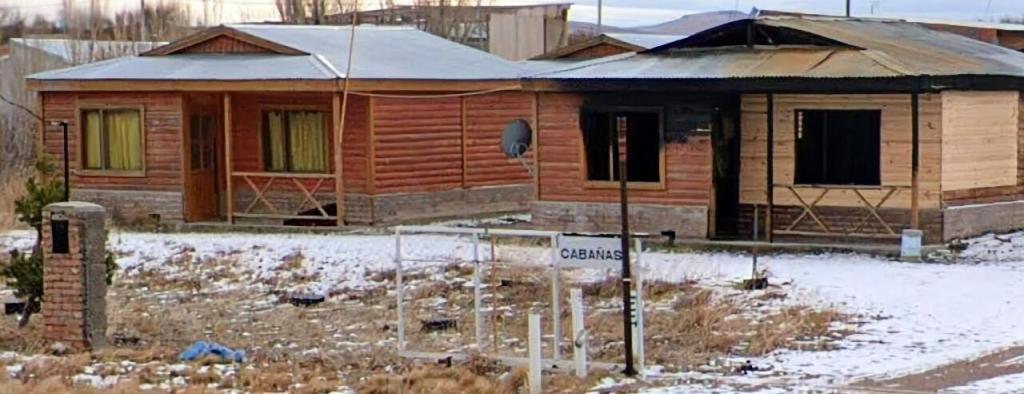
As luck has it, the village has these 2 Cabanas for hire. The one is burnt out. Judging by its TV satellite dish, it made me think of Elvis Presley, who had a habit of using a .357 magnum to destroy TV screens he didn’t like or that were malfunctioning. Or maybe there was no hot water for a previous tenant. Just a thought.

The next day I hot-wire the bike through the handlebar switch, meant for the spotlights. No spotlights, but a functioning bike that can start. When no one is looking.
Our thanks to Guy and Matt at home for helping with the wiring diagram.
Two remaining problems remain, though. I need access to the fuel tank either via the locked filler cap, or by removing the seat (the tank is under the seat). Both require a key.
The idea is to rig up a catheter-type set-up, using a fuel cell to feed fuel into the tank. But first, the seat needs to come off. A rock and a spanner forced under the seat gets it off.
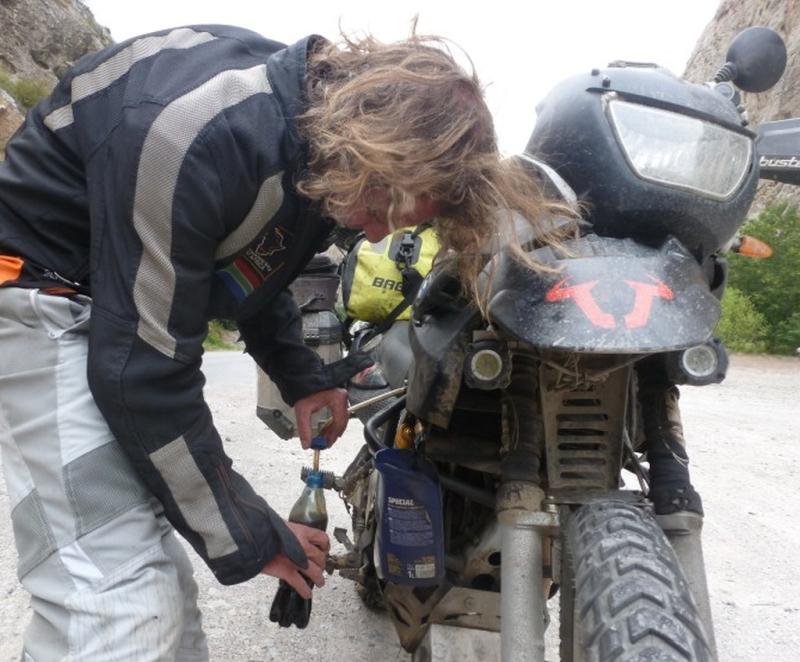
Another throwback and another Catheter. That time in the Wakhan corridor. No grey hair & less portly then.
A few days later, another layer in the Lasagna. We stop at this roadside town, which has more street lamps than houses. That one horse never stopped here. It kept on going.
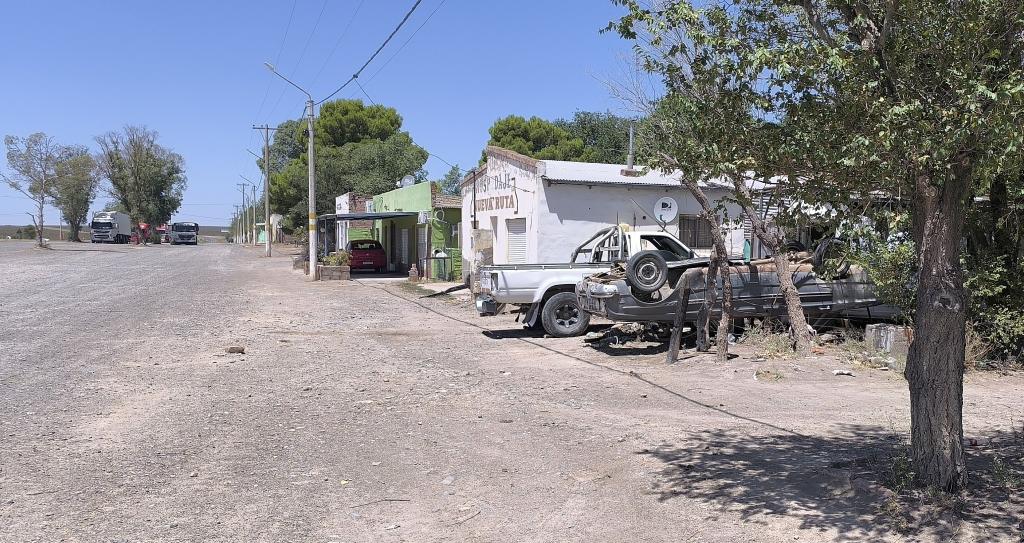
The trucks hog the shade.
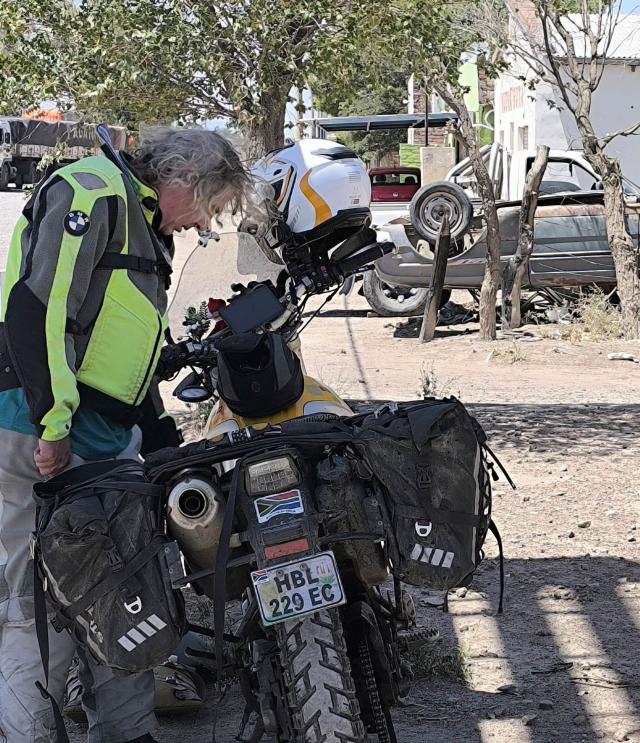
My dejected look was not aided by a mop that had not been cut in months. At least it was treated to the odd dose of shampoo, even though it may not appear so. Due to the heat, fuel is expanding and pouring out from under the seat. Linda’s front shocks are leaking. My back shock is on its way out. Another day, another plan.
Glacier Lakes
The Argentine Lake District in northern Patagonia is a stunning wilderness of glacial lakes, Andean peaks, and forests. We looked forward to it after the heat of the steppes.
Here are a few pictures.
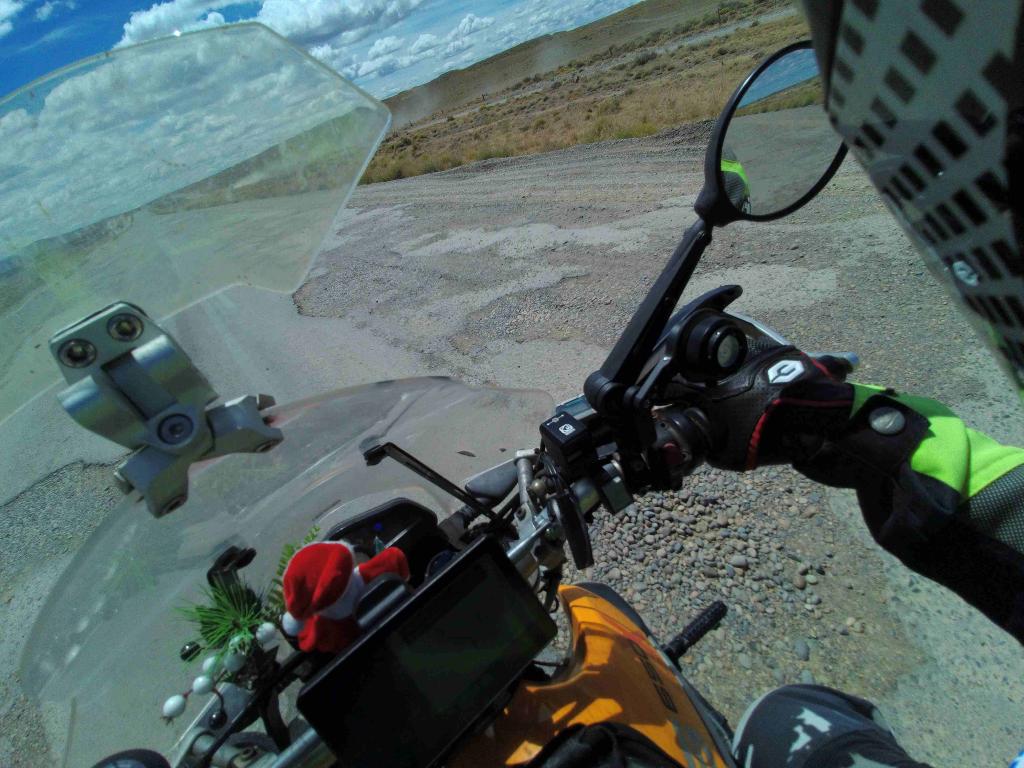
We cross Ruta 40 again. We complain about potholes at home….
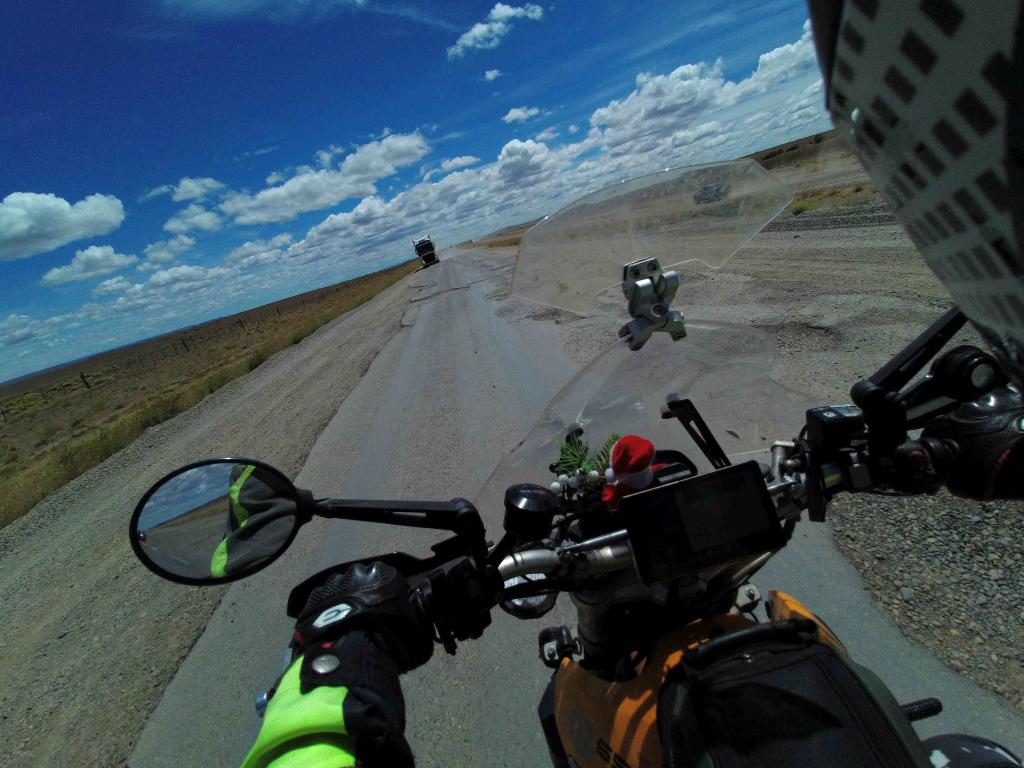
Here, folks get on with it. Gravel roads are carved next to what was tar. The problem is that trucks use it. We don’t argue with trucks.
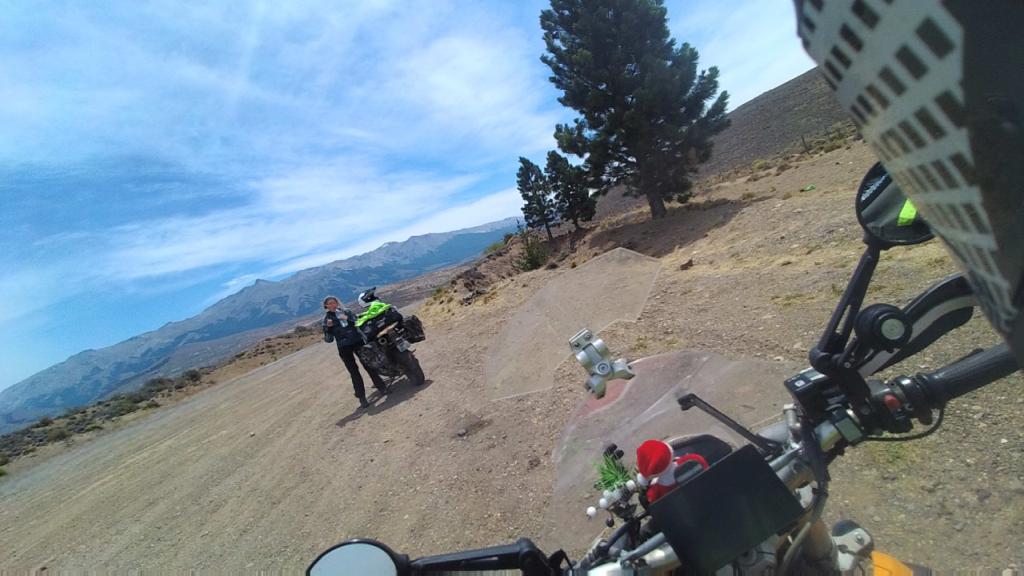
Beyond those mountains are lakes.


My Facebook 1000-yard pioneer stare. I don’t have Facebook . Others have been here before us.
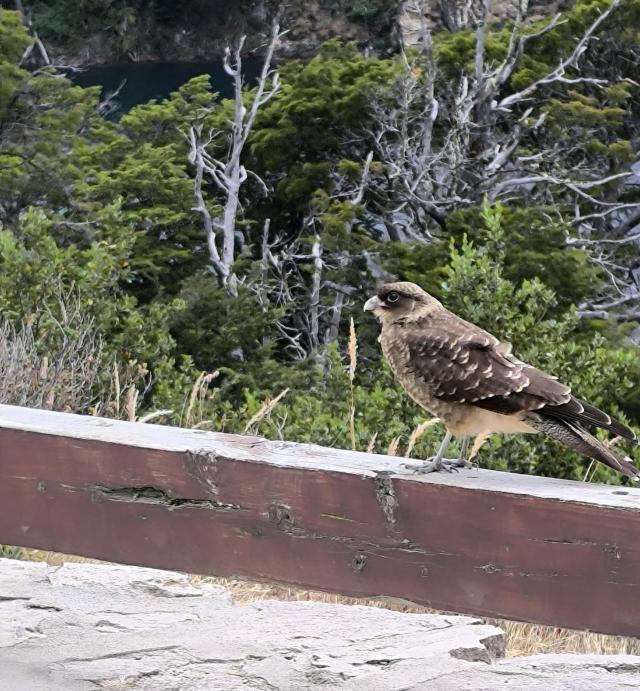
A Tiuque , a member of the falcon family ….
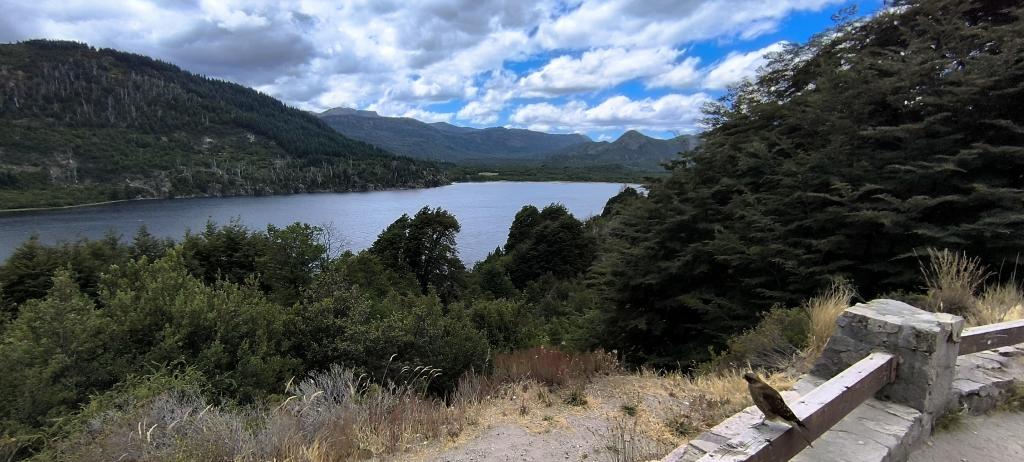
…. has the privilege to call this home
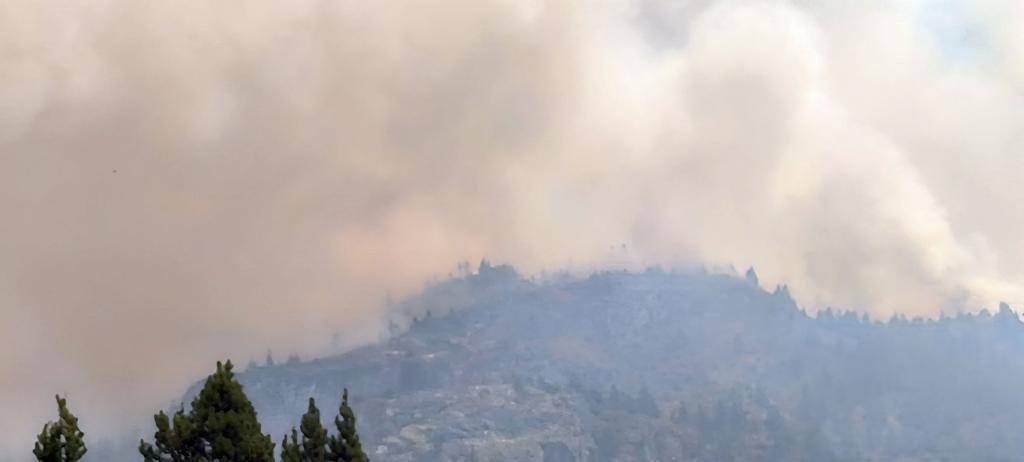
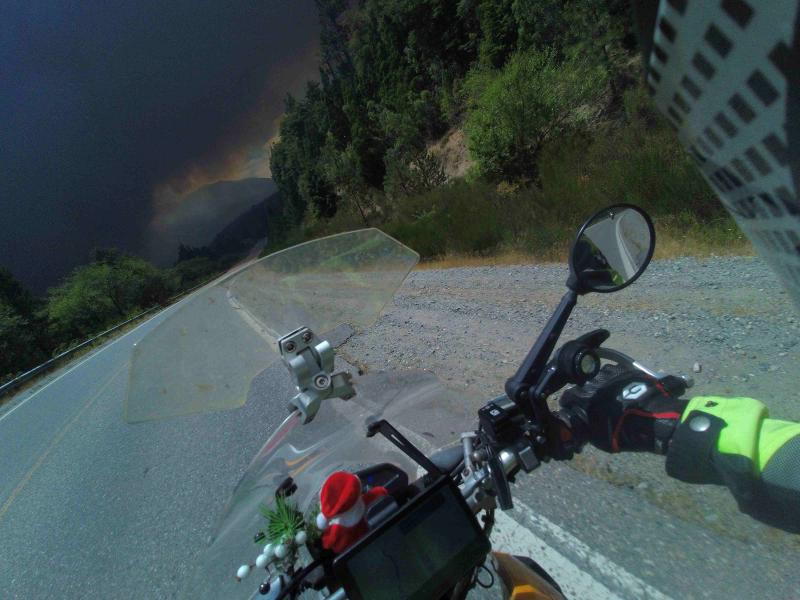
As we approach the last chain of lakes, we ride into this. One of the worst fires in living memory is ravaging the area.

It is a surreal experience.


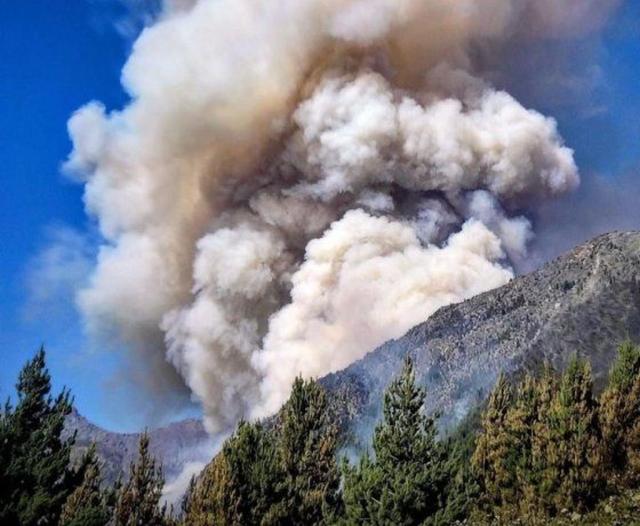
The buildings, bottom right, indicate the scale of the disaster.
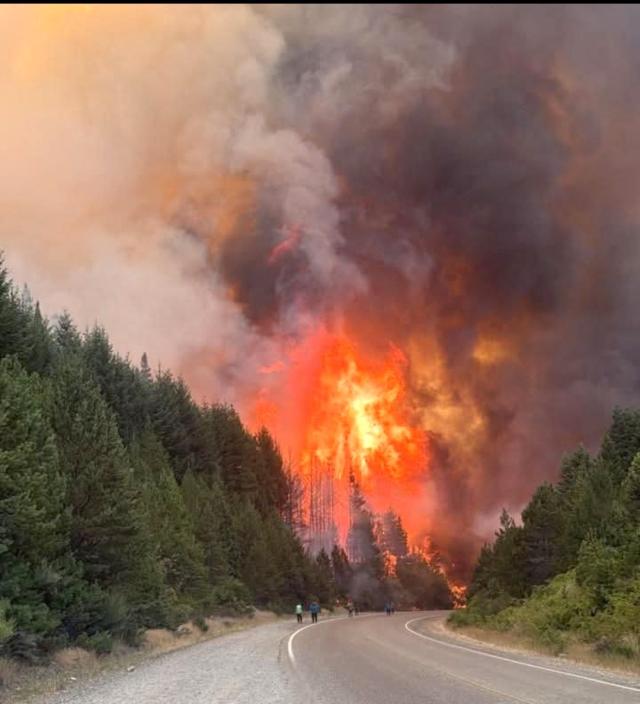

We were lucky to be the last to exit. This road was closed after us.

It is heartbreaking to see these dead swallow chicks. Their parents must have perished.
Driven by extreme heat above 38°C, months of drought, and fierce winds of 40–50 km/h, the fires spread very fast both in Chile and Argentina. Chile declared a state of emergency when the fires destroyed at least 1,000 homes, killed 23 people, injured hundreds, and forced more than 52,000 to flee. In Argentine Patagonia, a state of emergency was also declared as fires consumed more than 45,000 hectares, displacing at least 3,000 people.
We witnessed communities in the area forming their own firefighting brigades to work alongside the official ones, where solidarity took precedence over bureaucracy.
The fires continued to burn long after we left and is something that will stay with us for a long time to come.
On a lighter note, if you have read this far, then you do not have a short attention span, something rare these days.




Excellent photography. Wonderful information. What an excellent team you two make. Thanks for sharing your travels and adventures.
Well boet, you did say it was hard in parts…this would be such a part. Wild and gritty land. Great job on the hotwiring and other boer maak ‘n plan methods!
Wow Harry and Linda you’ve certainly been ‘ out there’ in the wilderness frontier. Your ingenuity to sort out problems is second to none ! Thanks for sharing your adventure I was riveted. Hope you’ve got the smell of leaked petrol out of your nostrils now .
Flip guys, Incredible on so many levels! Harry, McGyver of note! I suppose that is why it’s called adventure riding! Seriously harsh environment. Keep safe.
So many questions. What happened to the house/tourist shelter or was it built so skew or is it my eyes? I struggled a bit to find the route on a map but I found the towns. How many miles have you done so far and how many times have you switched on and off the bike that the key have metal fatigue? I would have thought keys are made from top notch metals? Paul and I have ridden on golf balls with our bikes. Not fun. I would have been petrified of getting trapped in the fire. Glad you are safe back.
Love the experiences that you are having and sharing with us! It’s amazing!
That was truly descriptive and had to be told to me long after you had got through it all. You are a great pair!!You are as I always say a genius Harry and your came out tops once again! Linda too making Pedro smile. You must have been very glad to see him and Harry at last. Patagonia was only a name to me but not any more. The photos are brilliant. The Tiuque was so proud and happy in his home . The lakes and snow capped mountains are so different from the Steppes.
This post has shown how important it is to be able to take the rough with the smooth. Well done and thanks for the true story!!!!
Fascinating people and places you are both meeting and learning about. Heartbreaking and heartwarming all at the same time. I am so sorry that you have also experienced such devastating fires. Very much like the fire that ravaged through our village not that long ago. Thank you for allowing us to experience all of this with you
This looks like the hard work of travelling but how well you both did.
Finding solutions where none seemed possible and making friends wherever you go!
That fire 🔥 looked very frightening.
So glad you came home safe and sound
It’s always great reading the picture travel log progress of your trip.
Thx Great reading.
Thank you Harry, really excellent.
Your off the wall approach is refreshing regardless of what is thrown at you.
Send A small dose of your humour my way please.
How do I get it?
Wow, that is true grit. Well done for all the vasbyting Harold. And Linda provides miles of smiles!!