
After Ushuaia we have no option but to turn north as our bikes are not amphibious.
We travel back via the Argentinean side of Patagonia, home to glaciers, lakes, a desert, and volcanoes. Along the way is Perito Moreno, a massive glacier located in the Los Glacia Perito Moreno National Park .
It is one of South America’s largest glaciers, part of the Southern Patagonian Icefield, the world’s second-largest ice field outside of polar regions.
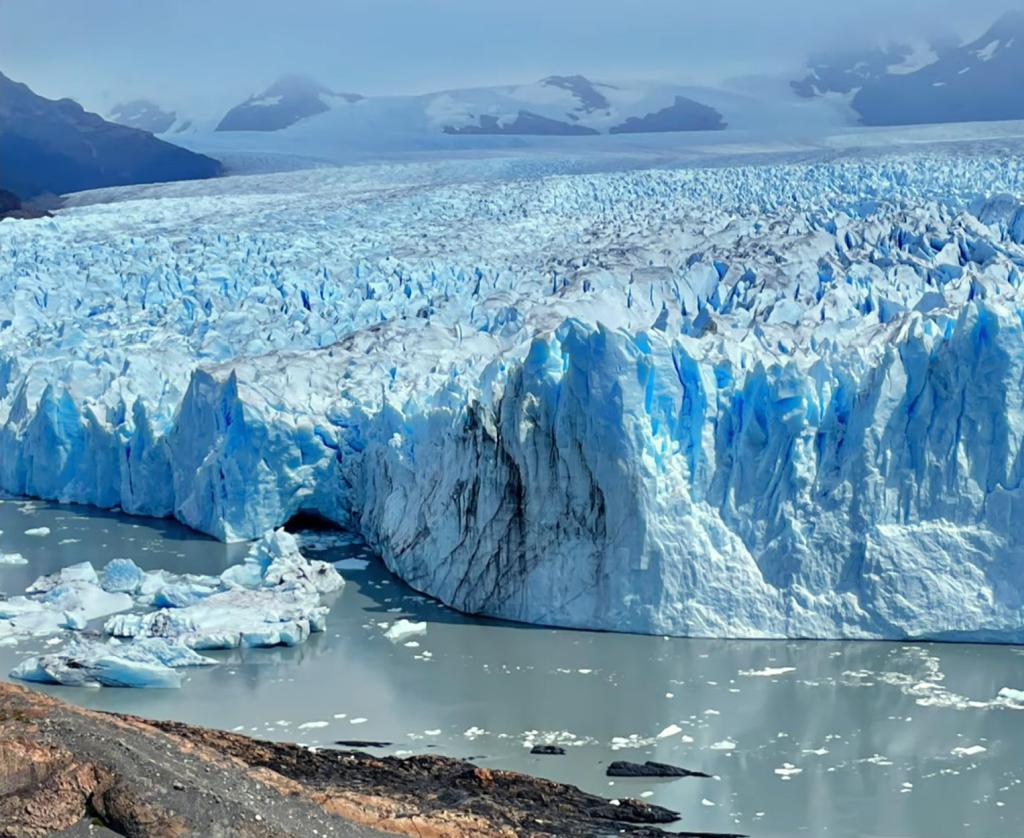
The deep blue hue is caused by the extreme density of the ice, which absorbs every other colour of the spectrum, except blue.
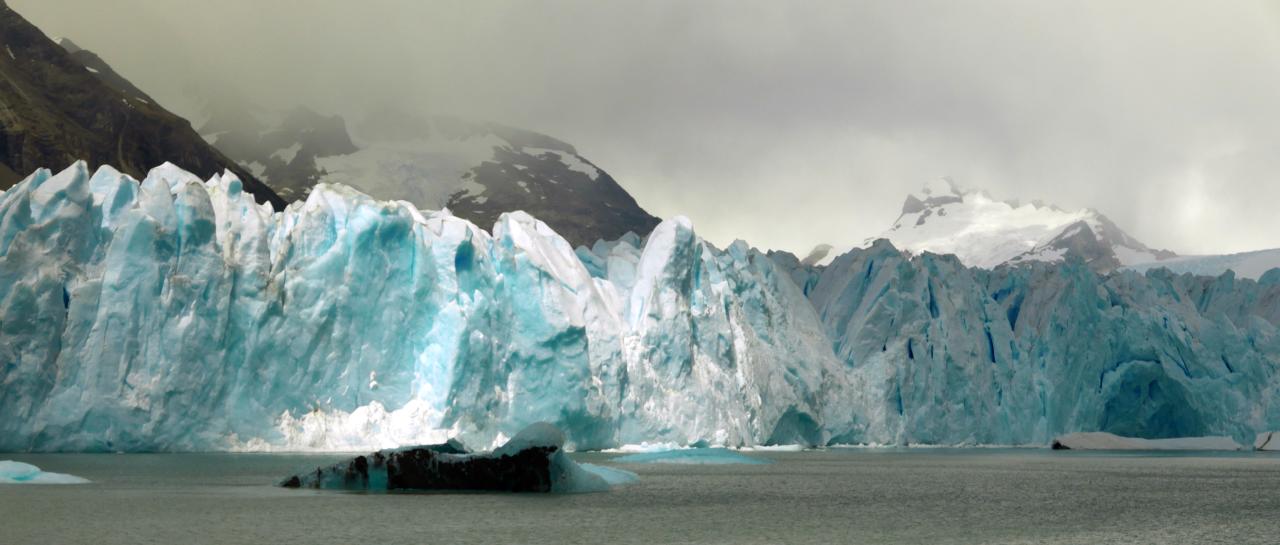
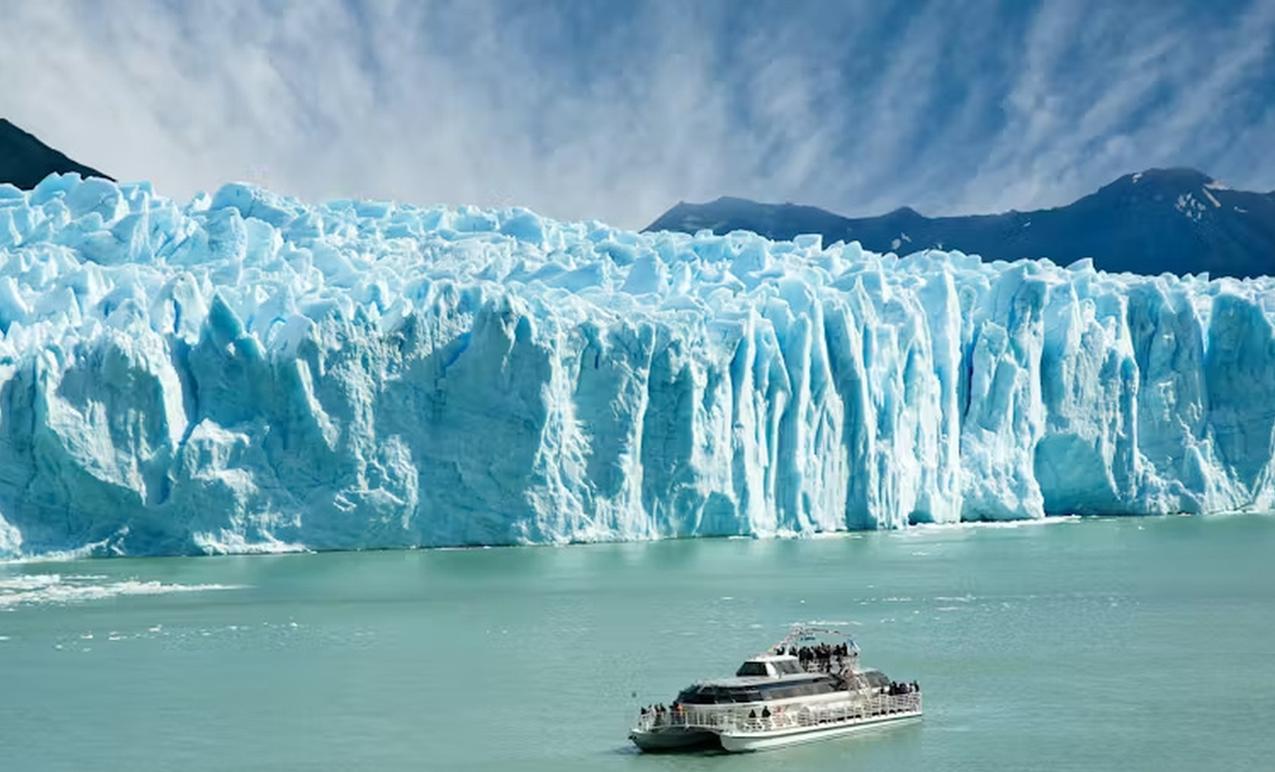
The Perito Moreno Glacier, a UNESCO World Heritage site, is massive, approximately 30 km long, 5 km wide, with walls rising 70 m above Lago Argentino.
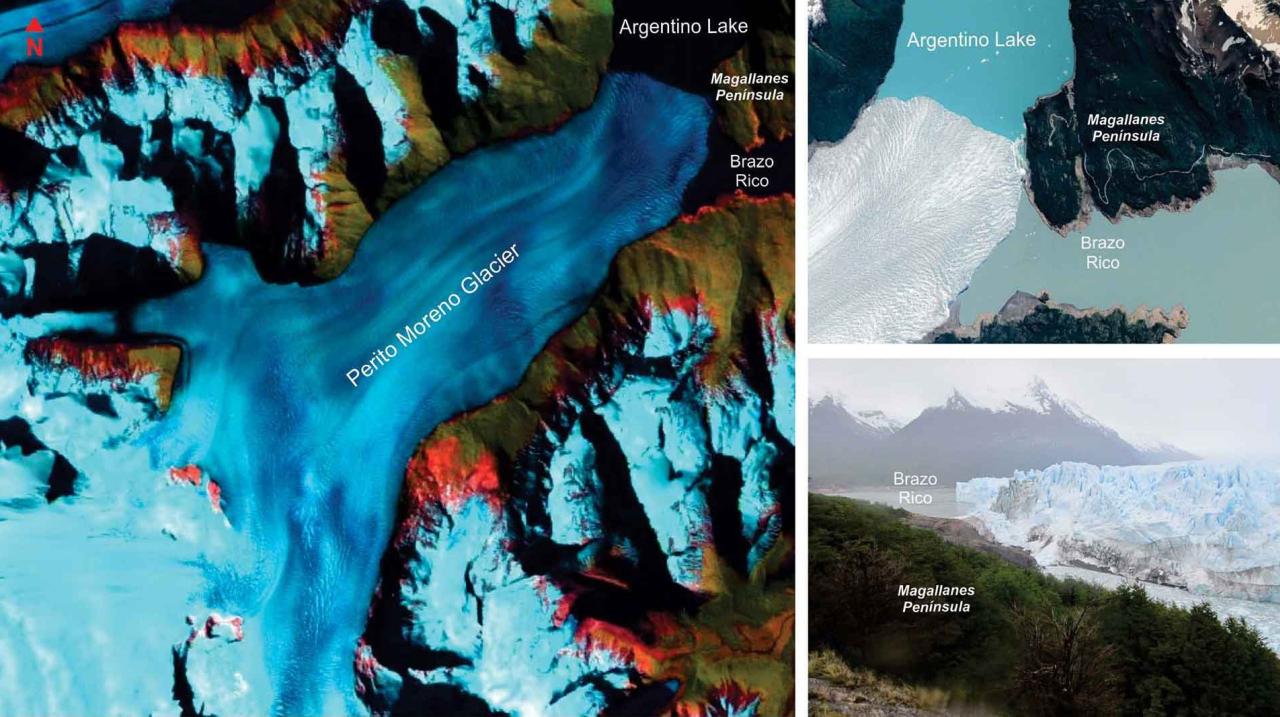
Flowing into a narrow channel of the Argentino Lake, it sometimes advances far enough to block the Argentino Lake from the Brazo Rico. This forms a natural ice dam, cutting off water flow and causing water to build up behind it.
This situation generates differential stresses at the glacier terminus and causes the progressive transfer of water to the Argentino Lake through a natural tunnel excavated in the ice.
When the pressure becomes too much, the dam bursts.
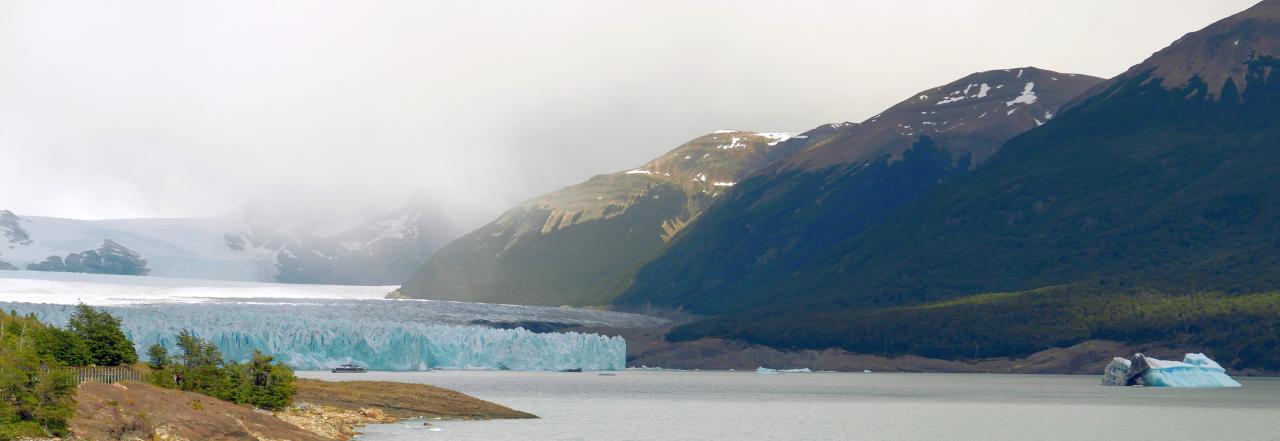
We were fortunate to get closer to the glacier by boat. This boat accommodates approximately 250 tourists. You can see it at 10 o’clock, to the right of the green trees. This indicates the scale of the glacier at its lowest point.
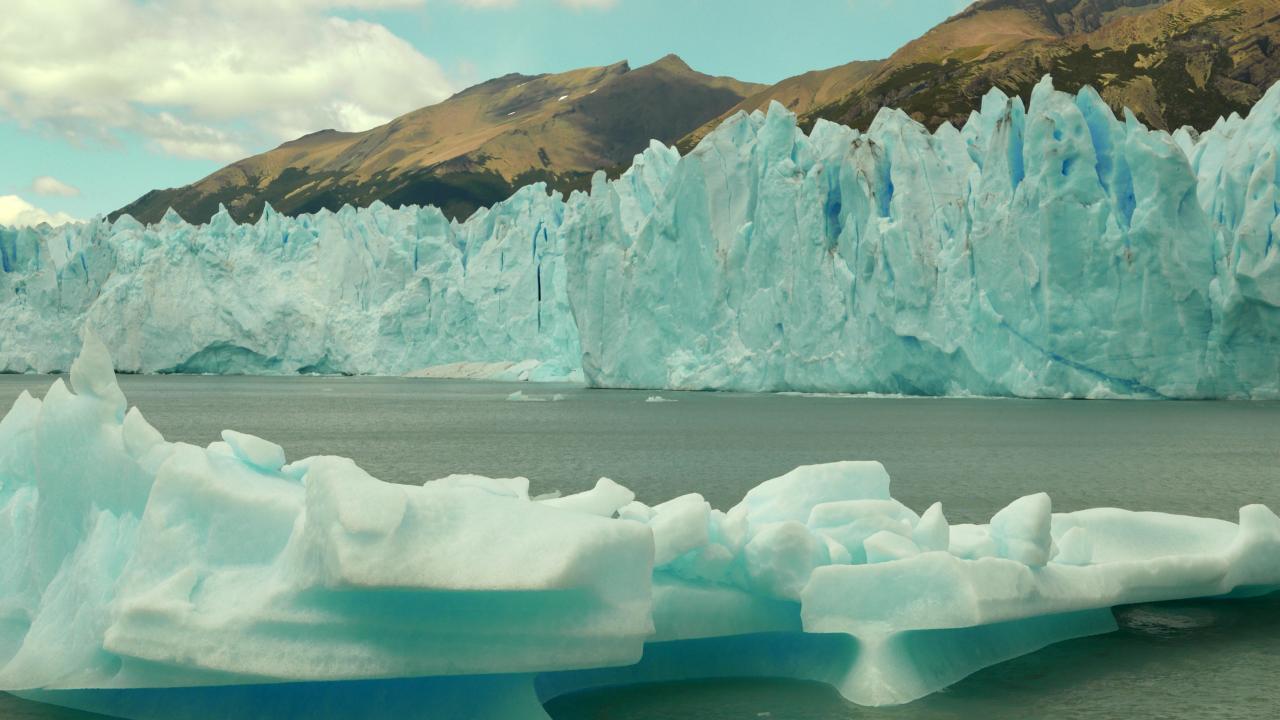
This glacier is renowned for its brilliant blue ice and dramatic calving, dropping massive chunks of blue ice into the lake.
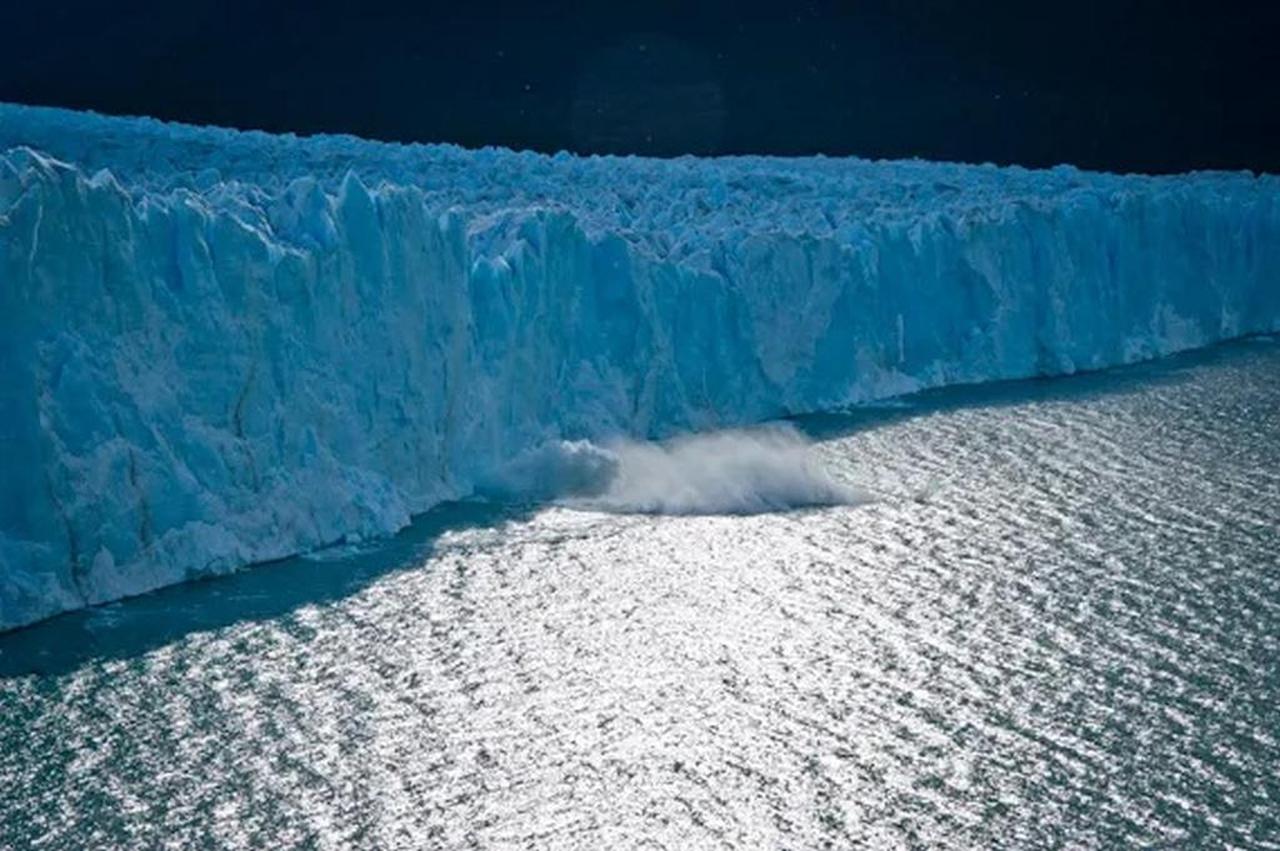
When it calves it sounds like a canon going off!
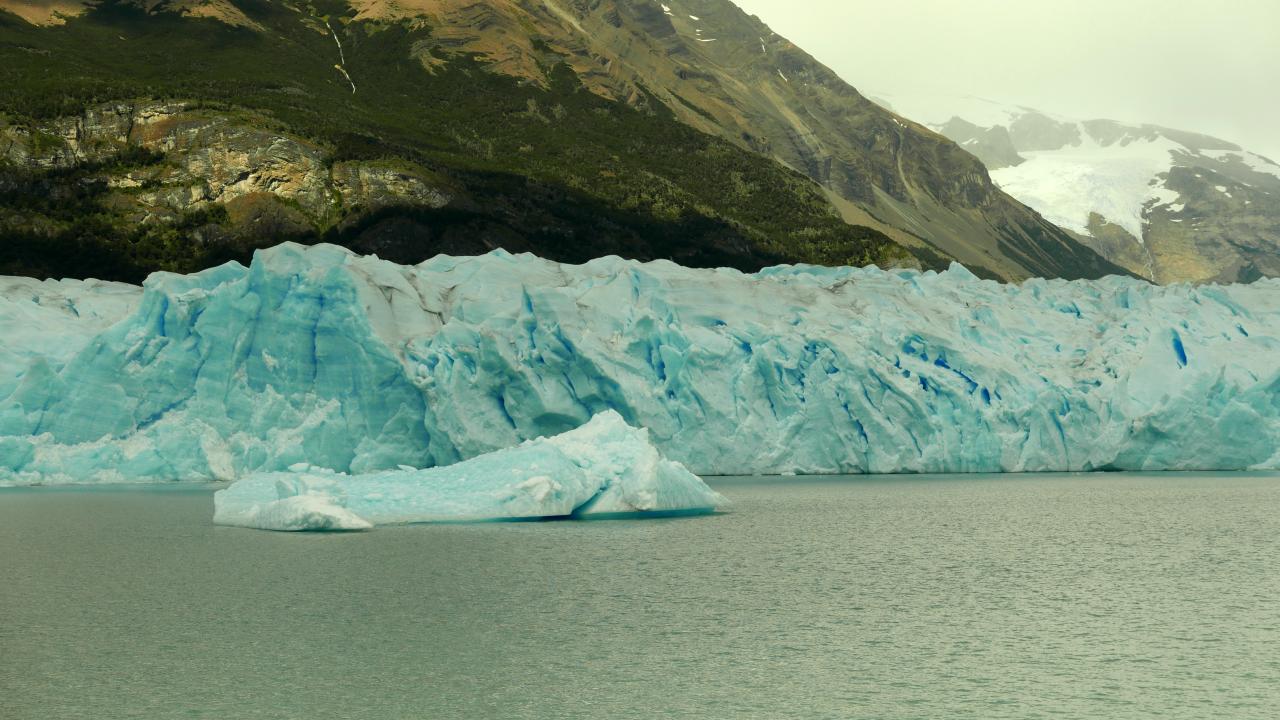
The weathers mood and colours change constantly, and very quickly.
Perito Moreno stands out as one of the rare glaciers in the Southern Patagonian Ice Field that has not diminished over the past five decades, making it unique amid the challenges posed by global warming.
However, this situation is expected to shift. Years marked by decreased snowfall and warmer summers have compromised the glacier’s stability.
Researchers now believe that Perito Moreno will no longer advance onto the opposite shore of the lake.
Rather, it is anticipated to continue withdrawing further into the lake’s depths, where the deeper water will hasten its breakdown. This is because glaciers tend to calve more swiftly in deeper waters. Predictions are that the glacier’s front will soon begin to float, increasing its instability. Ultimately, visitors will no longer be able to see Perito Moreno as it recedes into the mountainous terrain beyond.
The diminishing of Perito Moreno signifies more than just a lost photographic moment; it reflects a global trend affecting mountain glaciers worldwide. These glaciers are melting at unprecedented rates. Since 2000, mountain glaciers have shed over 6,500 billion tonnes — about 5% — of their ice. In Iceland, glaciers have even been commemorated with funerals to acknowledge their loss.
As glaciers thaw, they release stored freshwater back into the oceans, contributing to rising sea levels.
Additionally, the melting glaciers pose significant human challenges related to water supply. Serving as natural reservoirs, glaciers accumulate winter snowfall and gradually release meltwater throughout the year. Hundreds of millions depend on this steady flow for drinking, agriculture, and sanitation. The disappearance of glaciers would mean losing this vital and reliable water source.
The anticipated loss of Perito Moreno is not merely a concern for Patagonia but serves as a stark indication of the fate awaiting the world’s remaining glaciers.

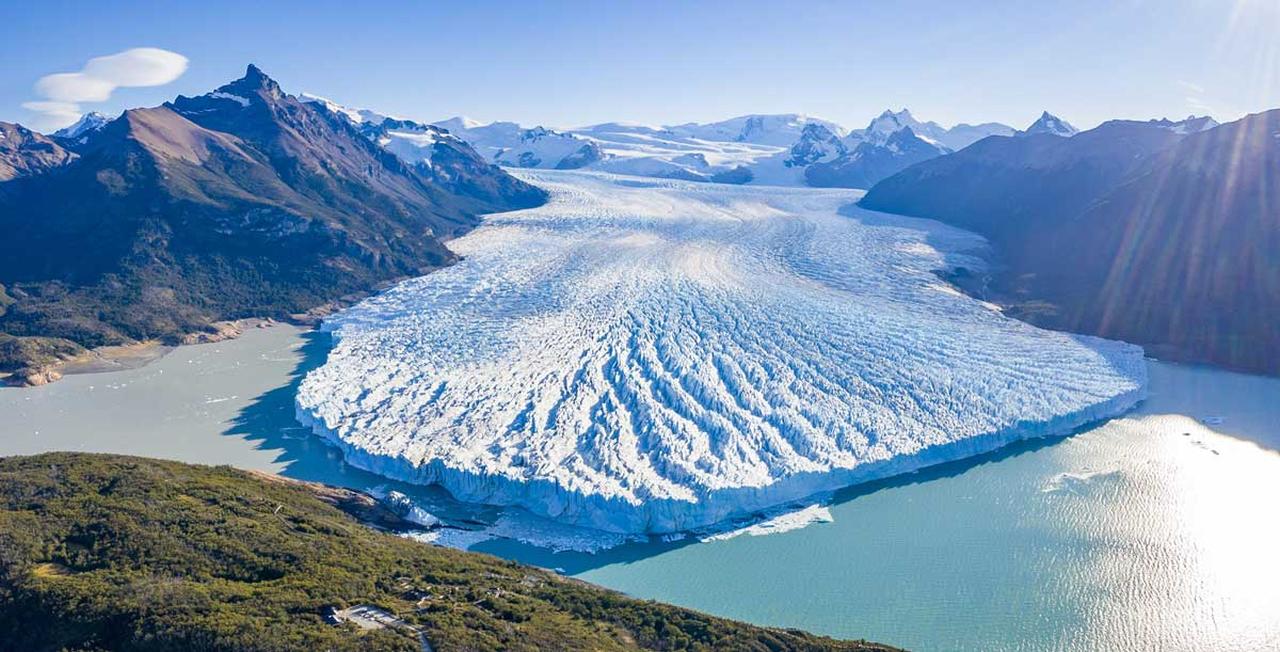
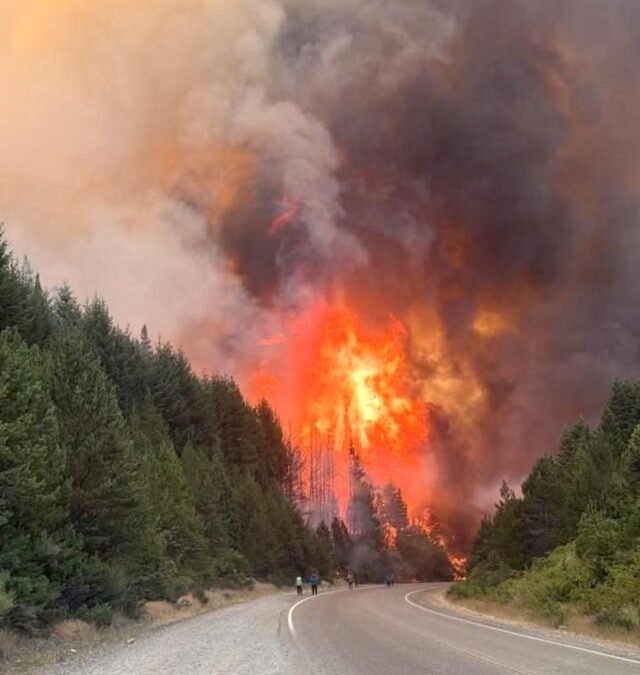
This photo is not ours, but for us it is a sobering reminder of what we stand to lose.



Fascinating. Once in a lifetime experience. Far too little has been done by governments of the world on the effects of Global Warming. Future generations face serious challenges that melting glaciers pose. What would the geography of planet earth look like in 50 to 100 years from now ? Very scary stuff.
I am in awe of the colour, depth and height of this receding beauty.
No wonder it is a world heritage site. Amazing and Scary at the same time! Thanks for all the detail that makes the whole so much more present and dramatic. Yes your little boat looks so small but could take 250 tourists!
Next time you go take Tr—p with you. He needs a lesson in Global Warming.
This could be or will be a true disaster in the coming years. How terrible. Thanks for the amazing photos and text
I immediately worried about the dam bursting while I am in the boat and washing 3 km out into frigid sea. Beautiful though.
Extraordinary, a privilege to see it. Such a wonderful natural happening. Huib, Amsterdam.
One day I will get there! Thank you so much for going to the effort of posting. Stunning pictures.
Looks cold…but beautiful!
Fascinating. That tourist boat is more age appropriate for you two!😉