
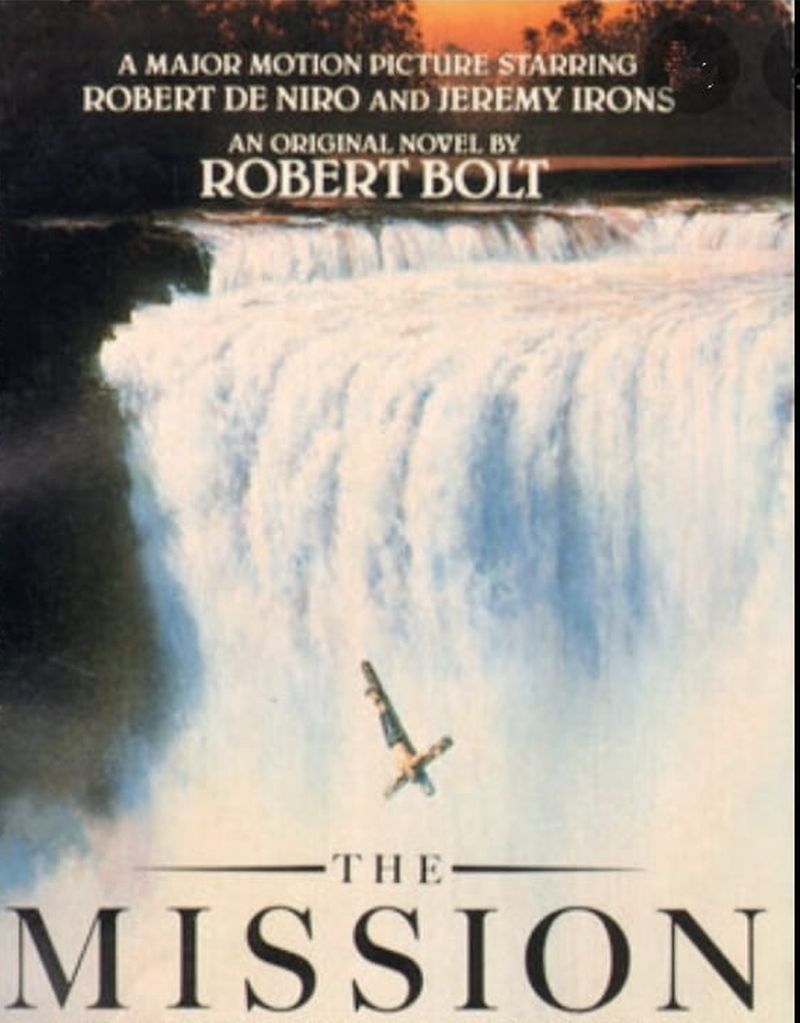
The Iguazu River carries, and its Falls drop, a Jesuit missionary, strapped to a cross, like Jesus. The plunging abyss below sucks him in and spits him out. Like the indigenous Guarani people he missions to convert. If only it ends here …..
This is a flashback. We are on that rubber duck, and stare up at the Iguazu Falls with fellow fun seekers. It flashes ‘The Mission’! The award winning 1986 movie starring Robert de Niro, Jeremy Irons and a very young Liam Neeson. We watch it again.
This movie pulls together 5 threads of wretched history.
- Guanari people, indigenous to the Amazon jungle.
- Mercenary slave traders that capture and sell Guarani people.
- The Jesuit missionaries convert Guarani to Christianity and together build self-sufficient mission stations. These are safeguards against slave traders and forced labour.
- Spain and Portugal horse-trades land between their colonies. And expels these ‘inconvenient’ Jesuits by Royal decree. Forces destroy one or two Guarani Mission Stations. The rest, abandoned, fall into ruins.
- The Church watches by quietly.
Oh, the end scenes of the movie rivet ….
Joint Portuguese and Spanish forces attack the mission station. Jesuit priests shield their Guarani congregation in a magnificent jungle church. Torched arrows ignite the church, flames surge, smoke billows. Priests come out and carry a monstrance with the Blessed Sacrament. They lead Guarani women and children, singing in a religious procession. Guns discharge into the procession and kill a priest, then another. A Guarani man picks up the Blessed Sacrament and continues. As they sing, more drop to the ground. At last, thankfully, it ends. But slave traders, lurk on the periphery, and capture and sell most of the Guarani. A small group of children manages to escape into the jungle.
And throughout, the Iguazu Falls, thunder. Water Falls like tears. It’s a testament to the shattering gravity of it all.
Oh dear, the Jesuits, and their missions, mess with my mind. It’s contentious! I suppose it depends on your perspective; either utopian or oppressive? Supporters describe them as a unique, semi-autonomous and prosperous social experiment that protects indigenous Guarani from enslavement. Critics argue they are theocratic regimes that control the religious, political and economic life of indigenous communities and suppress local cultures.
I know which way I sway.
But regardless, this seems clear. The Jesuits, and their missions, fall prey to global geo-politics and the Church in Rome sells them out.
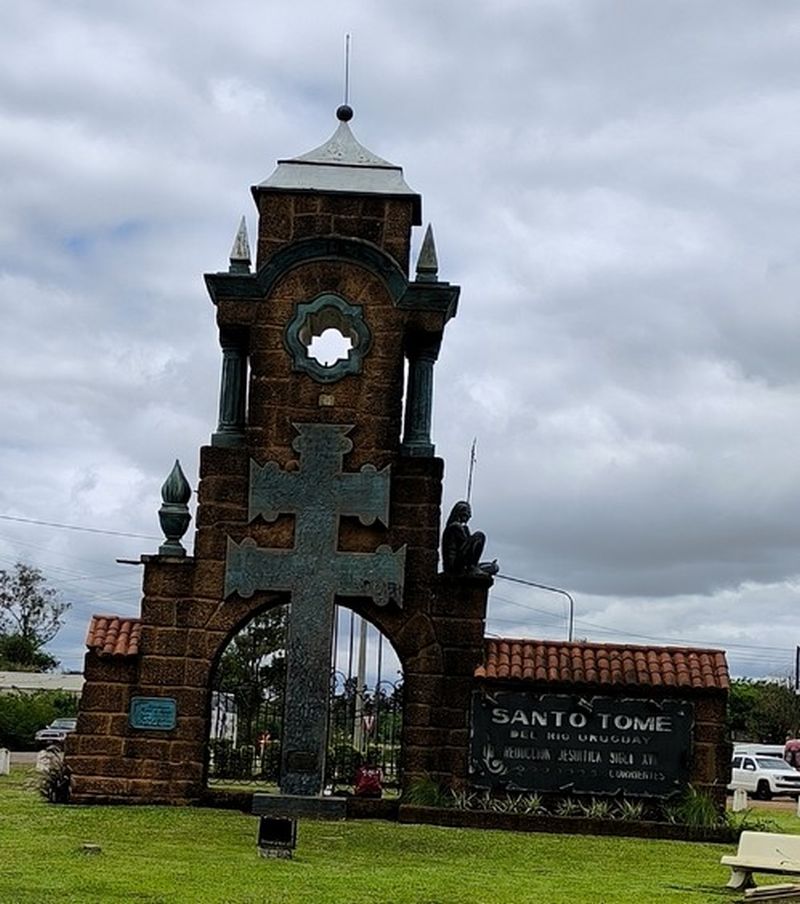
The Jesuit Order establishes about 30 missions in the 17th and 18th century. These settlements become home to about 142,000 indigenous Guarani.
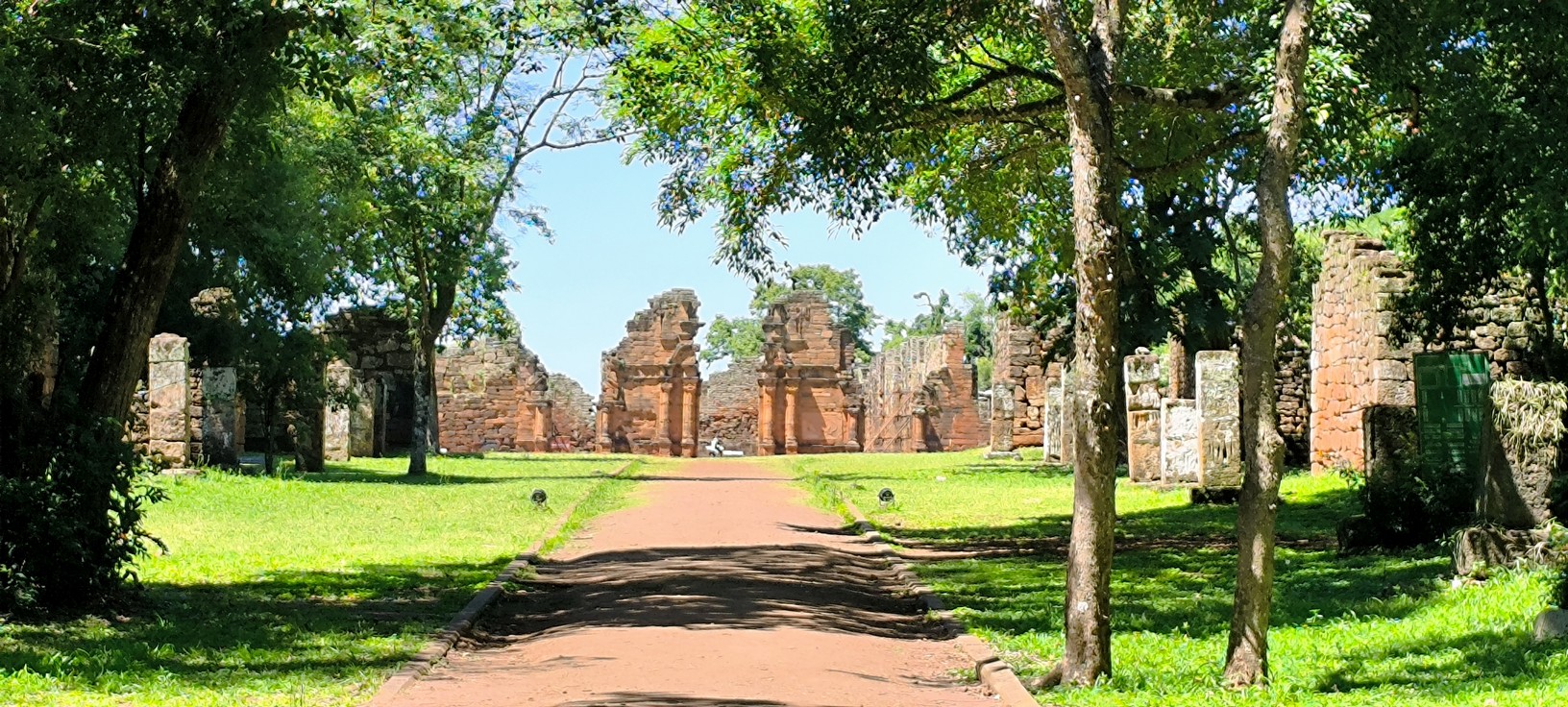
We visit the San Ignacio Mission.
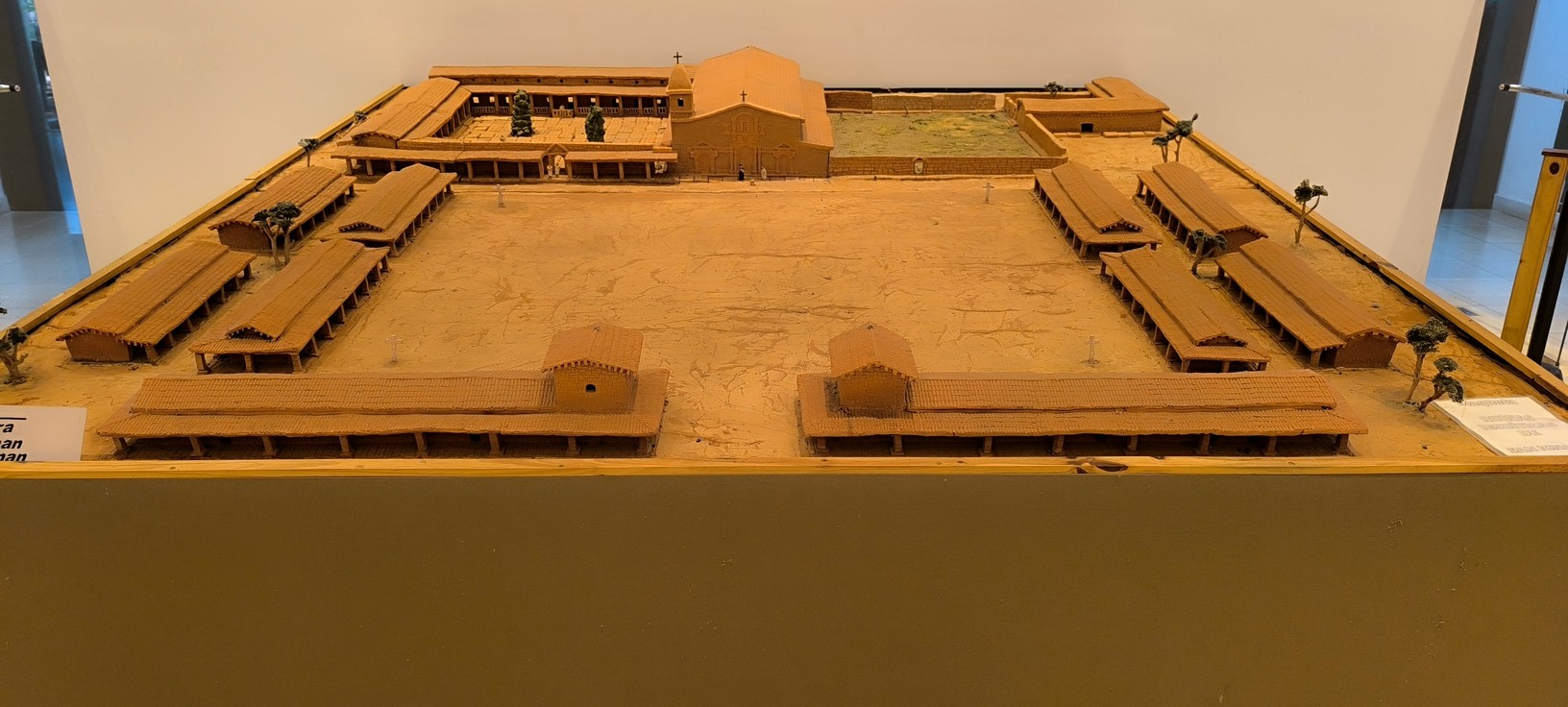
A model shows each mission generally has a church, central plaza, schools, workshops, vegetable gardens, a cemetery and residential barracks.
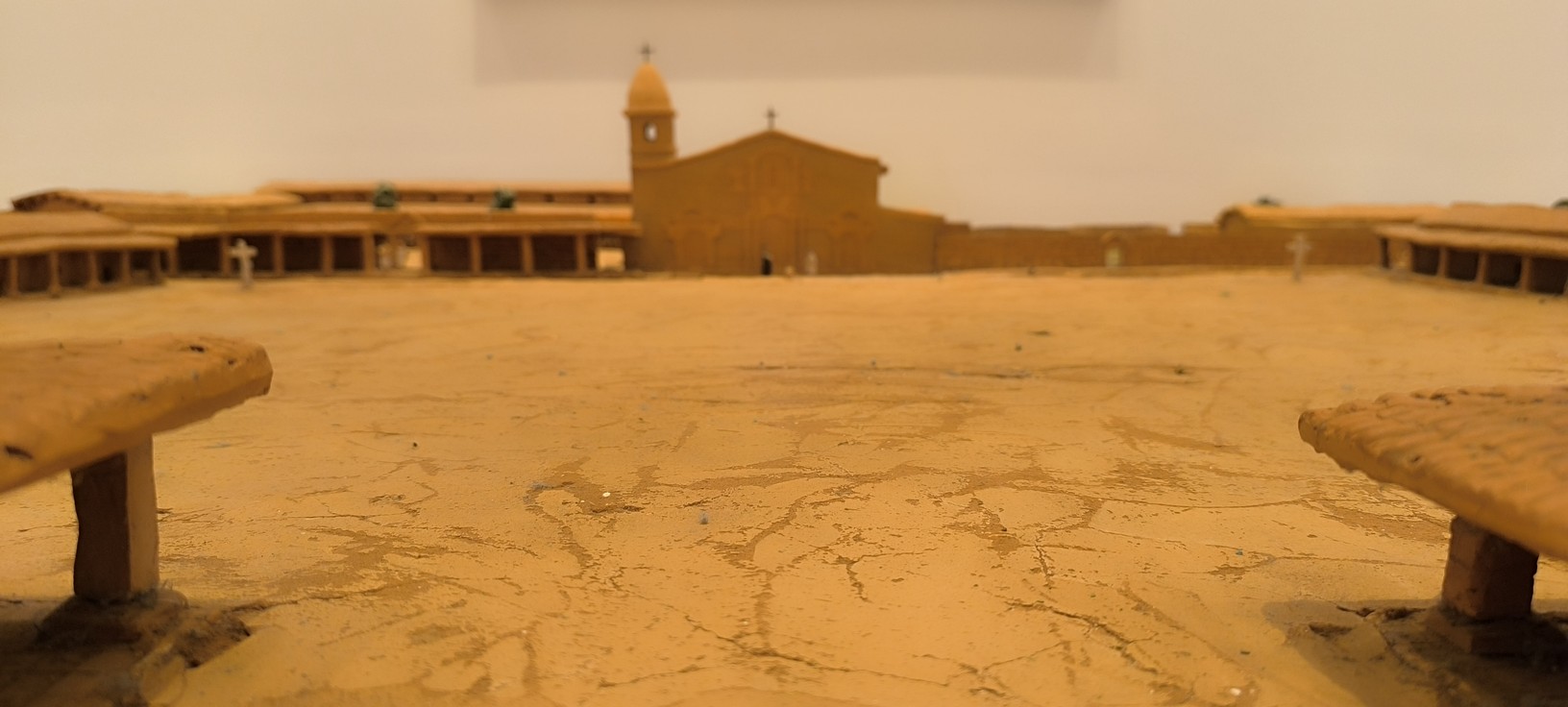
…

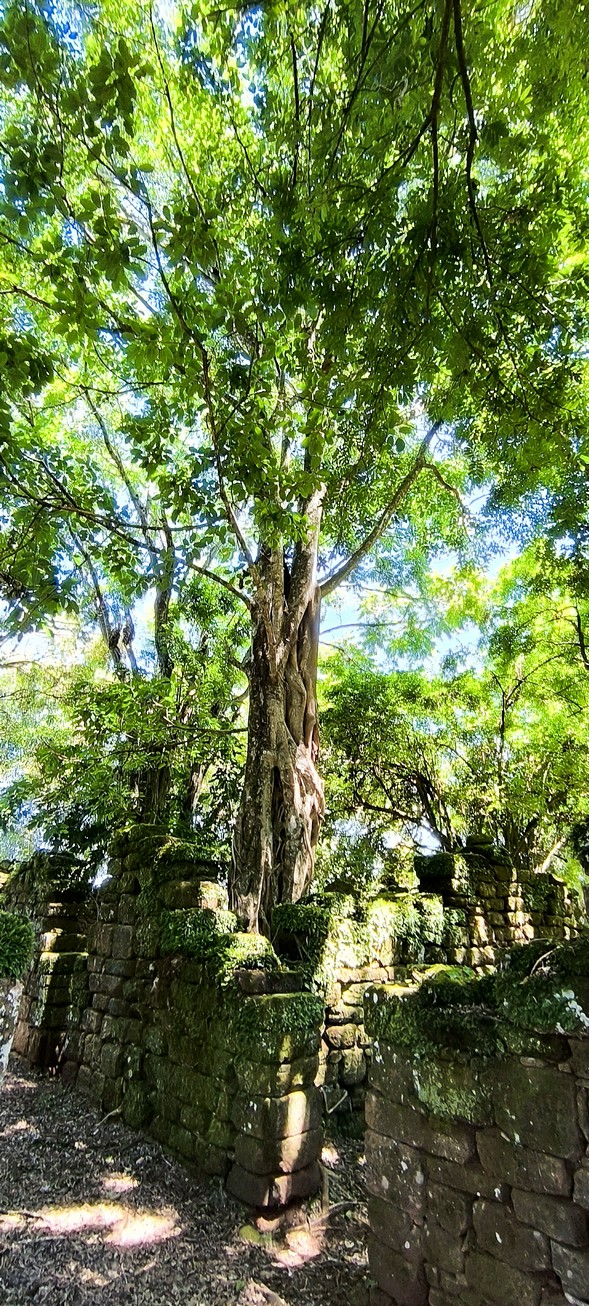
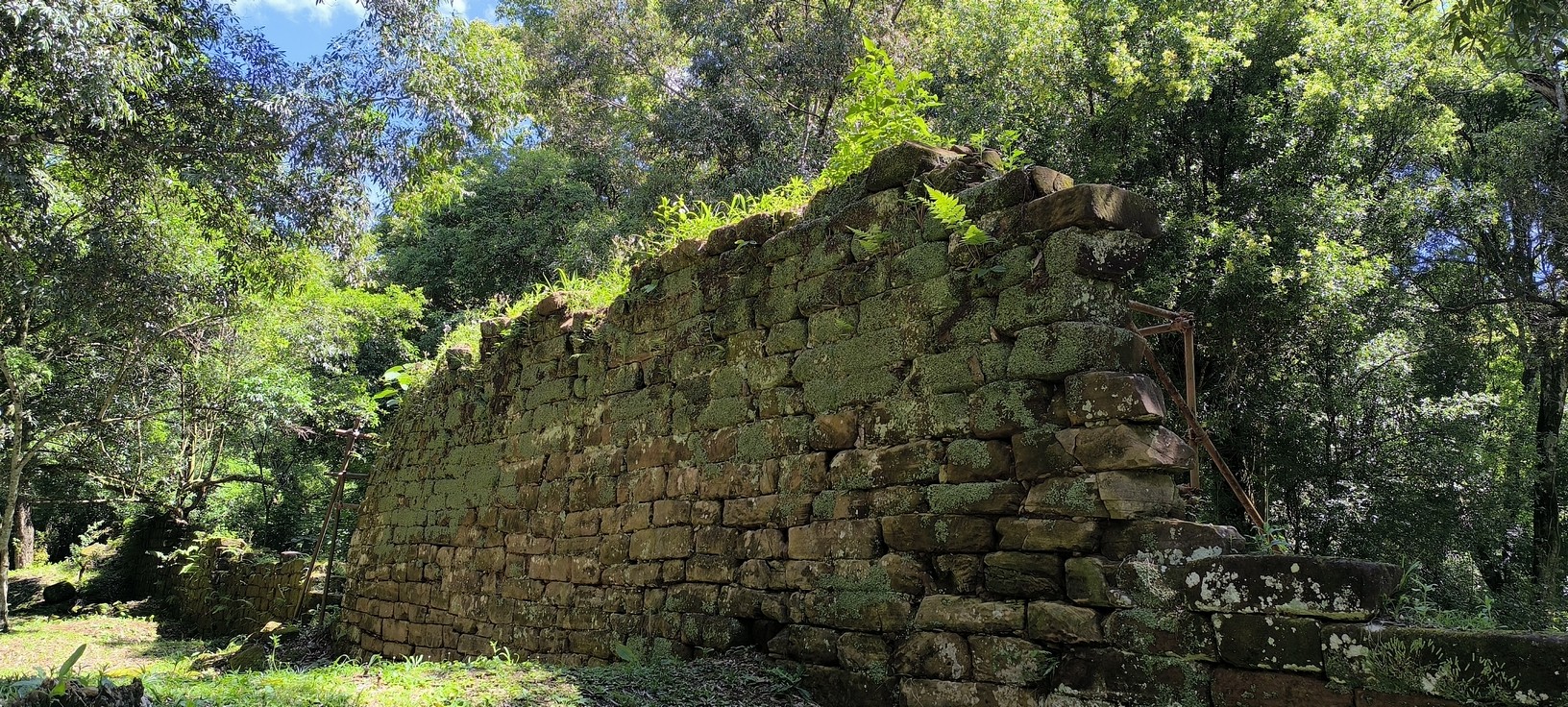
The forest is creeping back …

… but this San Ignacio Mission, and some others, are being maintained as World Heritage Sites.
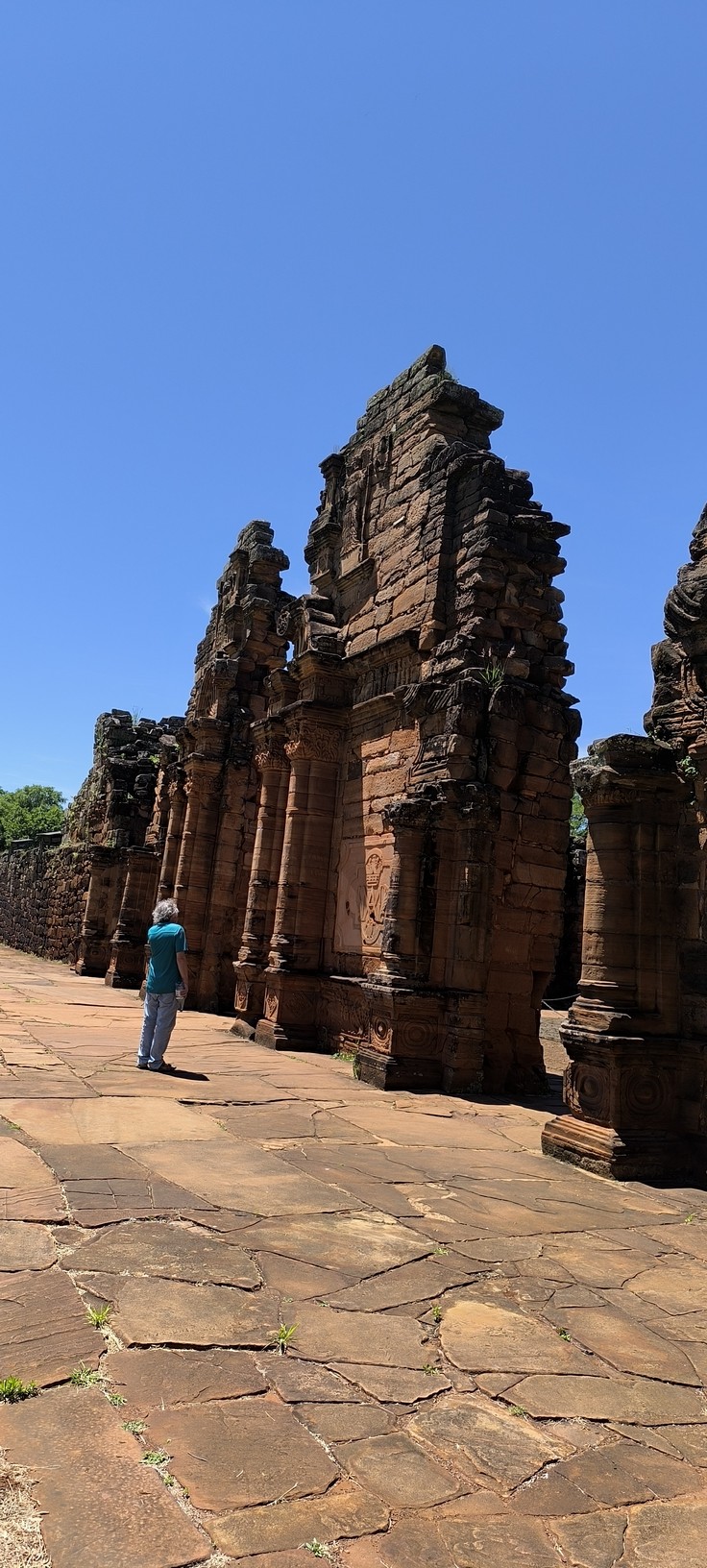
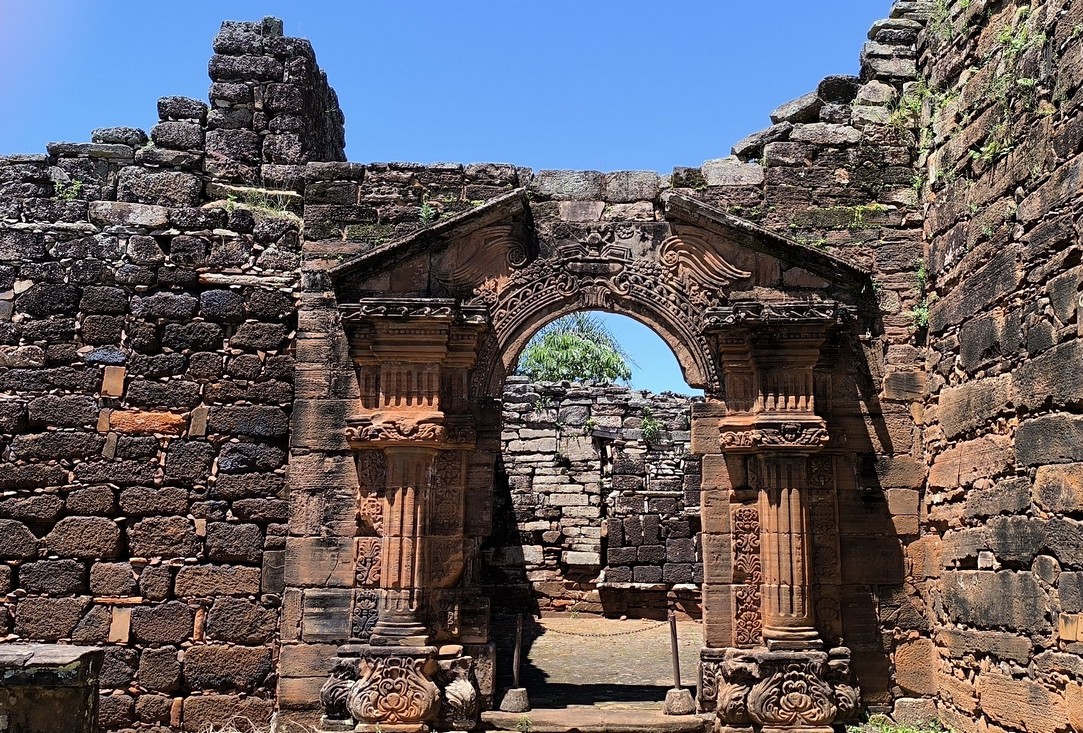
The chapel entrance towers above Harry.
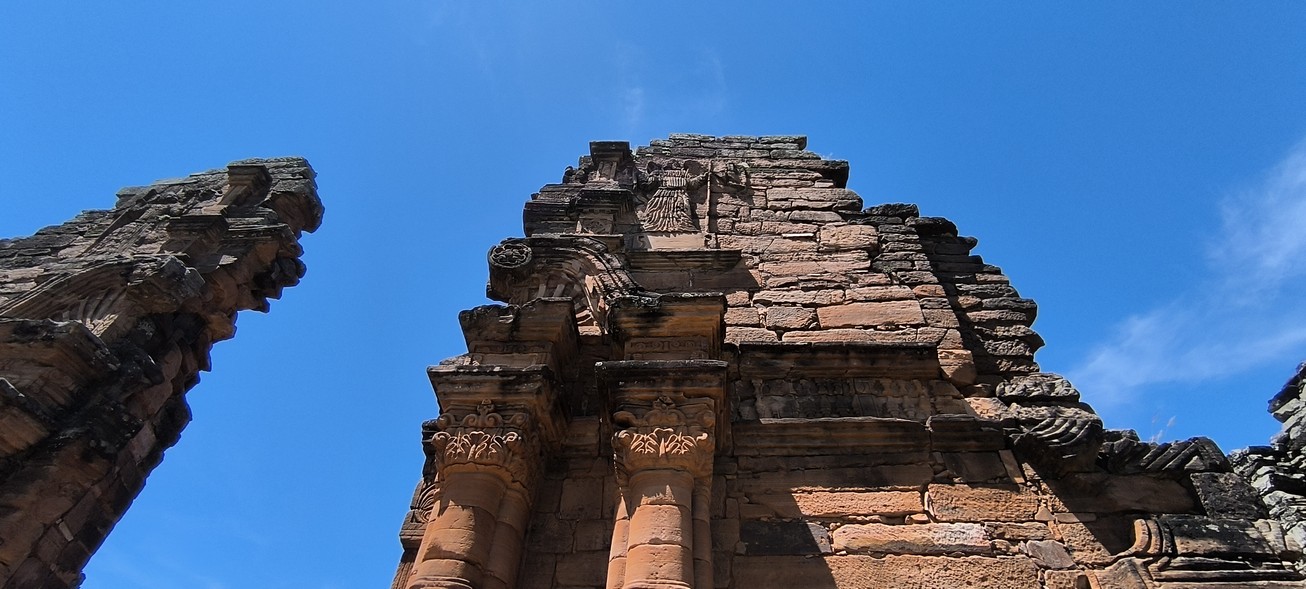
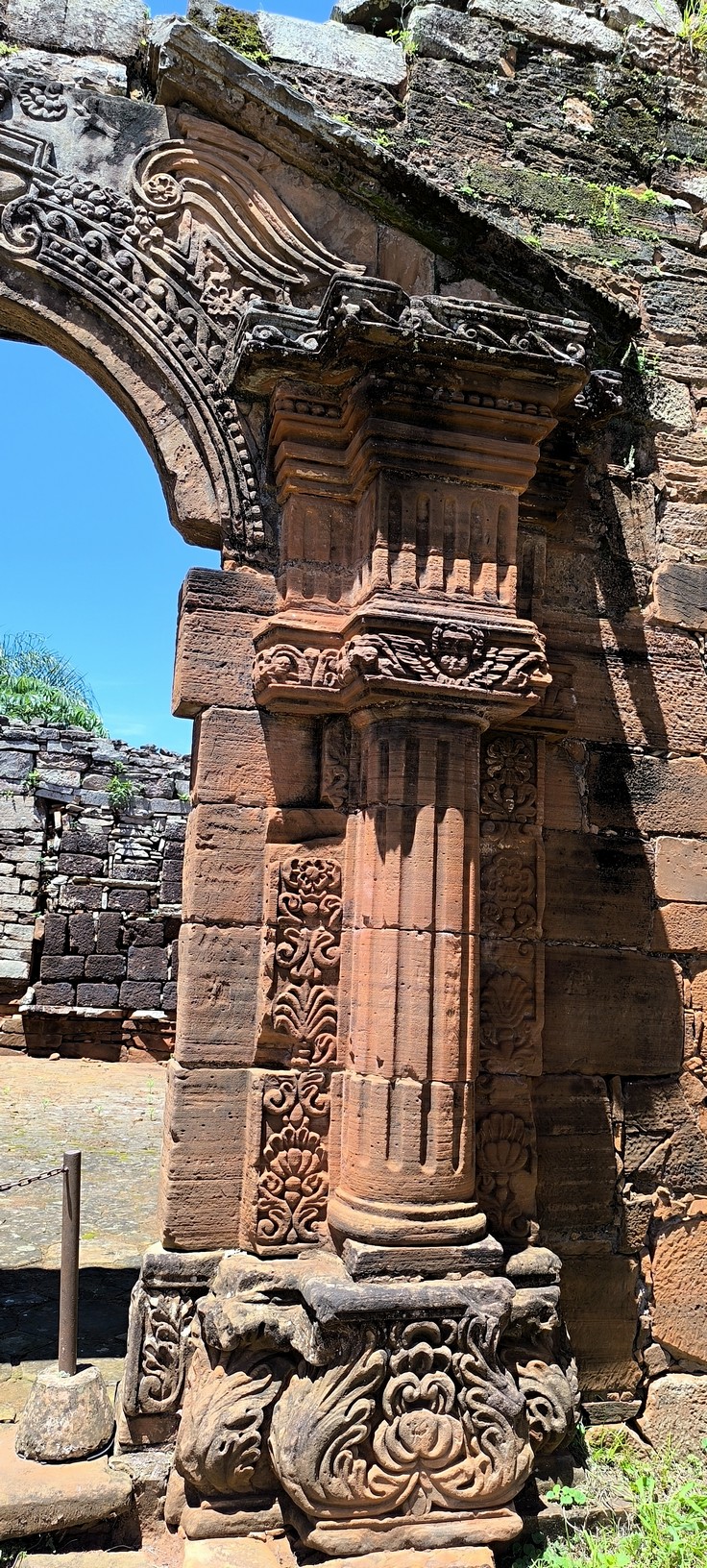
The missions are famous for their Guarani / Baroque style.
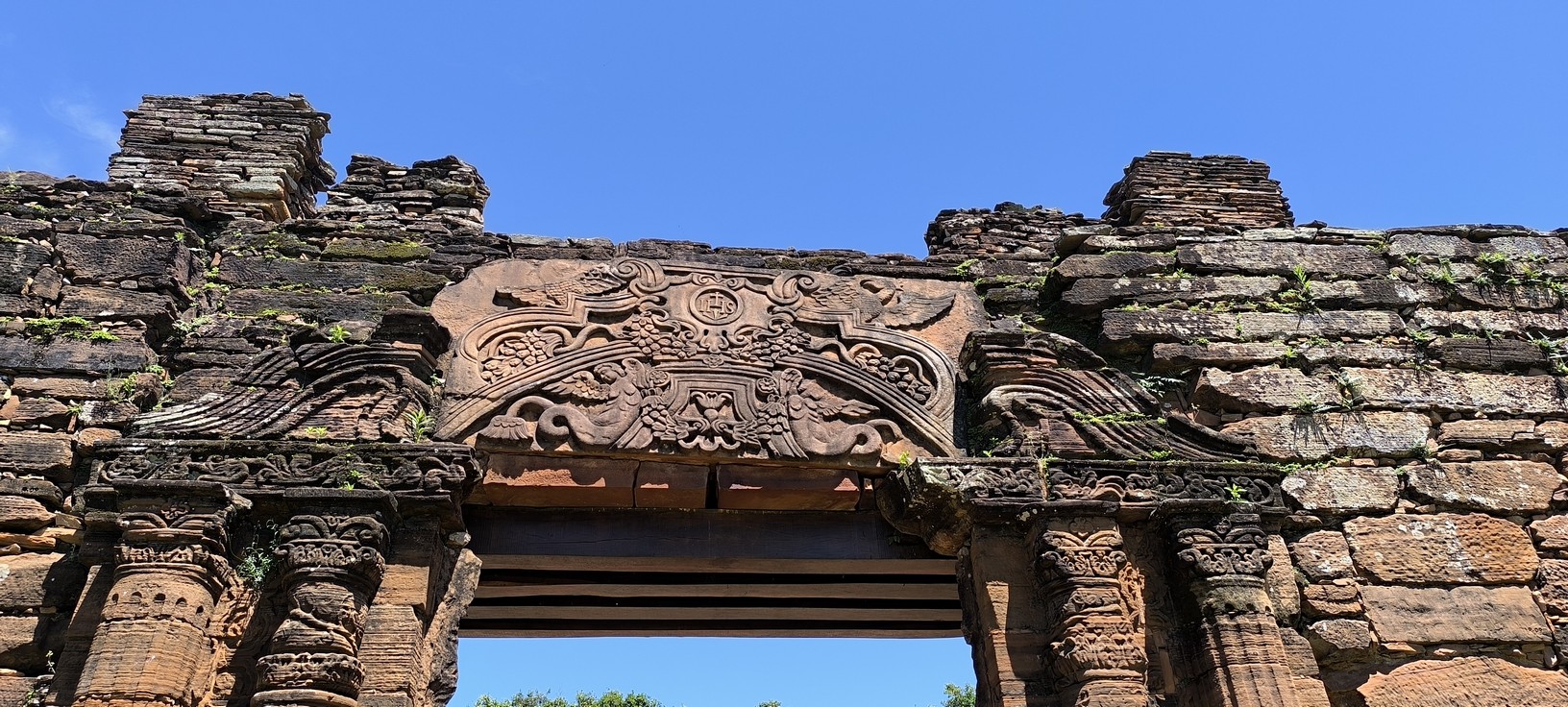
It is a fusion of European and indigenous influences, an expression of two cultures.
…
…
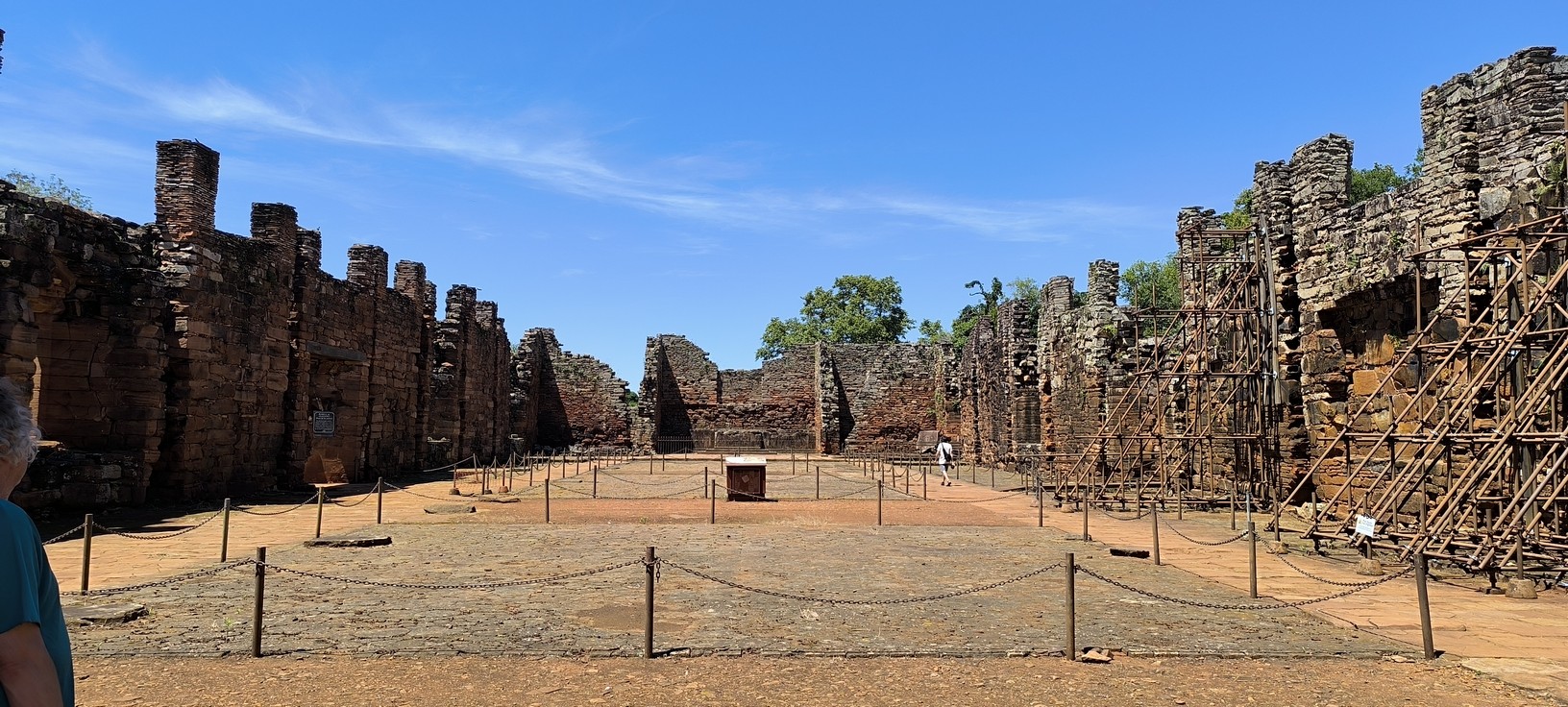
This is the present day inside of the chapel.
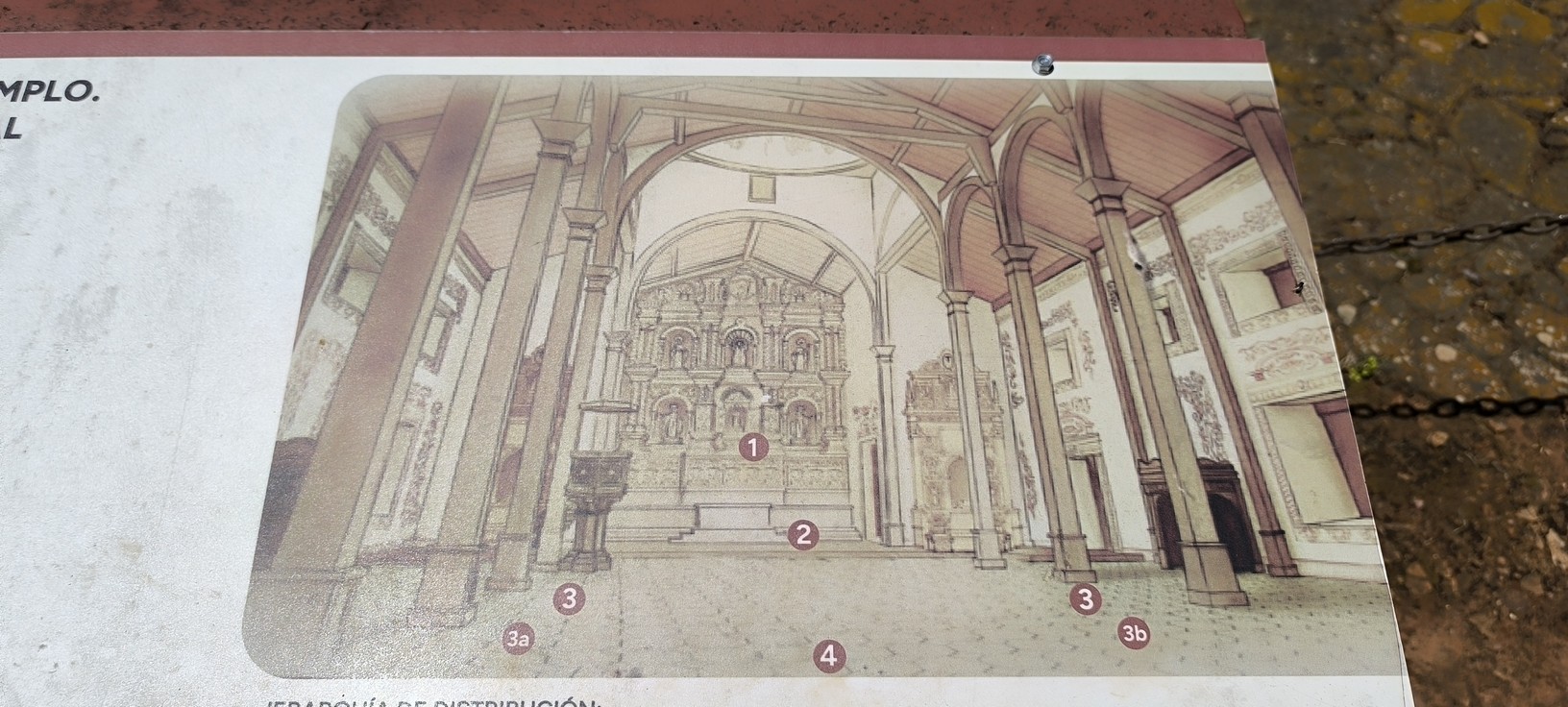
And an impression of what it would have looked like back then.

Here is the central plaza in front of the chapel.
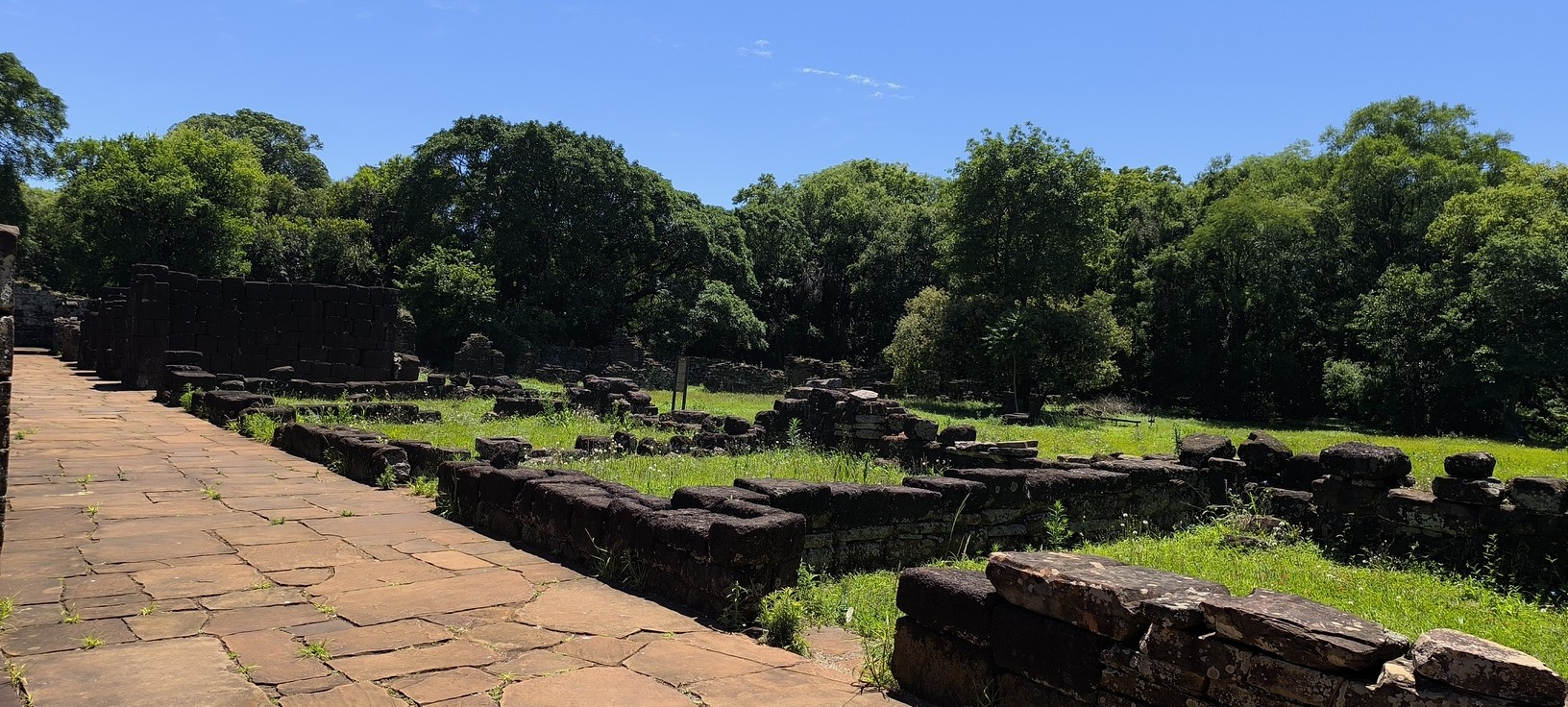
And the workshops abuzz with blacksmiths, carpenters, silversmiths, rosary-manufacturers, spinning mills, ceramic and sculpture artists.
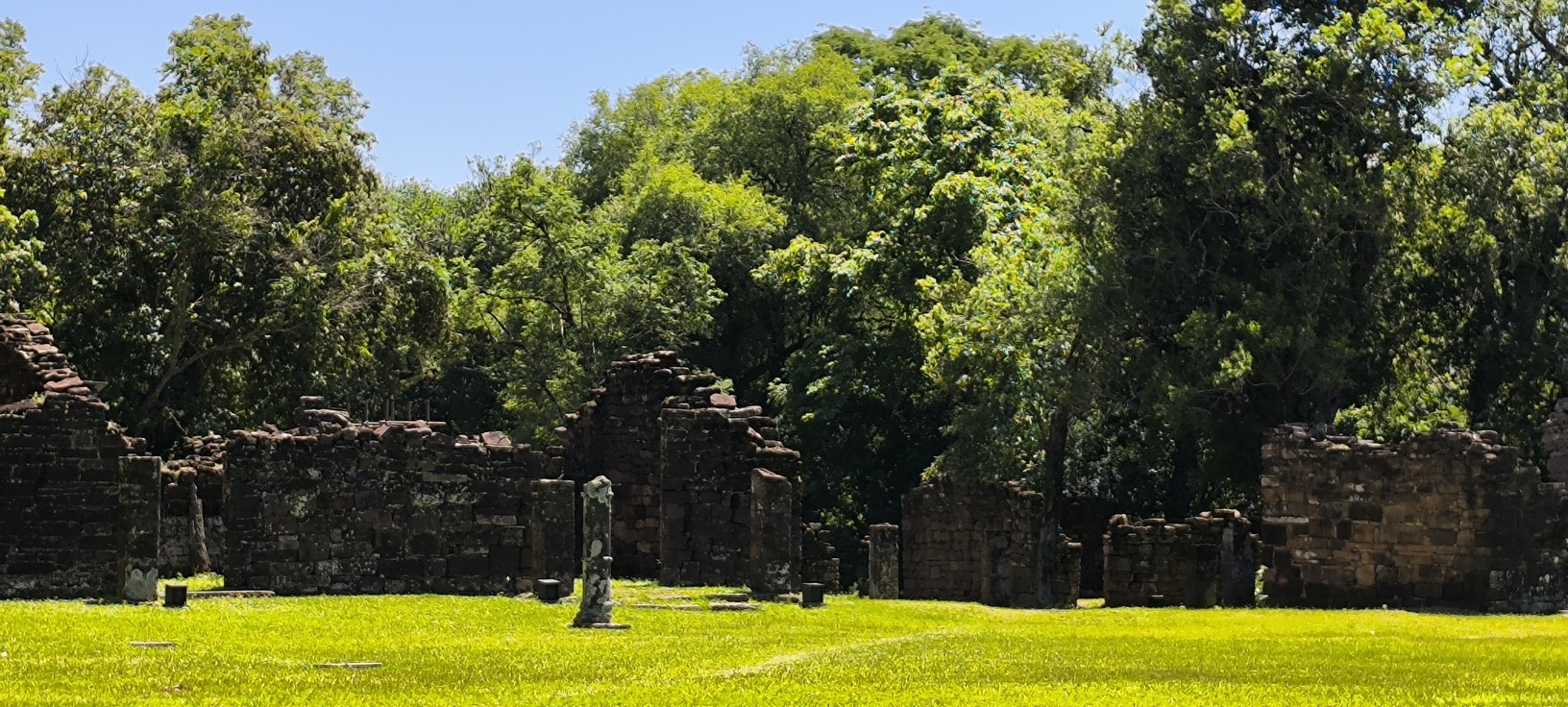
School rooms that teach Spanish and Guarani, as well as religious choirs, orchestras, painting, sculpture, architecture, theatre, art and dance.

Here are the residences.
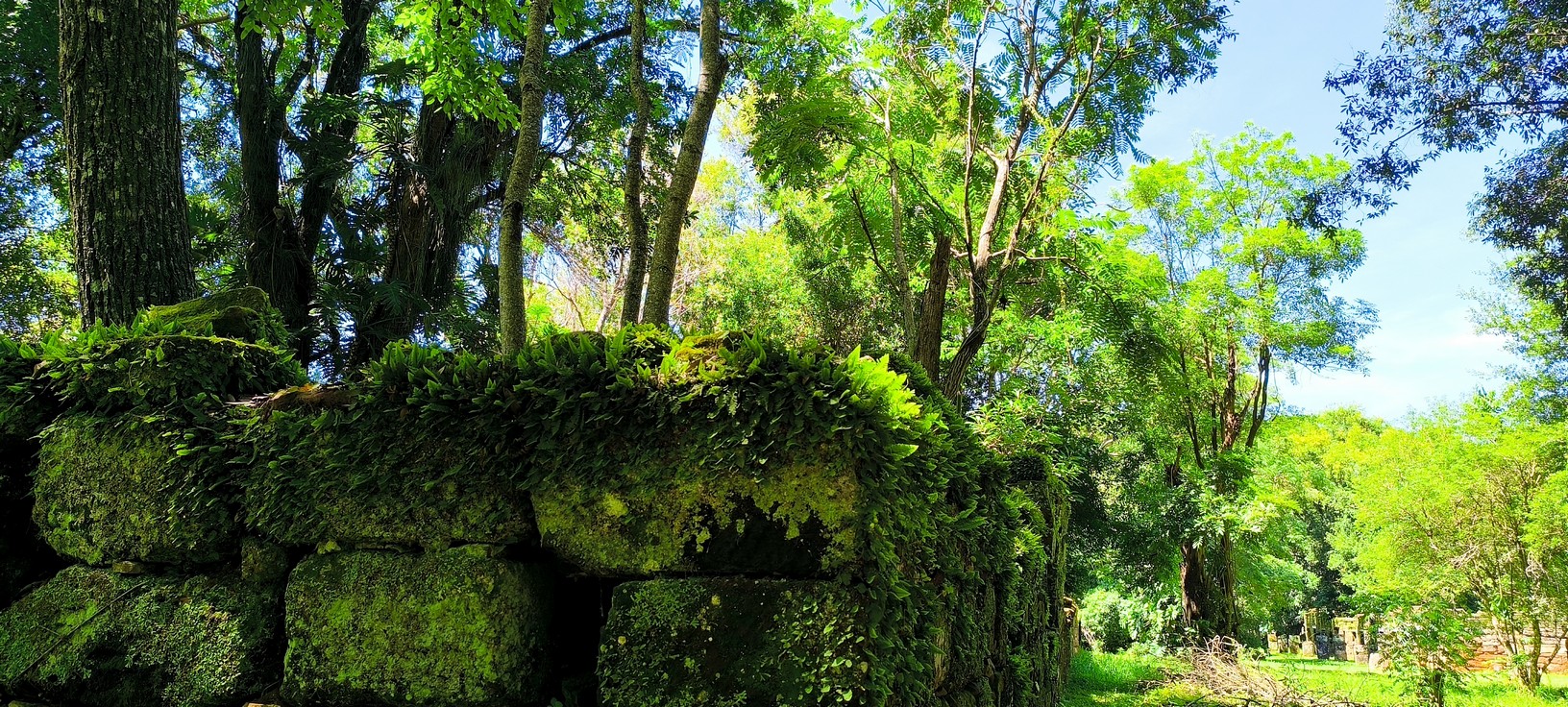
The forests slowly reclaim the land, but hopefully do not erase the memory of the happenings.
…

This is the second mission we visit; Loreto. This mission also slowly recedes into the forest …
…

…

…
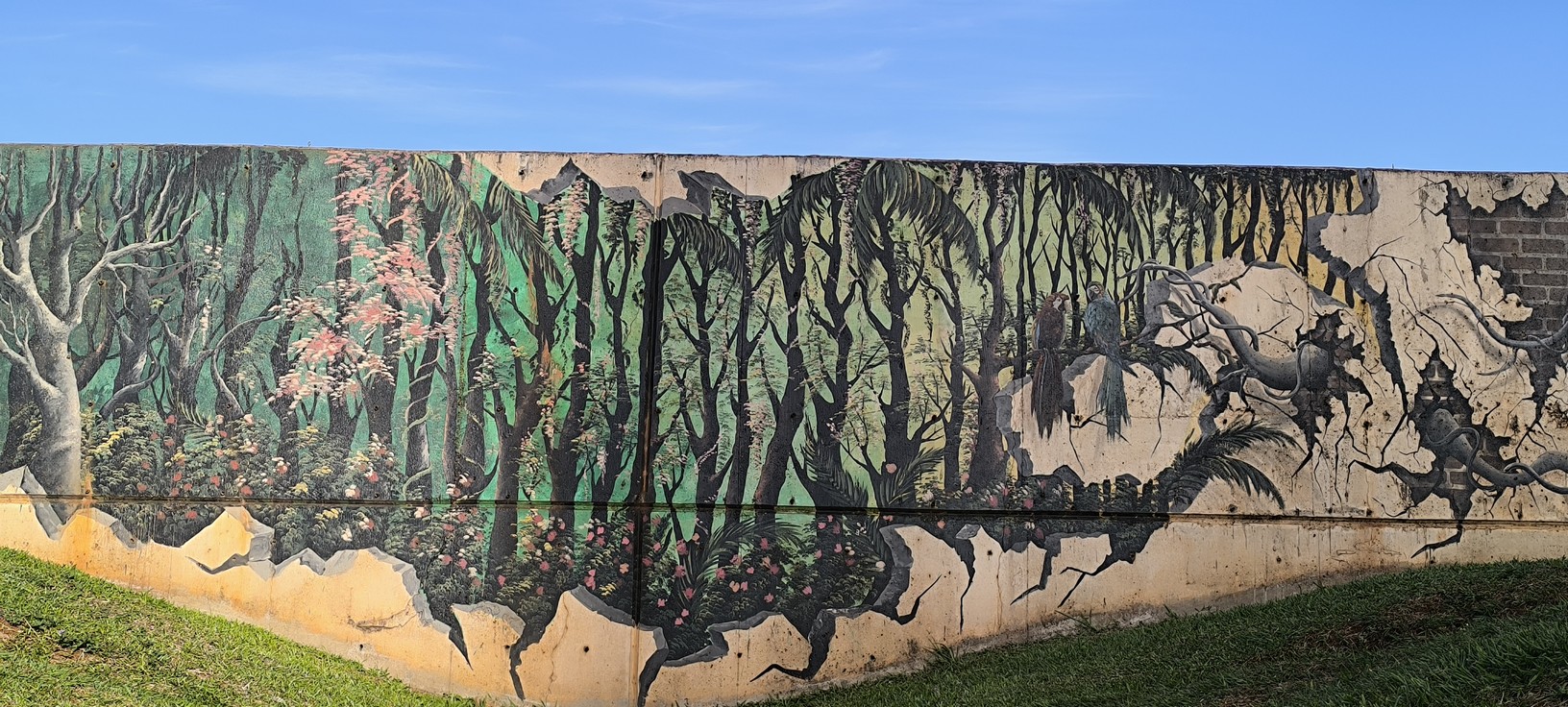
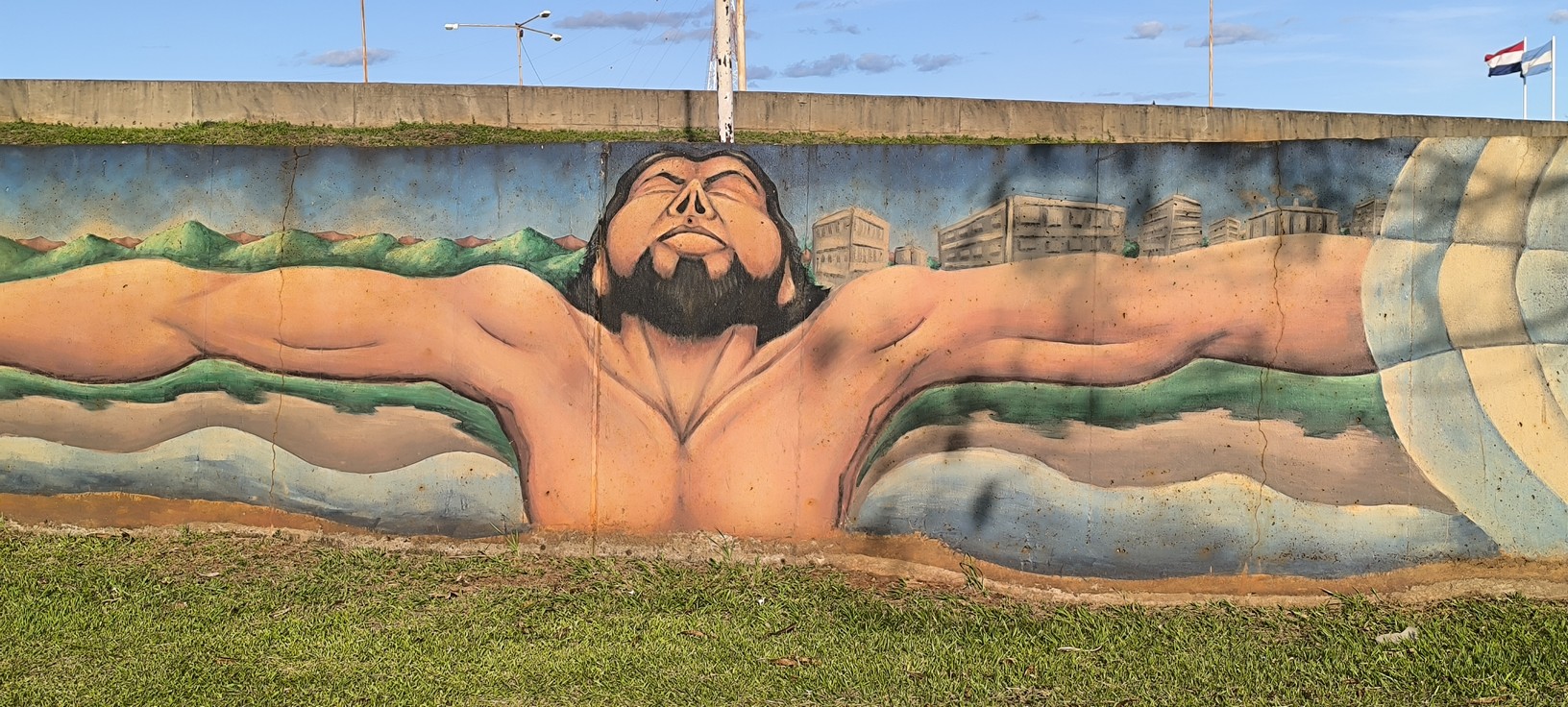
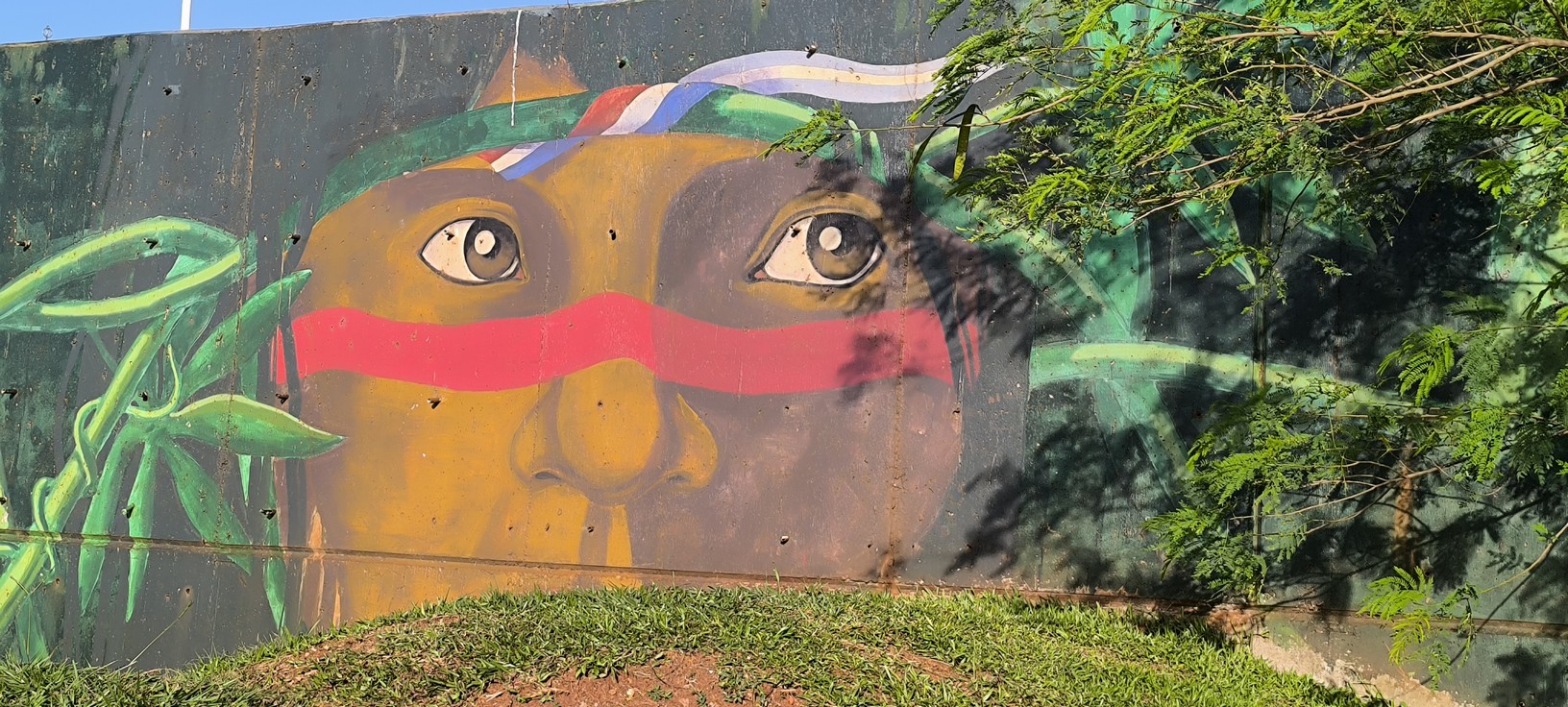
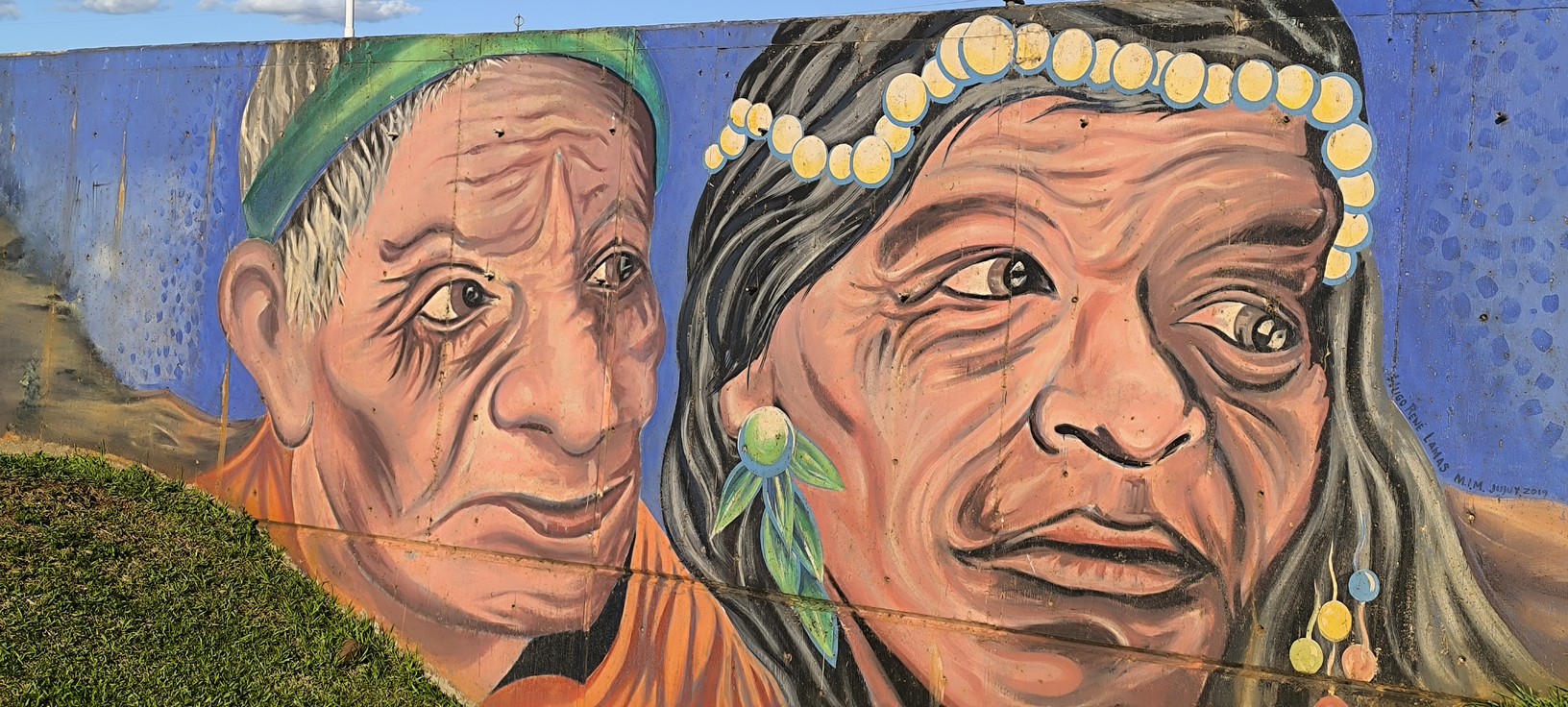
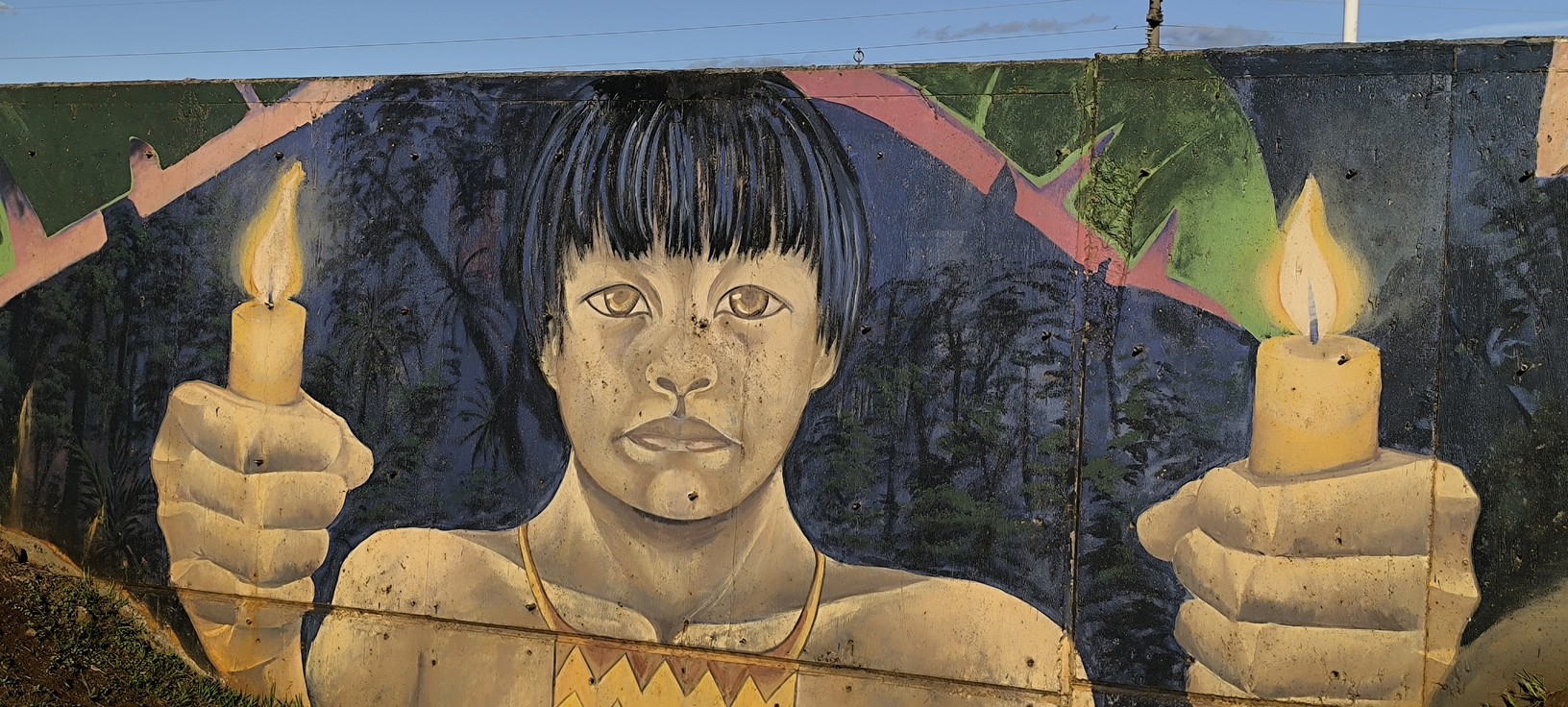
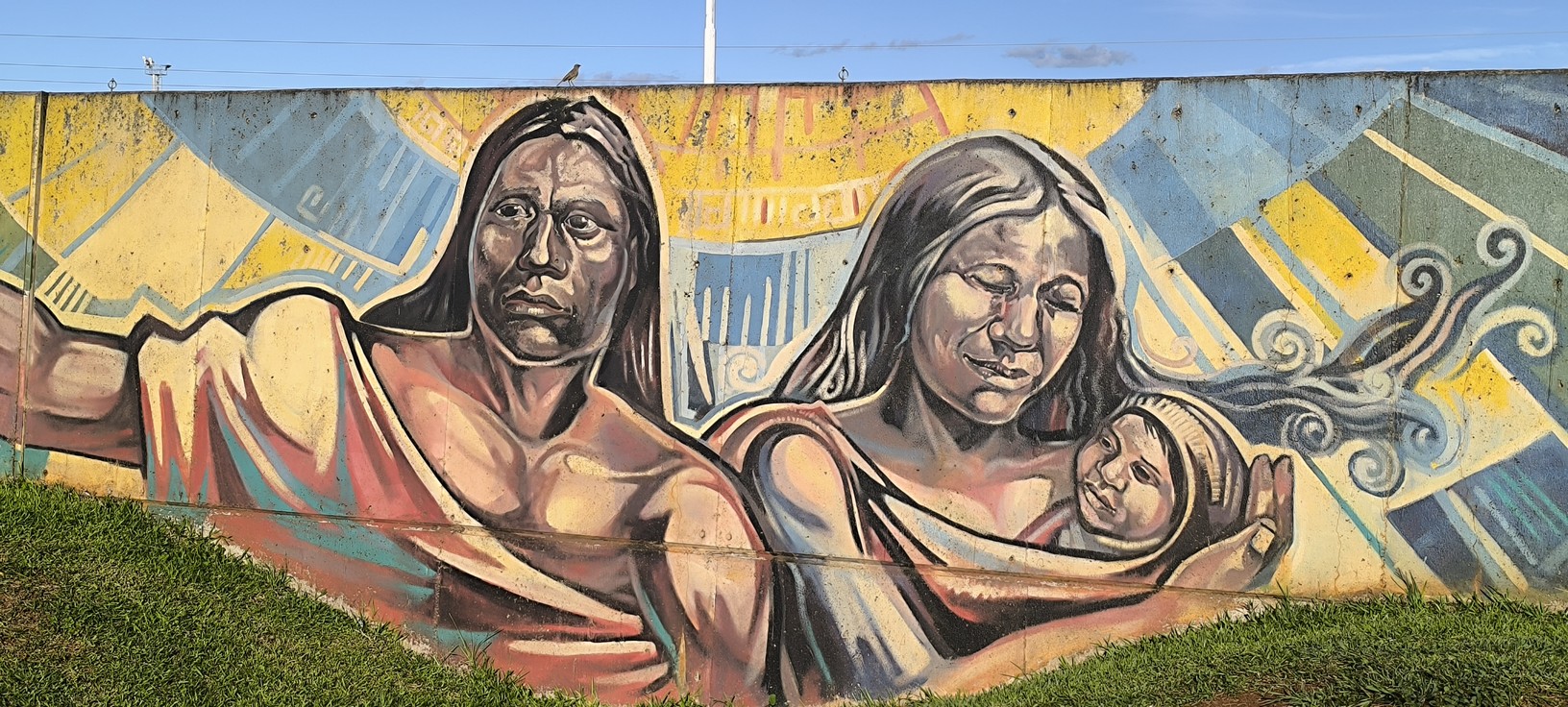
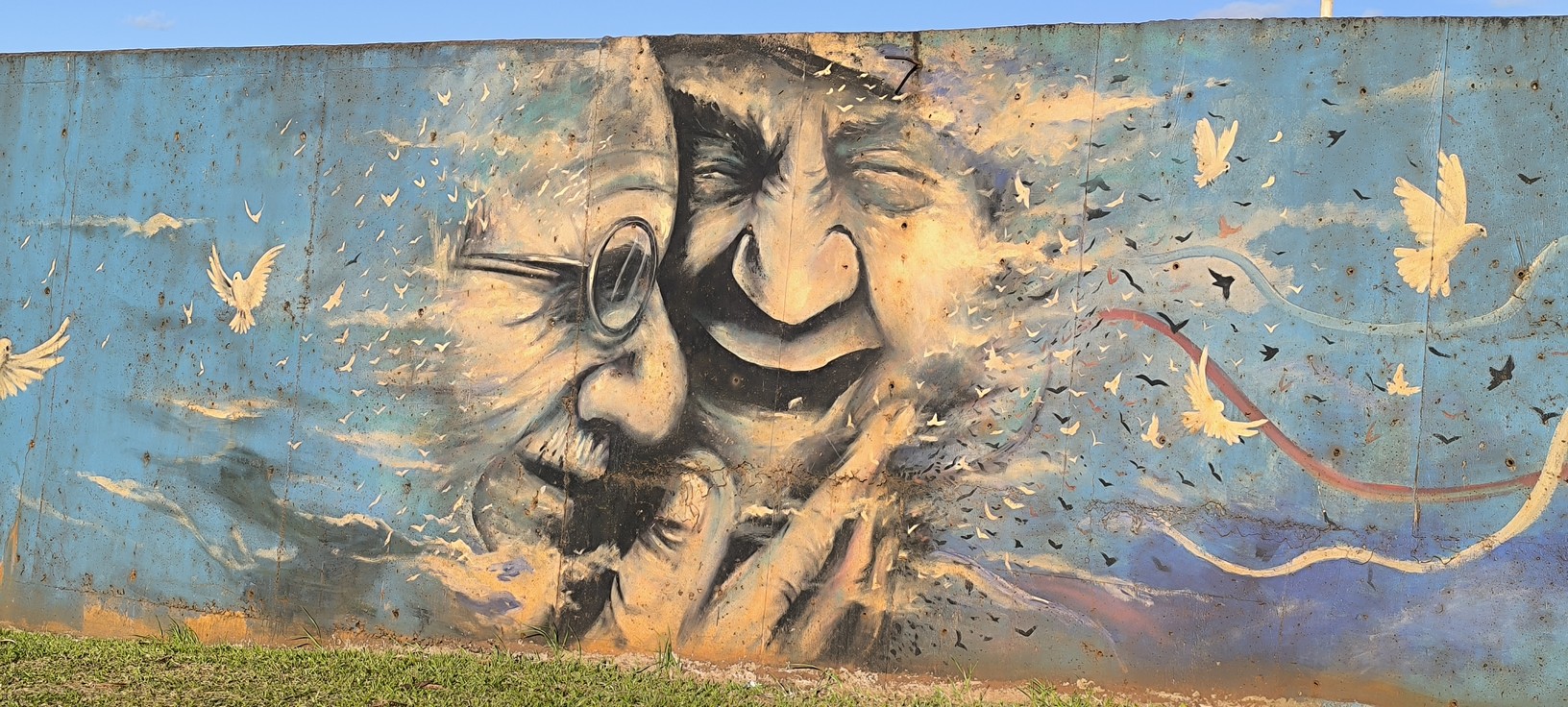
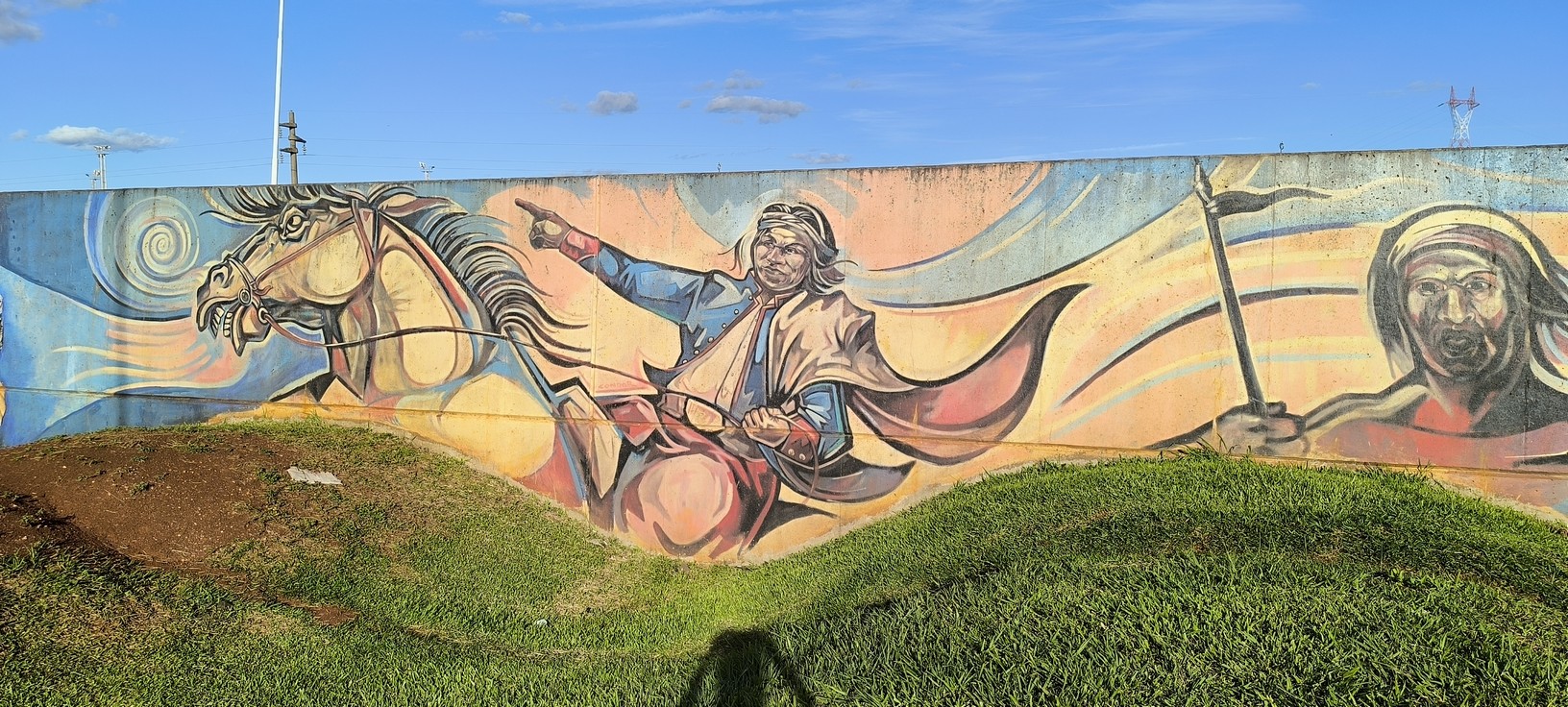
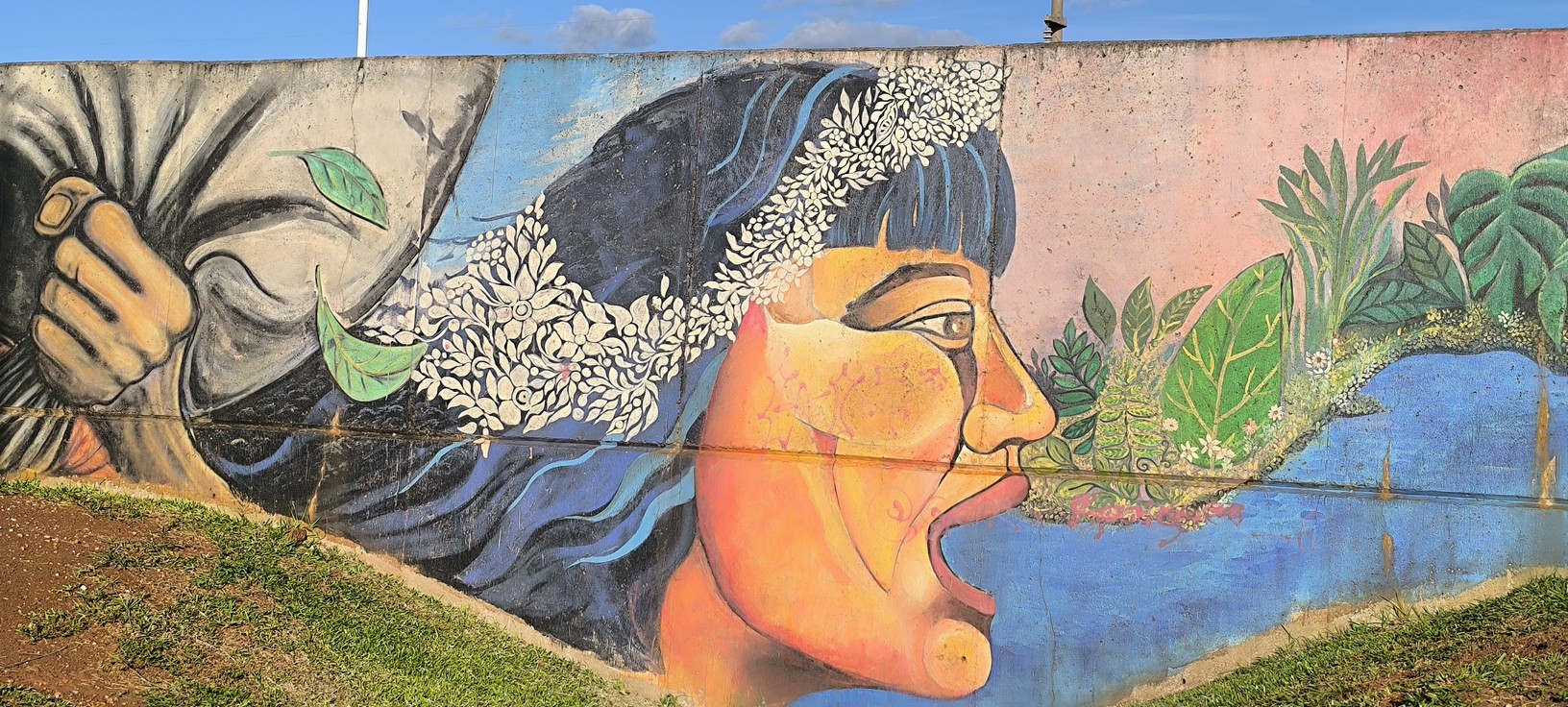
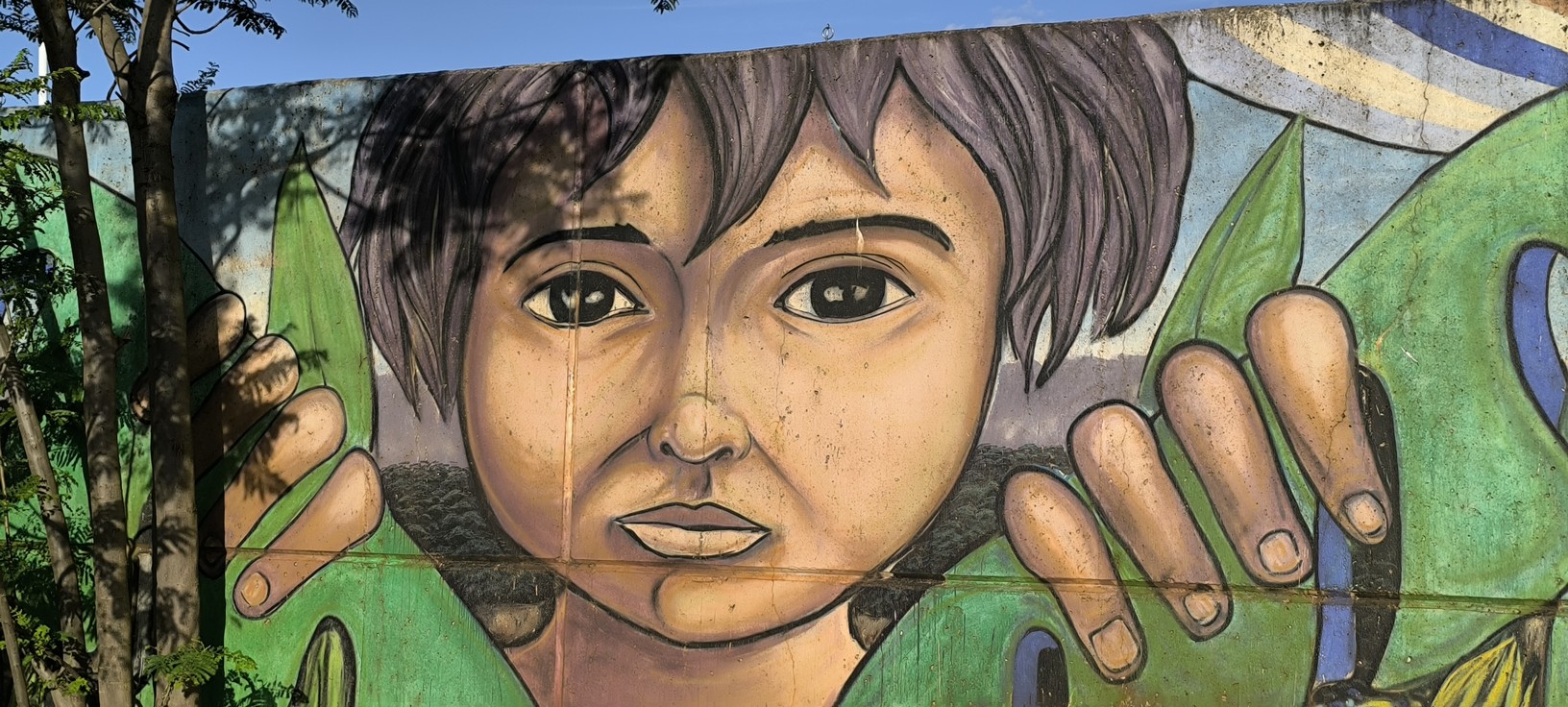
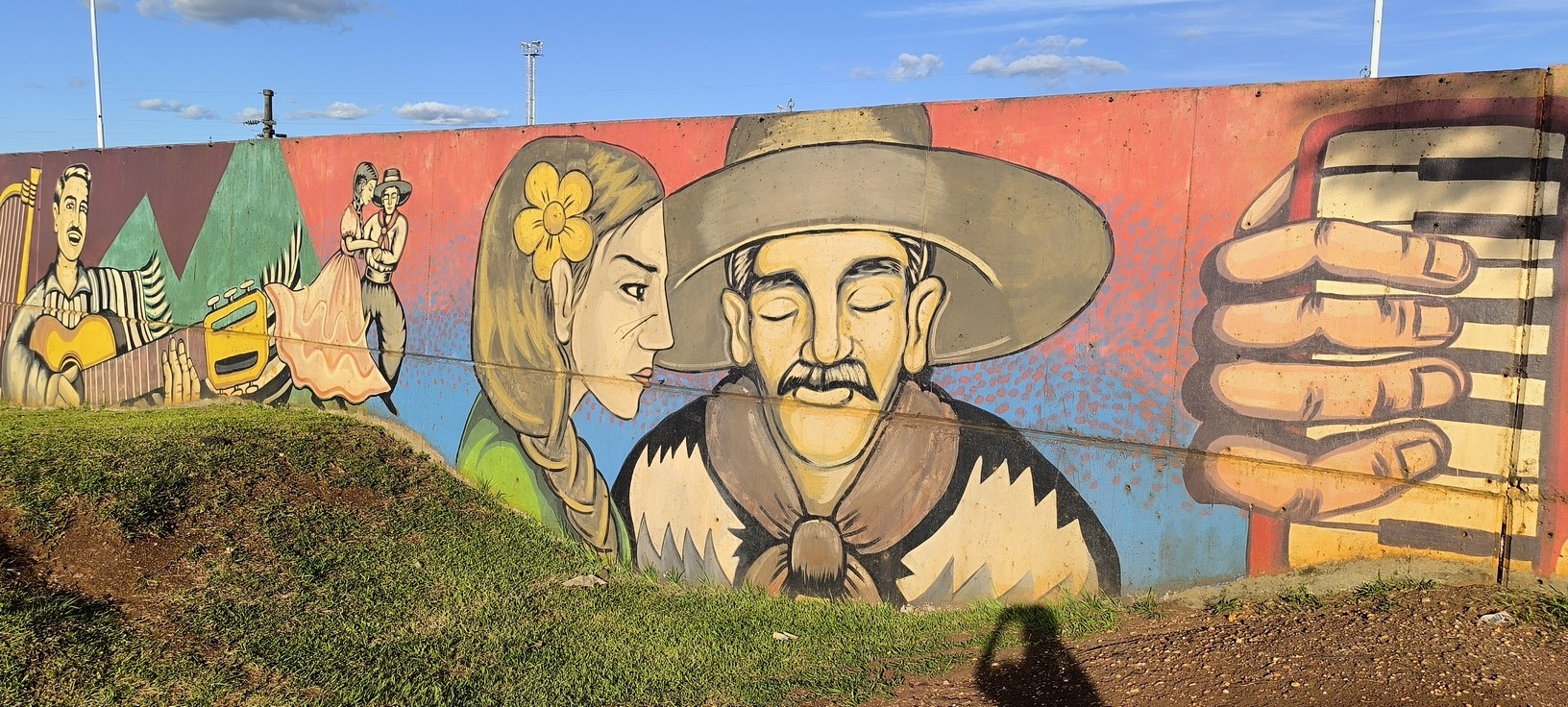
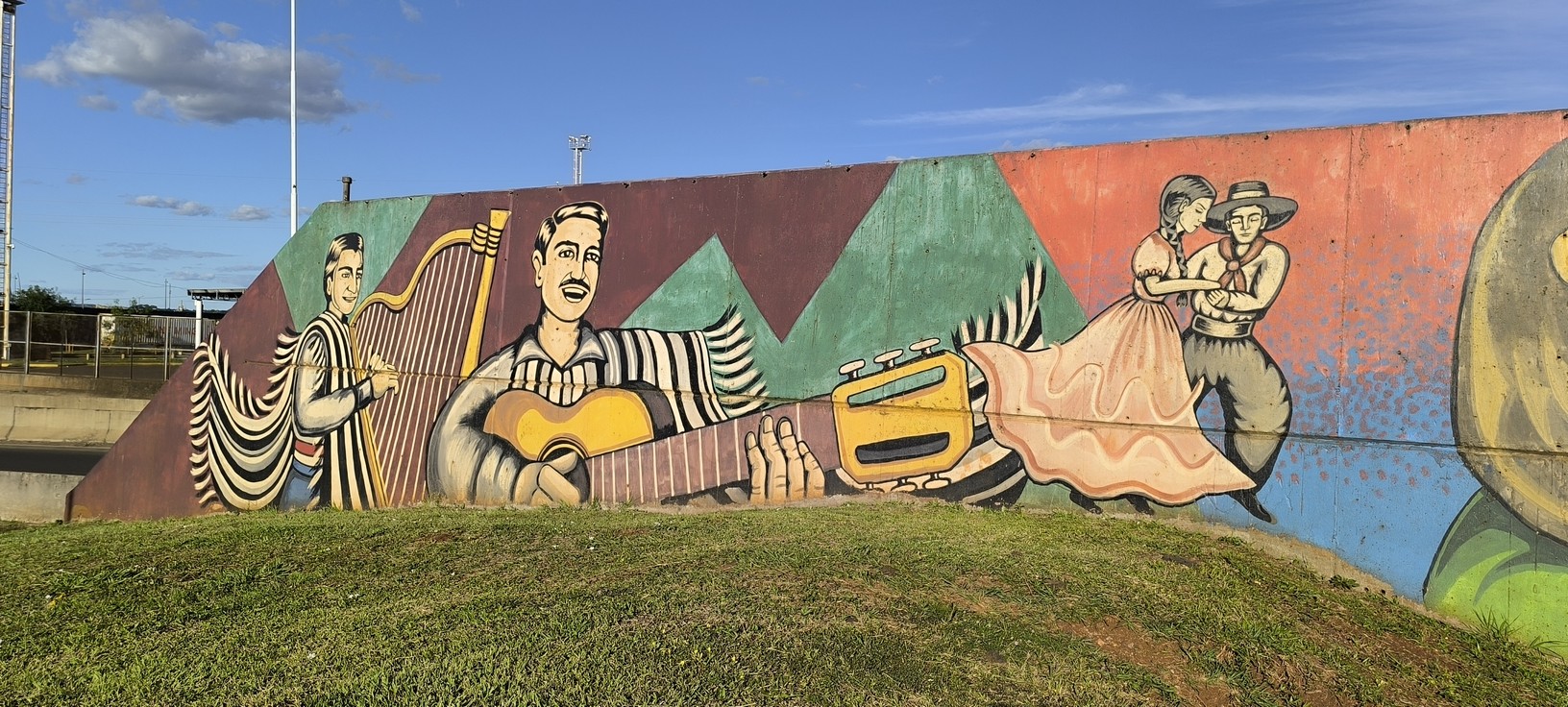
In a nearby city, Posadas, on the Parana River, we find these murals that tell the story artfully.






Super sorry – I somehow missed this chapter. I need to watch that movie. Those ruins. Beautiful. The detail is just stunning. The artwork on the walls is amazing. What a journey. Thank you for sharing. Lots of love.
Must watch the movie again.
All fascinating and a step back in history.
What amazing scenery xx
Think we sway the same way, one probably leaning much heavier than the other. Will maybe try and watch the movie again. I remember last time I stopped because I couldn’t stand the cinematic violence. The murals are very interesting, quite distinct in character. Much love and safe travels.
A sad history of how the “educated” Europeans went out and destroyed another nation that did not fit with their paradigms of how life should be lived. Civilization?????
What an awesome experience and so beautiful. Grateful to share your trip as always -Safe travels to you both
So happy for you that you both able to visit this special place Linda. Its be coming for a long time. Sure makes all the effort and admin to get there worth it. Safe travels further.
A spectacular area and a fascinating history that goes with it . Collisions and interferences between dissimilar cultures and faiths rarely end well. The forest is incredibly lush, must be pretty hot and humid. Happy trails!
Spectacular, it would be wonderful to experience it.
What a great, new view on South American and Jesuit-History ! Michiel
Amazing!!!
I will definitely also be watching the movie again after seeing your amazing photos.
The artwork is so moving and beautiful.
thank you for sharing
What an absolute privilege to see these sights from the past in the way they are now. So glad something remains to tell the tale. I must watch the film once again. THE mission so moving. Mingling it in with the mighty waterfall makes it the reality it was/ A truly dramatic post with amazing photos.. Thank you!!